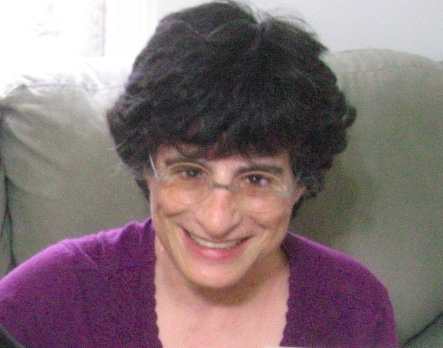
We spoke to Lisa Goldstein about her lengthy writing background and delved into a number of other topics along the way, including her love of Ursula K. Le Guin’s Earthsea universe, and why she enjoys writing about magic in the real world. Read her latest Asimov’s story,”In the Fox’s House,” in our [September/October issue, on sale now!]
Asimov’s Editor: How did this story germinate? Was there a spark of inspiration, or did it come to you slowly?
Lisa Goldstein: The story started when a friend of mine told me about videos online that showed foxes jumping on trampolines in people’s backyards. Foxes can be tricky or untrustworthy in the old tales, so I wondered what those foxes were up to.
AE: What is your history with Asimov’s?
LG: I’ve sold stories to Asimov’s nearly from the beginning, to Shawna McCarthy, Gardner Dozois, and now to Sheila Williams. All of them knew a lot about editing and gave me great feedback. If any of them rejected a story I was pretty sure there was something wrong with it, and I’d continue working on it or, sometimes, put it away to look at later.
AE: Are there any themes that you find yourself returning to throughout your writing? If yes, what and why?
LG: I like to write stories about magic in the real world, where there’s a possibility of something astonishing or mysterious just around the corner, in a place you’ve passed a hundred times before. And I like showing what happens when the borders between the two worlds become blurred, and what that does to the main character, if it frightens them or changes them or makes them understand something important.
AE: How do you deal with writer’s block?
LG: Not easily. I once read a piece of advice to writers that helps every so often: Pretend you are writing a letter to an author you admire, explaining your problem and asking for solutions. Of course you will never send this letter; instead it’s a way of putting yourself into the mindset of someone who has solved the kind of difficulty you find yourself in. Once I was having trouble with the plot of a novel and I addressed a letter to Nancy Kress, someone who I think is brilliant at plotting. A long time later I told her what I’d done and she said, “Well, you owe me a letter now!” The letter was long gone, though, and it was so filled with despairing cries for help that I could never show it to anyone.
AE: How did you break into writing?
LG: I wrote a short story, and a friend of mine told me I should turn it into a novel. So I wrote the novel, which became my first book, The Red Magician. I sold it to the second editor I sent it to, Ellen Kushner, who was at Pocket Books at the time.
Beginning writers usually hate this story because it seemed so easy for me. I want to assure them that my career was just as rocky as most people’s. For example, after writing a novel I couldn’t figure out how to write a short story for a long time.
I like to write stories about magic in the real world, where there’s a possibility of something astonishing or mysterious just around the corner, in a place you’ve passed a hundred times before.
AE: What inspired you to start writing?
LG: I can’t remember when I started wanting to be a writer. Maybe it was when I read my first book. Creating an entire world out of your head seemed the coolest thing anyone could possibly do. It turned out to be a lot harder than I thought, though. When I was in college I took a summer between classes to do nothing but write, and I went stir-crazy. Did people really lock themselves in their rooms with only a piece of paper for company? (This was before computers.) But after a while I started to like it.
AE: If you could choose one SFnal universe to live in, what universe would it be, and why?
LG: Two choices, at opposite ends of the spectrum: I’d like to live on one of the islands in Ursula Le Guin’s Earthsea. Not only would there be the possibility of seeing dragons and wizards and magic, there’s also daily life, which in Tehanu seemed slow but fulfilling: herding goats and spinning their fleece, planting and growing crops, visiting your neighbors, telling stories by the fire, and every so often consulting with the local witch about the weather or an illness. My other choice is about as far away as you can get from that, Iain Banks’s Culture, a technological utopia where AIs fulfill most of your needs, there are amazing scientific breakthroughs, and you’re free to do whatever you want, including exploring other planets and societies.
AE: What are you reading right now?
LG: I’m amazed by the number of terrific women writers working today: Tamsyn Muir, Arkady Martine, Ann Leckie, Rebecca Roanhorse, R. F. Kuang, T. Kingfisher. There’s a lot more of them than when I started reading sf, so I’m spoiled for choice. I’ve also been reading Adrian Tchaikovsky. It took me a while to pick up one of his books because of two words—“giant spiders”—but I like what I’ve read so far.
AE: Do you have any advice for up-and-coming writers?
LG: To start with, there are no shortcuts. You have to sit down every weekday to write, even if you’re blocked. Read pretty much everything and study how an author pulls off something particularly brilliant or, conversely, figure out why the story you just read is particularly terrible. Imitate the good ones until you understand more about style, then stop imitating. Write about things that excite you or anger you or scare you instead of just following a trend or writing for a market. Write the stories you feel need to be told, the stories only you can tell. Have fun—if you’re bored, the reader can tell. Oh, and get an agent.
AE: What other careers have you had, and how have they affected your writing?
LG: I’ve worked in bookstores a lot. It hasn’t helped my writing that much, except for allowing me to get books at a discount, which let me read widely in a lot of genres and research topics I was interested in. Also, people who work in bookstores are usually quirky and idiosyncratic, and know an impressive amount about weird subjects.
I’ve also taught at Clarion and other places. It sounds like a cliche, but I learned about as much from the students as I taught them.
AE: How can our readers follow you and your writing? (IE: Social media handles, website URL . . .)
LG: Website: brazenhussies.net/goldstein
Blog: lisa_goldstein.dreamwidth.org
 From Earth to the Stars