
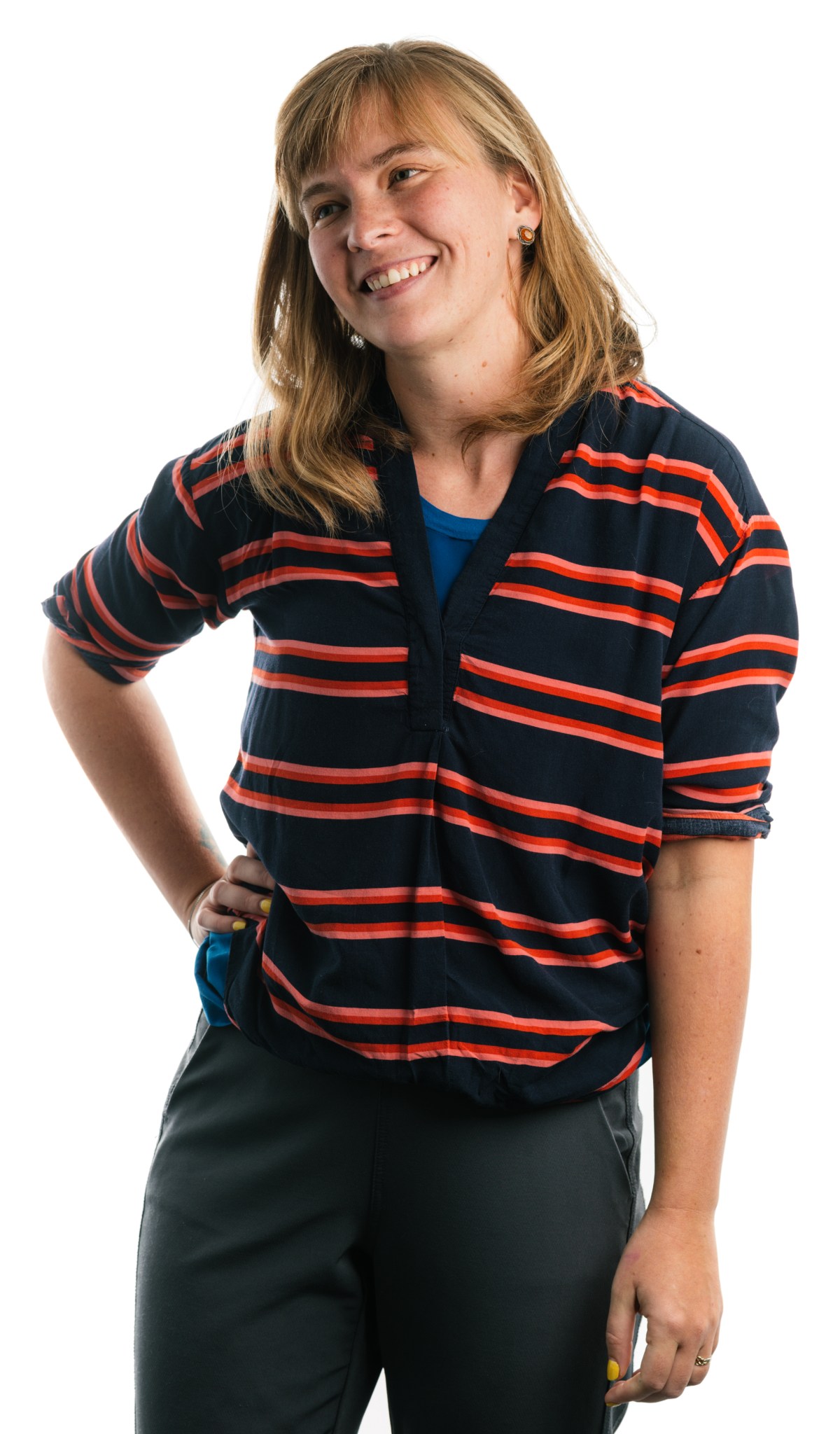
In our latest Q&A, Marguerite Sheffer discusses her greatest influences, her writing process, and the piece of family history that helped inspire “The Disgrace of the Commodore,” her latest story in our [Nov/Dec issue, on sale now!]
Asimov’s Editor: What is the story behind this piece?
Marguerite Sheffer: This flash story is based on a maybe-true bit of family lore that was passed down to me: the story of a famous Commodore who surrendered a ship to the British. I have a drawing of the ship itself hanging near my writing desk. The Commodore has been the subject of a lot of conversation, and a lot of jokes at family reunions. I began to imagine what the Commodore would think about our family as it is today, if he were eavesdropping somehow on those conversations: what would shock him, what would infuriate him, and what would spark his curiosity. Along the way I began to feel more tenderness towards him and found him to be more than a joke. I hope the story is able to be a little brutal towards his worldview, but also give him a little bit of softness and hope, too.
AE: Do you particularly relate to any of the characters in this story?
MS: Yes! I am one of the “descendants” in the story who is tearing apart the purgatorial version of the ship. That’s my secret self-insert character, and I had such fun writing myself and my cousins in, from the Commodore’s point-of-view.
AE: What made you think of Asimov’s for this story?
MS: I’ve been a reader and admirer of Asimov’s for so long! I had submitted several stories for consideration before this one, and had some encouraging near-misses. In one of her kind rejection notes, Sheila Williams mentioned being open to slipstream. This is one of my more unhinged, slippier pieces, so I hoped—and was right—that it might be a great fit. I’m so glad and honored to see my words among so many authors I admire!
AE: Who or what are your greatest influences and inspirations?
MS: I’m a particular fan of authors who are merging historical fiction with speculative fiction, in particular Sofia Samatar, Ken Liu, P. Djeli Clark, E. Lily Yu, Sam J. Miller and Caroline Yoachim. I’ve been lucky enough to speak with several of these writers about their work and their process. Their stories inspire me to imagine the voices missing from the historical narrative, and to speculate, wildly and curiously, into those gaps.
My own writing has grown enormously as a result of writing together with others, in writing groups. I’ve been lucky to write as part of the Nautilus Writing Group with Kendra D. Sims, Gwen Whiting, Amy Johnson, and Archita Mittra. We were matched together as part of the (free) Clarion West virtual Write-a-Thon, and I’ve been so lucky to learn from them! “Disgrace of the Commodore” began as a flash piece I shared with that group. I write nearly daily with Tierney Oberhammer and Corinne Cordasco-Pak (Wildcats Writing Group) and their incredible work and insights continually push me to be braver in my writing.
AE: Are there any themes that you find yourself returning to throughout your writing? If yes, what and why?
MS: While I don’t (consciously) write about current events, I do find myself, even when writing about history, circling some themes: of failing the next generation, of adults failing to protect the children in their care. I think in our era of looming climate disaster this is a subject that haunts me. I was a high school teacher for ten years, and I also find myself writing about the ways in which adults can be complicit in systems which restrict or harm children. One of the things I love about writing science fiction is the chance to imagine the world otherwise, even when it hurts to do so.
AE: What is your process?
MS: I could say so much about this one! I’m a new parent with a full-time day job, so I’ve had to get creative and scrappy with my writing process to make the most of minimal time. I write most mornings with a beloved writing group, the Wildcats, over zoom. We check in, say what we’re going to work on, do that, then celebrate each other for every little bit we accomplish. Sometimes, that’s a full hour, other times, just a handful of minutes on the Most Dangerous Writing App.
My day job is in teaching design thinking strategies as a tool for problem-solving and social impact, and I also apply design thinking to my writing: I write to explore, do a lot of brainstorming and ideation, and go through many (many) iterations of each piece. I try to set aside the idea of “good writing” and instead play around and see what happens.
One of the things I love about writing science fiction is the chance to imagine the world otherwise, even when it hurts to do so.
AE: What other projects are you currently working on?
MS: I’m in the final revision stages of my first novel, which is both thrilling and scary! The novel is historical speculative fiction, set in the Gulf South (Louisiana and Florida) in the early 1900s, and concerns early conservation efforts during the “plume wars:” a time when egrets were nearly hunted to extinction for their feathers, which were worth as much as gold. A female journalist, Theodora, heads to a remote island to cover a new egret sanctuary, and learns an other-worldly secret. I’m going to be seeking representation for this novel, hopefully in early 2024, after working on it for the last four years.
AE: What are you reading right now?
MS: Right now I am reading Zadie Smith’s The Fraud, as well as a nonfiction book (research for a new project) about Cold War espionage: Spies by Calder Walton. I’m also reading my favorite genre mags: Asimov’s, Uncanny, Apex, The Deadlands, and The Dread Machine (among many others!).
AE: Do you have any advice for up-and-coming writers?
MS: Writing with others keeps me inspired, and helps keep the work itself fresh, fun and playful. So, my advice is to start joining communities and looking out for writers whose work excites you! Kickstart a writing group: it is an investment of time and energy that pays off massively, in my experience.
AE: What is something we should know about you that we haven’t thought to ask?
MS: I love to use playlists as I write to get into the right mood and voice for each different story. Sometimes I will go further and break it down by characters and scenes. For “The Disgrace of the Commodore,” one song that I listened to over and over again was “Iron 2021” by Woodkid. Here’s the whole playlist on Spotify.
AE: How can our readers follow you and your writing? (IE: Social media handles, website URL…)
MS: Readers can find me at my website, www.margueritesheffer.com, and on social media at @mlensheffer. The Wildcats Writing Group is going to launch a Substack soon with information about workshops and publications. You can sign up early here: wildcatswritetogether.substack.com.
 From Earth to the Stars