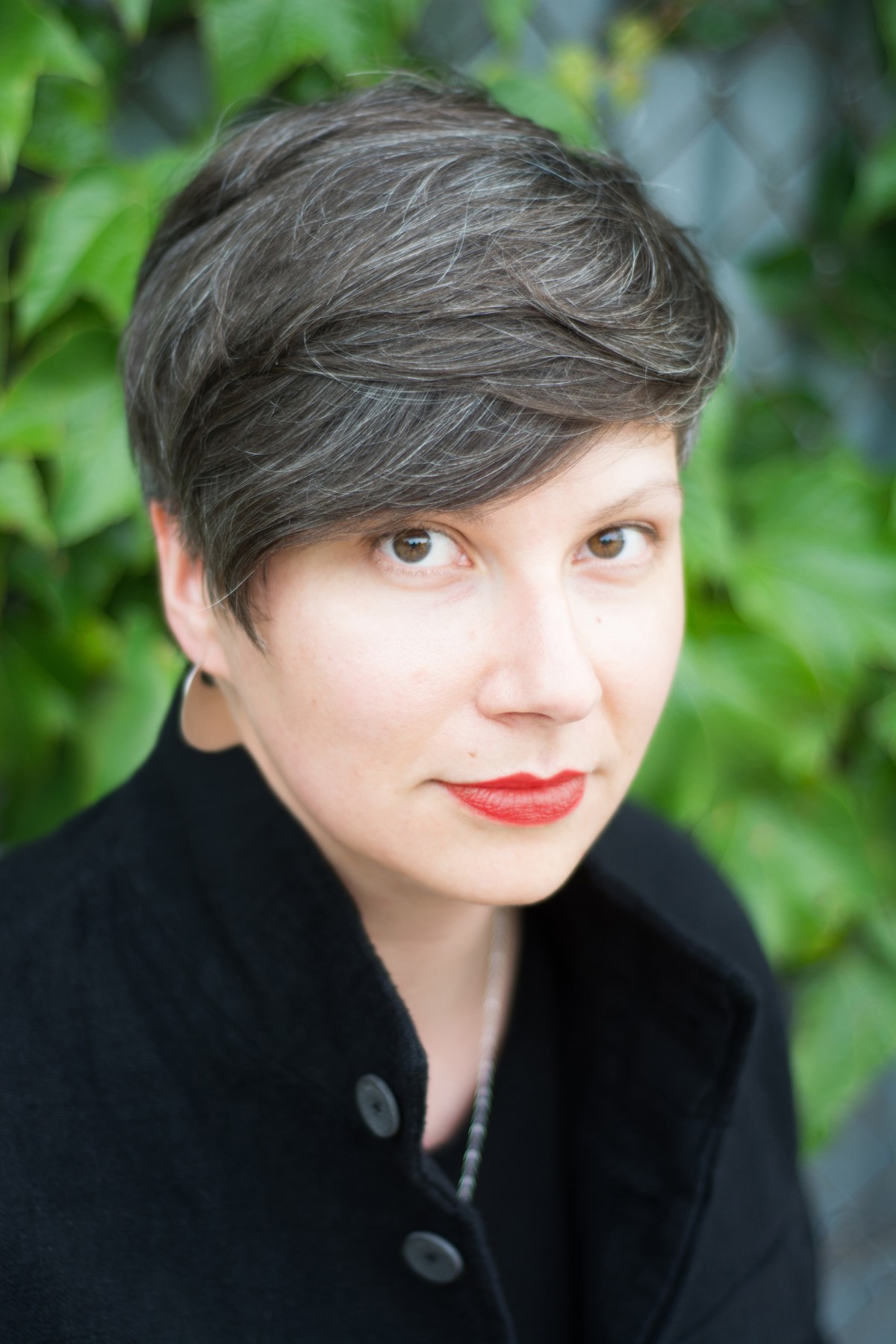
Author Genevieve Valentine discusses her writing process, her interest in the psychology of artists, and the thoughts surrounding performance art that inspired her story “Future Perfect,” now available in our [July/August issue, on sale now!]
Asimov’s Editor: What is the story behind this piece?
Genevieve Valentine: “Future Perfect” comes from my complicated feelings about performance art—the definition of it, who decides what qualifies as art, where “real art” is experienced, and the limitations to art’s power, especially against the power of the state. Despite the space in the museum dedicated to “Adaptive Memory”—in which artist Cora repeatedly cooks and serves a dinner she claims her grandmother once made—the space around her is claustrophobic; she’s surrounded by physical reminders of art that came before it, and we’re surrounded by the curator’s memories of other art exhibits, and how they did, or didn’t, reach their intended audience. (Whoever the actual intended audience might be—another complicated feeling.)
AV: How did this story germinate? Was there a spark of inspiration, or did it come to you slowly?
GV: This story arrived fully formed; I know what I was thinking about in terms of a story about performance art, and looking back, I can point to a lot of the individual elements that I had come across at very different times, all of which informed what the story ended up being—research I had done on hideous ’50s foods, experiences with anonymous comment sections—but the story itself happened quickly.
AE: Is this story part of a larger universe, or is it stand-alone?
GV: Technically this is a stand-alone story; however, at some point I must admit that there’s a Genevieve Valentine Five Minutes From Now Cinematic Universe where a lot of my science fiction seems to take place—my novels Persona and Icon as well as several of my short stories, like “The Nearest Thing” and “Small Medicine”—and this story is certainly located there. (This universe used to be a little farther in the future than that, but the future is barreling towards us increasingly fast.)
AE: How did the title for this piece come to you?
GV: Generally with titles, I either agonize for weeks about it, or I know what it is before I even begin. “Future Perfect” is the title of a piece of performance art that plays continuously in the museum—a short video clip from another performance-art piece hosted there years before, in which two sisters (one of whom is now dead) reminisce about something that happened long ago in high school, while one of them brushes the other’s hair. It hangs heavy over the museum; Cora’s “Adaptive Memory” exhibit is sometimes drowned out by it. Future perfect is the verb tense used when describing something that may or may not have begun yet, and will be completed sometime in the future. Grammatically, that’s a fascinating tension between uncertainty and predestination, and it’s why “Future Perfect” was always the title of that art piece, and of this story.
“Future Perfect” comes from my complicated feelings about performance art— the definition of it, who decides what qualifies as art, where “real art” is experienced, and the limitations to art’s power, especially against the power of the state.
AE: How much or little do current events impact your writing?
GV: If I could look directly into the camera here, I would. Let’s just say that for those who’ve read “Future Perfect,” I think this question will handily answer itself.
AE: Are there any themes that you find yourself returning to throughout your writing? If yes, what and why?
GV: There are very few genre trappings I’m wedded to; I write in several of them. However, if we mean themes in terms of obsessions, I’ve given up trying to avoid my ongoing fascination with performance, artifice, branding, ritual, the perception of art, the psychology of artists, the maintenance of the state, and narrators who know far more information than they’re able to meaningfully act on. I’m sure so long as I never examine why I’m drawn to all those things, I’ll be fine.
AE: What is your process?
GV: Generally my process is to think about something for a while until it feels ready to commit to paper, write a draft in a fugue state, be consumed with self-loathing for an unspecified and variable length of time, and then return to the draft to begin the actual crafting.
AE: What other careers have you had, and how have they affected your writing?
GV: I’ve had many, and they’ve all affected my writing; not every job has been good, but all the effects on my writing have been. “Future Perfect” draws in particular on my time in event management, which involves being in a lot of places at liminal hours, during which they take on a very specific quality that isn’t present when they’re open for business. The night watch shift always knows.
AE: What are you reading right now?
GV: Recent and current books include Katy Simpson Smith’s The Weeds, A Woman of Pleasure by Kiyoko Murata (translated by Juliet Winters Carpenter), Kate Strasdin’s The Dress Diary: Secrets from a Victorian Woman’s Wardrobe, and Wake: The Hidden History of Women-Led Slave Revolts, written by Rebecca Hall and illustrated by Hugo Martínez.
AE: How can our readers follow you and your writing?
GV: I’ve largely retreated from social media, though I occasionally emerge to shout into the wastelands of Twitter at @glvalentine and the fog of Bluesky at @glvalentine. The most reliable place to check for new work is actually genevievevalentine.com, which is fairly regularly updated, and doesn’t require you to sign up for anything at all!
 From Earth to the Stars
This was an insightful and unique interview. Thank you for putting Genevieve Valentine in front of your readers. I learned a lot.
LikeLike