Rich Larson talks about his inspirations for his newest story, the impact of current events on the writing process, and more. You can find his newest story, “The Rise of Alpha Gal” in our [September/October issue, on sale now!]
Asimov Editor: What is the story behind this piece? Rich Larson: I read an article a few years back about the very real allergy-inducing Alpha Gal carbohydrate, noticed that it sounds like a superhero / supervillain, and wrote a story to make sure other people noticed too.
AE: Do you particularly relate to any of the characters in this story? RL: This story was originally from Nea’s POV, and the ending was even more bitter. I think beta readers dinged it for lack of agency and likeability, but honestly, in real life, a lot of the time you show up to a place and a thing happens and you get no say in it. I relate to that.
AE: What made you think of Asimov’s for this story? RL:Asimov’s has terrific taste and is unafraid to publish potentially thorny stories. Depending on which character readers side with, people could (mis)interpret this one as antivax. Me, I think Heli is right: personal liberties and bodily autonomy sometimes need to be sacrificed for the greater good. If I were to contract this theoretical viral allergy and never be able to eat meat again, I would be annoyed, but I would also understand. Of course, I come at this from a position of privilege.
AE: How much or little do current events impact your writing? RL: I think current events impact everyone’s writing, whether they are conscious of it or not. This story was written pre-COVID, but it takes on a new dimension now that there’s a worldwide pandemic.
Asimov’s has terrific taste and is unafraid to publish potentially thorny stories. Depending on which character readers side with, people could (mis)interpret this one as antivax.
AE: What is your process? RL: I sit down at my typewriter and bleed. No, just kidding. I sit down at my netbook and bleed.
AE: What other projects are you currently working on? RL: Now that Ymir is out, I’m trying to finish all the stories / novelettes / novellas that have spent the past few years on the backburner. I’m also doing some videogame-adjacent work-for-hire stuff. If I talk too much about it, an NDA ninja will jump out from behind a bush and slit my throat.
AE: What are you reading right now? RL: Two poetry anthologies, one showcasing new British poets, the other nominees for the 2020 Montreal Poetry Prize. I also tried The Exegesis of Philip K Dick but only made it a quarter of the way through.
AE: Do you have any advice for up-and-coming writers?| RL: I sure miss being an up-and-coming writer. Savor each accomplishment; there are diminishing dopamine returns.
AE: What other careers have you had, and how have they affected your writing? RL: None. I went straight from working at a liquor store and studying Romance Languages to writing full time. Now I am thirty and the only thing I know how to do is make shit up, so if readers ever get tired of me I’m done for.
AE: How can our readers follow you and your writing? RL: I’m most thorough with my monthly Patreon updates (patreon.com/richlarson), but I also occasionally link stuff via Facebook (facebook.com/richwlarson) or Instagram (@richlarsonwrites).
Rich Larson was born in Galmi, Niger, has lived in Spain and Czech Republic, and currently writes from Montreal, Canada. He is the author of the novels Ymir and Annex, as well as the collection Tomorrow Factory. His fiction has appeared in over a dozen languages, including Polish, Italian, Romanian, and Japanese, and his translated collection La Fabrique des lendemains won the Grand Prix de L’Imaginaire. His short story “Ice” was adapted into an Emmy-winning episode of LOVE DEATH + ROBOTS. Find free reads and support his work at https://www.patreon.com/richlarson.
Alastair Reynolds goes into his inspirations, his long history with writing, and advice for new authors. Read his newest story, “Things to do in Deimos When You’re Dead” in our [September/October issue, on sale now!]
Asimov Editor: How did this story germinate? Alastair Reynolds: I talk a little about the title and the inspiration below, but the process of putting it all together was quite slow (as it usually is for me) and was as much about striking a mood as coming up with characters and a plot. I’m a big fan of surrealist art so in the landscapes of this story I was trying to evoke the empty, melancholic city-scapes of de Chirico, with their eerie statues and long, creeping shadows. I took the name of the spaceship in my first novel from a de Chirico painting, so it’s a lifelong influence! There’s a bit of Titian in there as well.
AE: Is this story part of a larger universe, or is it stand-alone? AR: It’s very much a standalone. I’m at the point now where I’m not so keen to be revisiting larger universes, at least for a while.
AE: How did the title for this piece come to you? AR: This is also the genesis of the story. I’m a fan of the late American rock musician Warren Zevon, and I always liked his “Things To Do In Denver When You’re Dead.” There’s a film of the same name that I haven’t seen, also inspired by the song. I swapped Deimos for Denver and off we went! Except that’s not quite true as I had the title and a few fragments of story for about five or six years before the thing cohered into a finished piece. I thoroughly recommend checking out Zevon, by the way. A lot of people will know “Werewolves of London” but that’s only the tip of an enormous number of great songs. He was a terrific loss to music, at such a young age.
AE: What made you think of Asimov’s for this story? AR: Way back when, Gardner Dozois took a story of mine for Asimov’s. It was a huge breakthrough to me and it also happened around the time Gardner bought another of my pieces to be reprinted in his Year’s Best series. He was the first American figure to show any interest in my work so it felt like a big validation. I sold a couple more stories to him in reasonably quick succession, so I had a run of appearances in the magazine around the millennium and then I just didn’t send anything else in. I always meant to, but time slipped away and then suddenly it was two decades! Holy cow. This story wasn’t written for a commission, so when I finished it, it felt like the right time to try and sell another piece to Asimov’s—under Sheila’s excellent tenure this time, of course. And I’m really delighted to have broken that twenty year drought!
AE: Who or what are your greatest influences and inspirations? AR: Music and art are the primary influences. I’m known for having a background in space science so people understandably tend to assume that the science comes first, but it’s not really the case. I get stimulated by a mood or set of images, and then I start feeling my way into a story which spirals out from that starting point. I’ll see a character in a predicament and want to know who she is and how she came to be there. The science and worldbuilding, such as they are, get salted into the process as I go along. It’s all very organic and intuitive. To feed this, I need to keep exposing myself to new influences, so I’m a voracious consumer of music and visual imagery across nearly all genres. Without bigging myself up, I also suspect that I have a somewhat over-developed visual imagination. I can see stuff in my mind’s eye as clearly as a CGI render, right down to highlights and reflections, and often all I’m doing as a writer is translating these image-rushes into prose.
I can see stuff in my mind’s eye as clearly as a CGI render, right down to highlights and reflections, and often all I’m doing as a writer is translating these image-rushes into prose.
AE: How do you deal with writers’ block? AR: I don’t know whether it’s real or not, but I do know that there are times when it becomes very difficult to progress with a piece of work. I deal with that in two ways: first by reassuring myself that it’s an inevitable part of the process, and no cause for alarm, and then just grinding down through the gears until I’m just barely moving forward, but at least making some imperceptible progress. The second thing I do (that was the first!) is to have more than one project on the go. If I’m really honestly stuck with something, then I switch over. I’d rather be writing then not writing, basically. If that fails as well, then go to the cinema and let your mind freewheel for a couple of hours. It’s surprising how often exposing yourself to a different narrative form can unblock things.
AE: How did you break into writing? AR: I’d always been a compulsive writer, right from when I could hold a pen. I wrote two novels in my teens, as well as a bunch of linked stories. Around the time when I was sixteen, I started making cautious investigations into getting published, and that’s when I realised that there was this standard pathway into SF, by which you sell stories to magazines and then eventually graduate to novels. I couldn’t get hold of the American magazines, but within a year or two I became aware of a British one, Interzone. I started sending them stuff as I moved from school to university, all written on a manual typewriter. After three or four years they took a piece of mine and gradually doors began to open. Life throws lucky chances at you. Because we were both working at the university at the time, I ended up getting to know Paul McAuley, who aside from being a more-established writer, helped me get an editor to look at my first “grown-up” novel. Of course you have to put in the hard graft so that you’re ready to jump on these opportunities when they arrive.
AE: What inspired you to start writing? AR: That’s an easy one. My dad took me to the cinema to see a double-bill of James Bond films: From Russia With Love, and Goldfinger. I was bored by the first one (even though it’s actually a really good Bond in retrospect) but my tiny little mind was completely blown away by Goldfinger, with the car, the gadgets, the laser! The next day at school I started drawing and writing a Bond-inspired story, leaning heavily on Goldfinger, and I never really stopped. If anyone needs a script for the next Bond, I’ve got some time in my calendar.
AE: What other projects are you currently working on? AR: Machine Vendetta, a new novel in my Prefect Dreyfus series, which is itself a sub-series in the Revelation Space universe. This is the last one for a while, though, as I’d like to concentrate on entirely new standalone SF works for the next few years. There’s a novella, “I, Clavius”, on the back-burner, about a sentient moonbase, but that’s a way off being finished.
AE: If you could choose one SFnal universe to live in, what universe would it be, and why? The Known Space universe of Larry Niven, around the time of the Beowulf Schaeffer stories. It seems like a pretty fun, groovy, day-glo sort of place! I’d have my own ship with a General Products Number One hull, a hyperdrive and some cool friends to come along on an adventure to the fringes of Known Space.
AE: What are you reading right now? AR: I’ve just finished the autobiography of Dave Grohl, the drummer from Nirvana and the front-man of the Foo Fighters. I’ve always enjoyed reading about drummers and this is a really good read. Now I need to pick up a David Baldacci thriller I’m part-way through. I haven’t read any science fiction for a few months but I’m feeling the itch again so it won’t be long.
AE: Do you have any advice for up-and-coming writers? AR: Finish stuff. This is really good, basic advice but it’s surprising how powerful it is. You can always improve a lame story, but you can’t improve something that isn’t complete. I liken a first draft to throwing a line across a ravine. It’s too flimsy to carry a load, but now you’ve got that line across, you can use it to drag a heavier rope, and so on, until you’ve got a bridge.
Alastair Reynolds was born in Wales in 1966. He started publishing SF in 1990 while working in space science, and has now written around twenty novels and many short stories. His most recent novel is Eversion (Gollancz UK and Orbit USA). After living and working in the Netherlands for nearly two decades, he and his wife now live back in Wales, surrounded by birds and bats. Alastair is a keen runner and owns way too many guitars.
The folk lore and history of Iceland play major roles in Eleanor Arnason’s new story, “Grandmother Troll.” Read it in our [September/October issue, on sale now!].
My father’s parents came from Iceland. Since the population of Iceland is not great, and the West Icelanders in Canada and the U.S. are not numerous, this was pretty exotic back when I was a kid. Of course, I was interested in the country. In addition, my father spent World War 2 in Iceland, working for the U.S. government, and told stories about the experience. (The U.S. had a huge wartime base in Iceland and recruited everyone they could find who spoke Icelandic. My father had grown up speaking it.) I read books about the country as a kid and took Medieval Icelandic in grad school, since they didn’t offer modern Icelandic. The language is conservative, so the two versions are not that different, except for vocabulary. Modern life in Iceland has required a lot of new words. At some point, I began to write stories drawing from the medieval Icelandic sagas, which are famous, and Icelandic folklore, which is less well known. Five of these stories have been collected into a book titled Hidden Folk, which can be found on Amazon or from the publisher, Many Worlds Press. I have written an additional four stories, not yet collected. “Grandmother Troll” is one.
I should be clear about two things. I am not an expert on Iceland, though I’ve read a lot over years and been to Iceland twice. I am sure Icelanders can catch me out in a lot of errors. Also, the Iceland I write about is my version of the country and culture. For example, I don’t like Icelandic elves. They are described as like human Icelanders, but richer and handsomer and in better health. Most Icelanders for most of their history were miserable peasants, living in sod huts, subject to poverty, sickness, bad weather and volcanic eruptions. Elves were like the few rich Icelanders, or like the Danish merchants and officials who exploited and/or ignored the people of their colony. (Iceland was a colony, first of Norway and then of Denmark, from the 13th century. It did not become completely free until after WWII.)
I like Icelandic trolls. In Icelandic folklore they are a mixed lot, usually hostile, but sometimes friendly. I see them as the island’s rock come alive: strong folk, but not especially fortunate, peasants barely getting by, hiding from humans in the highlands. There are two kinds of trolls: those who can go out in sunlight and those who will be turned to stone if sunlight touches them. I usually write about the latter, probably due to the influence of Tolkien and The Hobbit. Even the ones who can come out in sunlight are not often seen.
There two stories about trolls I like. These are real stories out of Icelandic folklore. One is about Bishop Gudmund the Good Arason, who used to wander around Iceland with a troop of beggars. If he stopped at a prosperous farmer’s farm he would be welcomed, since he was a bishop; and the farmer would have to feed his troop of beggars.
I guess you could say my story is about history and how we relate to the past, and about respecting the land, and taking good care of our animals, especially our sheep.
Anyway, all kinds of bad things were happening around the island of Drangey in Skagafjord, and Gudmund was asked to bless the island. The island’s cliffs were sheer. The only way he could bless them was to be lowered on a rope. Gudmund worked his way around the island, getting lowered at each new section. Finally, he was almost done. He was about to bless the last bit of cliff when a huge, gray hand came out of the stone and grabbed his rope. A deep voice said, “Even the wicked need a place to live, Gudmund.”
This struck the bishop as reasonable, and he did not bless the last bit of cliff. The hand released his rope, and he was pulled up.
The Icelanders know what part of Drangey was not blessed. The first time I was in Iceland, I spent a couple of hours on an Icelandic fishing boat off Drangey. I remember the sheer cliffs and the seals in the water and the boat’s captain telling us that this section of cliff was still unlucky. Bad things still happened there.
So that is one story. The other I got out of a book on trolls. Some fishermen were fishing at night and getting loud. One of their party said, “Be quiet. You’ll disturb the trolls.”
A night or two later, that man was asleep. He dreamed that a troll came to him and thanked him for his consideration. “In return, I’ll tell you when and where to fish so you always have a good catch.”
The troll kept his word. After that, the two of them would go out fishing together on moonlit nights. If the troll was along, the man’s catch was always good.
My trolls are usually helpful, rather than wicked. But there is no question that trolls can be dangerous, just as Iceland can be. Icelandic Search and Rescue is always rescuing idiot tourists who get their cars stuck in glacial rivers or who get lost in the highlands. Pay attention to the weather when you are there. Follow instructions from the natives about where to go and what to do. Do not walk on the lava near an ongoing volcanic eruption. The crust may look black and solid, but the lava may be still red and molten underneath.
What else can I say about my story? The man who Grandmother Troll gives shelter to in the highlands is Grettir the Strong, the hero of the Grettis saga, an amazing character. He meets his end on the island of Drangey in an epic last stand against his enemies.
I have made the farmer in my story a descendant of the great saga hero Egil Skallagrimsson. Egil’s grandfather Kveldulf did in fact send his spirit out as a wolf in the evening. Egil’s father Skallagrim was a smith, which is a somewhat magical line of work, and Egil himself was a viking, a poet and sometimes a magician. He laid a really impressive curse on the land spirits of Norway, so they could not rest until they had driven Norway’s king Eirik the Bloody Axe out of the country. Eirik ended in York in England. Unfortunately, Egil was on a ship that broke up on the coast near there. So Egil ended in the court of his worst enemy and had to buy his way out with a praise poem named “The Head Random,” which is the first example of a Norse poem using rhyme.
Egil was a real person and a real poet. We have three of his long poems preserved in the Egils saga, including “The Head Ransom.” His family has descendants alive today. I may or may not be one.
Both Egil and Grettir are awful, violent men and also kind of likeable. Their sagas are my favorite sagas. This does not mean I approve of their behavior.
The sheep getting caught in a blizzard in my story is based on an actual blizzard that hit northern Iceland a number of years ago. It was in the fall, before the sheep had been gathered in for the winter, and the sheep were still out in the fields, trapped under a huge snowfall. Iceland Search and Rescue had to go out on snowmobiles, find sheep and dig them out and bring them to safety. It was an epic effort, which was made more difficult by some tourists who got themselves in trouble, so Iceland S&R had to leave the work of saving sheep and go to rescue tourists. Tourists are important, of course. But sheep are also important, and the sheep had not done anything silly.
I guess you could say my story is about history and how we relate to the past, and about respecting the land, and taking good care of our animals, especially our sheep.
Eleanor Arnason sold her first story in 1973. Since then, she has published six novels and fifty works of shorter fiction. Her novel A Woman of the Iron People won the Tiptree and Mythopoeic Society Awards. Her novel Ring of Swords won a Minnesota Book Award. Her story “Dapple” (Asimov’s, September 1999) won the Spectrum Award, and other stories have been finalists for the Nebula, Hugo, Sturgeon, and Sidewise Awards. Eleanor’s most recent story in Asimov’s was “Tunnels” a Lydia Duluth adventure, in the May/June 2020 issue. Hidden Folk, a collection of short stories based on Icelandic folklore, came out in 2014.
Along with several thousand others, I am David Gerrold’s Facebook friend. He’s remarkably approachable and has responded to the half dozen messages I have sent him over the years. In January 2021, I messaged him and asked if he had any comments about “Man Out of Time,” my favorite episode of the Logan’s Run 1977 television series. I was writing a review of his episode for Stupefying Stories. He suggested we talk on the phone. On January 30, 2021, I found myself chatting for over an hour with the writer of “The Trouble With Tribbles” and the story editor for Land of the Lost. He was very gracious when the Zoom link didn’t work and even more gracious when he realized that I, unlike every other interviewer, had not taped the interview. Lucky for me, he had. Anyhow, enough about me: sit back and enjoy a science fiction master recounting the glory days of sixties and seventies science fiction. —Peter Wood
Peter Wood: So, you said you have a story for me (about “Man Out of Time,” the episode you wrote for the 1977 television serial Logan’s Run)? David Gerrold: It’s a couple stories. The producer on the show was Len Katzman, and the executive producers, who I never met, were Goff and Roberts. Now, I enjoyed working with Len Katzman. He later went on to do Dallas, and he was a very, very nice man, and a very good producer. And what I suggested was not just a time travel story but that we actually find sanctuary, and that this would give the show the opportunity to—once we had found that sanctuary was not real—stop searching for sanctuary and start being about rebuilding the connection between all the human settlements all over.
PW: Right. DG: And it was a pretty good intention. So we came up with this time travel story that played a trick I’ve done a couple times—the time traveler is not from the future. He’s from the past. I did that in Land of the Lost as well. But, I have this weird sense of humor, but also a sense that science must be logical and believable. So the first thing the time traveler does is he sends a rabbit forward to see if it survives. And so they find the rabbit. Now, Jessica and Logan and Rem have never seen a rabbit before. They’ve lived in this bubble. Okay, so they find the rabbit in the cage, and Rem is searching his memory, and I had stumbled across a weird fact that the rabbit is genetically or evolutionarily similar to an elephant. Apparently they have the same root, and so Rem says, “This is an elephant.” And Logan says, “I thought they were larger,” And the joke was that they would carry the rabbit around with them for the entire rest of the episode. And there was a lot of funny stuff that got written. I think I went through four drafts, and each time the notes would come back not from Len Katzman, but from Goff and Roberts, and they ended up taking out all of the jokes, all of the humor, all of what I had learned on Star Trek, and again on Land of the Lost, was that the jokes made your characters likable, so much that you wanted to spend more time with them. And we particularly saw this with “The Trouble with Tribbles,” but we saw it in all of the episodes of Star Trek where Spock and McCoy would take large bites out of each other. And it seemed to me that there were a lot of comedic possibilities in Rem and the others. And it wasn’t a bad show, and the people there were good. I have nothing against anybody there, but Goff and Roberts kept taking the jokes out. Now, my first-draft scripts were long because it’s easier to cut than it is to pad, and so I cut, and I cut, and I cut, and a lot of fun stuff got cut, maybe properly so. It might’ve been too talky for television. I’m certainly not going to say I was —I’m not going to do like some angry writers do and say, “I was right and they were wrong all along,” and then you see their original script and you can see, yeah, they had some brilliant stuff in it, but it wasn’t filmable, right? I’m not naming any names.
PW: Right. I think I know who you’re talking about. DG: Yeah. No, I’ll be candid. Harlan [Ellison]’s script was brilliant, but it wasn’t Star Trek, and it had to be rewritten to fit into Star Trek—and a lot of the dialogue he wrote was simply not the characters, and I learned how to write Star Trek dialogue by reading, I would guess, 25 Star Trek scripts, and watching every single episode I could, more than once, and then watching the actors work. So I wrote for their speech patterns, and Harlan, who had—it was the last script of the first season—he’d had plenty of time to hang out on the set and read other scripts and get a sense of who the characters were, but a lot of the dialogue he wrote, as brilliant as it is, wasn’t the Star Trek characters very much. And then you do find these little flashes, these little moments, “I fought at Verdun.” “Oh, a man who fought at Verdun. We have to do something for him,” even though Kirk and Spock didn’t understand, but they knew it was important. So there’s these little flashes of brilliance, and yet— Harlan’s draft of the script, as much as I love it, and it really is a brilliant script, would’ve made a great movie, but it needed to be fixed for Star Trek, and Dorothy Fontana did most of that. Harlan blamed Gene Roddenberry but it was really Dorothy. She admitted it to Harlan many years later when we all believed that some of his anger had ebbed. Anyway, Goff and Roberts were editing my script down, or wanted my script cut down, and they made extensive notes, and I finally reached a point where I felt that they had leached a lot of the fun out of the story, so I put another name on it, Noah Ward. The funny thing is that it turned out to be a very good episode anyway, one of the better episodes of the series, and they sent me a kind of snarky note when they saw the reviews. They said, “Well, I guess we know what we’re doing, huh?” But look, they did know what they were doing. They were good producers, but doing science fiction, especially back then, there weren’t a lot of people who understood how to do science fiction, and they had never done science fiction before, and science fiction requires a skill that very few really good writers had at the time. Richard Matheson and Robert Bloch, and Norman Spinrad, and—oh God, a whole bunch of people who understood. Gene L. Coon for sure. Dorothy Fontana. You need to know how to do science in a way that it’s believable, even if you’re making crap up, and then you also need to make your characters likable so the audience cares about them. And then you have to have a story, a drama where something is at stake, and you look at—I’ll give you an example. One of the great episodes of Trek was “The Doomsday Machine.” I mean it’s one of the best things Norman Spinrad ever wrote because you really care about William Windham’s character. He’s lost his ship and he wants revenge. It’s Moby Dick in space, and you realize Kirk’s challenge is, he doesn’t want to lose the Enterprise, and yet he asks, “How are we going to destroy this planet-destroying doomsday machine?” And as a character story, it is one of the best stories Star Trek ever told.
PW: It’s my favorite episode. DG: Understandably, yes. “The Trouble with Tribbles,” even though we see it as a comedy, if you stripped out all the jokes, because there were never that many jokes in the first draft, it’s just, “Oh, it would be funny if we did this. It would be funny if we did that.” But if you strip out all the jokes, you have a strong character story of Kirk versus Barris versus Klingons.
PW: Yep. DG: And it’s my belief that any great comedy has to have a great story underneath the jokes; that if you strip out the jokes, you still have a great story. The jokes are the way you dramatize the story. You could tell Some Like It Hot, which is one of the funniest movies ever made, you could tell that straight, without any jokes, and it would still work. It’d be a little hard to believe.
PW: Some Like It Hot is horrifying. They’re almost killed. DG: There’s a lot at stake in that story. There has to be something at stake.
PW: Yeah. DG: And a lot of science fiction by people who don’t understand science fiction, who have not grown up in it, is, “Let’s do a monster”, and the guy who did the third season of Land of the Lost—now, when I did the first season, it was—Spencer Milligan as Marshall says, “This is the land of the lost. There has to be a reason for everything.” You get to the third season, in the third season the story editor is saying, “Crap, have the characters saying, ‘This is the Land of the Lost. Anything can happen,'” which is not true.
And it’s my belief that any great comedy has to have a great story underneath the jokes; that if you strip out the jokes, you still have a great story
David Gerrold
PW: Right. DG: That’s not the Land of the Lost that I made up. Anyway, but you see what I’m saying is, you have to have a level of logical consistency, even in fantasy, and you have to have characters you can care about, and you have to have something at stake, and then you have to have those moments that bring the character to life, whether they are funny or tragic or whatever. And in episodic television it’s easier to go for the comedic response. That joke makes your characters likable, and it’s actually a physical thing. Let me give it to you this way. If I tell a joke, you laugh and you get endorphins. You get an actual physical sense of pleasure, even if it’s a small one. Now, the more that I give you that physical sense of pleasure, the more you’re going to bond; the more you’re going to feel affectionate; the more you’re going to like being around me. So this applies to television. The more that a character makes you laugh, the more you like being around him.
PW: Right. DG: And you can even do that with Klingons because the Klingons, as originally conceived, as nasty as they were, you got a feeling of—you got a little adrenaline rush off the Klingons. That was exciting. Yeah, tell me more about the Klingons. So I wanted to bring the characters to life, and if you look at the entire 13-14 episodes that were completed and released on the DVD, or the Blu-ray, I forget, what you see is, it’s a very dry, dull show that’s trying very, very hard to be serious. And while that might be fine in a murder mystery, or a detective show, or any kind of the crime shows, it doesn’t work for science fiction. Science fiction needs a light edge. And you look at films like Forbidden Planet. There are jokes in Forbidden Planet. You look at The Day the Earth Stood Still. There’s a couple of very high-level moments that are actually amusing. You look at—even the 1953 War of the Worlds. There are a couple moments that, while they’re not laugh-out-loud jokes, they’re smiles, and you end up—those characters become vivid because of the likability. And I always felt that, as good as all of the actors were; Paul Shenar and Greg Harrison and all of them, as good as they all were, I think they were defeated by scripts that didn’t give them any fun to have. I’ll give you another story which you may have already heard, but we were shooting over at MGM, which is just one of the great old studios, and MGM had a tradition with Technicolor going all the way back to Gone With the Wind and Wizard of Oz. They would pump up the light so that the colors would be saturated on the film. Now, we get to 1970-whatever and they’re still pumping up the light but we’re using a new film stock, 5437, which is a very fast film, and doesn’t need to be pumped up with light. Well, they’re pumping up the light like they’re shooting Wizard of Oz because it’s some of the same people who worked on Wizard of Oz? Wizard of Oz was 1939. This was only 40 years later. Some of the same people were still working there; good guys but they were still working as if they were, the film stock was 50 ASA And we’re using film stock that was 400 ASA, right? Which is great. I mean, you look at those episodes and they are saturated with color, but the problem was they were burning out the eyes of the actors, and Harrison and the others finally complained that those bright lights were not just physically painful, but at the end of the day they couldn’t see because they were so dazzled by the lights. So they had to redo the lighting, and later episodes you can see the lighting shift a little bit. So I did not note there the director of photography. You go back to Star Trek. Jerry Finnerman understood the film stock he was lighting for. He also understood that all the sets were gray, so that’s why he used the colored—what do they call them? I’m blanking out on the word, but the colored sheets in front of the light, so you’ve got a purple wash here, and a green wash there, and an orange wash. So he made the sets look different, even though they were all just painted the same color gray. And then he’d also put up this latticework so you’d get these textured shadows in the background. In terms of making the most out of a limited budget, the man was a genius. He made the show look good, and this was the early days of color television. People were tuning in to Star Trek just because of the bright colors. You’ve got a color TV, you wanted to watch something in color. There was Star Trek.
PW: True. DG: But by the time we got to Logan’s Run, everything was in color. All the networks had gone full color, and the sets were better. The sets had evolved in just ten years, and you can start to think in terms of subtleties of color. You didn’t have to have everything primary colors. And Logan’s Run looked good. It did look good.
PW: It did. I agree. DG: I think that’s all I remember from the show. That should give you something to work with.
PW: So I’m guessing you got involved because of Dorothy Fontana? DG: Yes. Yeah, Dorothy was being hired as a story editor everywhere. Dorothy and I were great friends. She was one of my best friends in the world, but she knew that I was fast, I was dependable, and that they wouldn’t have to do a lot of rewriting. I would turn in a shootable script, and they might have to tweak a line here and there, but she knew she could depend on me and vice versa. When I was doing Land of the Lost, Dorothy Fontana wrote the best script for Land of the Lost. There’s absolutely—I mean, I had some good writers. I had Ben Bova. I had Norman Spinrad. I had a few others. Just great people. I had some of the best writers I could find, but Dorothy’s script was, she had done this script, “Yesteryear,” for the animated Star Trek. When I brought her along for Land of the Lost, I said, “Let’s do ‘Yesteryear’ but we’ll turn it around. This time, instead of meeting young Spock, we’ll meet Holly as an adult.” And she made it work beautifully. I mean, very limited, but they shot the episode in two or three days—all of our episodes were shot fast. So there wasn’t a lot of time for a lot of nuance. On Land of the Lost we did not have a director who was good at nuance, but he could get the shots in the can, and the actors managed to make it work. It’s hard work being an actor. Most people think, “Oh, you learn your lines and you get to be glamorous.” No. If you look at what the average actor goes through in just a one-hour episode, they have to learn their lines, there’s 60 pages of script. If you’re the star of the show, you have to learn 10 pages of script every night, which I think explains William Shatner’s delivery. He’s trying to remember his lines all the time.
PW: Right. DG: But anyway, Logan’s Run should have been a better show. I mean, it wasn’t a bad show, but it wasn’t a show that was destined to last long because the network didn’t give it a chance to gel. That was part of the problem. But the other thing is that I don’t think Goff and Roberts understood the magic of what that show could’ve been. With Star Trek we were visiting a different culture every week, more or less. And Logan’s Run could have done that. They could have been doing this exploration. You could’ve taken the time to say, “Okay, where are they on the map, and where are they going? Okay, so they’re in a desert. Next they’re in the uplands, then the foothills. Next they’re in the mountain range,” and each time they could be visiting a community that has a different way of surviving because of the geology of where they are, or the geography of where they are, and you could’ve done a fascinating exploration of a devastated future and how the people are starting to come back together. And that would’ve been a very hopeful optimistic show, but the context that they ended up with was, Logan and Jessica and Rem are kind of lost and wandering from place to place without any clue of what they’re really looking for. And wherever they’re going, they’re not finding any more information about where to look next. And so it became, your context in a series is something that—I had this conversation with Harve Bennett when he was doing Matthew Star—Star Boy — and I said to him—I turned in a couple of really good ideas, and he loved them. He said that we can do these second season. And I said, “If you don’t do shows like this now, you’re not going to have a second season.”
PW: Right. DG: Well, the poor kid who was the star of the show was injured in an accident, burned by some fireworks, and the show got canceled, so they never did get a second season. But what I have always said is, “Tell me what we’re going to be doing for the fourth episode of the third season, and then I’ll know if the show’s going to survive,” because it’s—if you’re doing Perry Mason, the producer will say, “We’re going to be doing a murder mystery,” and you say, “Oh, right, of course.” But if you’re doing a science fiction show like Battlestar Galactica, which is “run away from the Cylons,” three seasons in, we’re still running away from the Cylons. It’s, um, that’s not a grabber. But you say with Star Trek, “We’re going to be doing third season—we’re going to be exploring strange new worlds, seeking out new life and new civilizations, boldly going—”
PW: Right. DG: So, oh, great? I know what we’re going to be doing third season. And that’s a question you want to ask: do we know where we’re going? What’s the punchline of this series? A show like Lost started out real strong and introduced even some interesting mysteries, but nobody knew what the punchline was, and after a while it became obvious they were making it up as they were going. They didn’t know where they were going.
PW: Yeah. DG: So, the couple of times I have written a bible for a series—and I’ve pitched two or three now, and we’ve gotten great reactions but nobody opened their checkboo—I could always say, “Here’s the finale. Here’s where we’re building to. You tell us this is our final season. Here’s how it’s going to resolve.” If it’s a war story, here’s who wins the war. If it’s a this, here’s how this— And I think that, especially now when we’re doing series that you get ten episodes a year, there should be a story arc for each episode but also a payoff at the end of the story arc. Doctor Who is the exception, because you just regenerate the doctor and reinvent the whole series, which has happened, if you follow, Christopher Eccleston, David Tennant, Matt Smith, Peter Capaldi, Jodie Whitaker. Each time they not only reinvent the doctor. They reinvent the context of the series because the doctor has a different challenge each time. And with this latest thing, the timeless child, the doctor is a whole different person. So it’s “Oh, this is going to be interesting. Are we going to play it out? What are we going to discover about where the timeless child came from?” I mean, the whole series has been ripped wide open. So, that’s the exception to the rule. But if you’re doing a thing —Hawaii 5-0 is a really good example. They went what, 7-8 seasons, and finally McGarrett ages out and gets the girl, finally, in the last episode? But they were building to it. That whole last season was setting up McGarrett—I mean McGarrett had already lost a kidney, and a this, and a that, and the other, so—I mean they were building up to McGarrett’s retirement for a while. They knew where they were going and they paid off all the plot lines that they’d been playing with for seven years. And that’s how you do a series. So we came away from watching Hawaii 5-0 feeling complete; that we had not been left with—let me say it this way, we’d been given closure. We had not been left hanging. And I think that’s what makes good television, is that you do get that sense of completeness. The Sopranos is one that has a sense of closure, a sense of completeness, because if you think about it, Tony Soprano gets killed in that last shot. That’s the only real explanation, and the producers of the series kind of hinted that was what they intended.
PW: Yeah. DG: So that’s really—you have all of this—these problems with doing television, and there are a lot of people in the industry who are only thinking in terms of this episode, and the next episode, and the one after, and they’re not thinking, “What are we going to be doing next season? How are we going to pay this off?” And I think you need an overriding story arc to make any series work.
PW: Like Babylon 5. DG: Babylon 5, yeah. Babylon 5, once Joe started writing all those scripts himself, he knew exactly where he was going, and Joe’s a good writer and a good producer, and I can only say wonderful things about him. He’s really an admirable man. He knew where he was going and he built toward it, then the network says, “We’re going to stop after four seasons,” so he had to rush the fourth season to get to closure, and then they said, “No, we’ve decided we want a fifth season,” so he had to do a fifth season after he’d already done everything he intended to do. It was very frustrating for him, but he made it work better than most producers would have.
PW: Not bad. I always felt like Logan’s Run would’ve been better if they had done more with Francis or less with Francis, but having it be every week, he’s on their tail and can’t quite seem to catch them, or he captures them and somehow he loses them. That seemed to happen a lot. That got kind of repetitive. It was like an old movie serial or something. DG: Well, it was like Les Miserables, and he was supposed to be Inspector Javert chasing Jean Valjean. Well, that’s fine, but—and they did that as a TV series called The Fugitive, where Richard Kimball was being pursued every week, but the real interest in The Fugitive was not that Richard Kimball might get caught this week, because you knew he wasn’t going to get caught. The real story was the people’s lives that Richard Kimball got involved with in The Fugitive. And so, if you kept Inspector Javert in the background as a threat, that might get close. And when he does get close, it’s time for Kimball to move on. The Fugitive was a great TV series because it was not—he wasn’t always running, but with Logan’s Run, because the story was about the chase—of Francis chasing Logan, they were trapped into, “We have to have Francis every week.” Well, I think it would’ve worked better if Francis didn’t show up quite so often. “I think we’ve lost Francis.” “Oh, he’ll track us. We’ve got to keep moving.” “Okay.” So you could have an episode or two where Francis is not there, but the threat is implied. You could bring that series back, but you’d have to really rework it hard. My problem with the entire Logan’s Run context is, they come from a place where, as soon as you turn 30 you get killed. Well, people don’t mature. People don’t even get interesting until they hit their 30s. The male brain doesn’t finish developing until about age 23 or so, and you don’t start really getting a sense of how life works until you’re 25-26-27, and by the time you’re 33 that’s when you start to become—that’s when you are who you are, and that’s when you’re really interesting. You have some control over what you’re doing, especially if you’re a writer. You finally moved into your craft. Whatever else you are working at, you’ve had your 10,000 hours. You’ve had your million words. You’ve got your muscle memory in place. And that’s really about the age where mastery starts to kick in. So killing people before they even have a chance to develop real maturity struck me as being wrong. Now, if I were redoing Logan’s Run today, I would have Logan discover that the real masters of the city are the people who didn’t get killed but go into hiding, and that there is a secret counsel of older people who didn’t get killed but who went into hiding. You either got killed in Carousel, or if you had proved yourself worthy, you got elevated to be one of the secret masters who were living underneath the city, and making sure everything works. See, at least that way you would have a believable environment. Why do we have all these kids running around upstairs? Because that’s where we let them learn how to be human beings, whether or not they are worthy of going on. But we don’t tell them that because that would just traumatize them, so we just let them have fun, play, learn, and see which ones are worth saving. See, that would be an interesting story.
PW: That would be. I kind of got the feeling that the original book was almost like a satire because I think there’s this youth revolution in the 21st century and they kill all the old people, so like Wild in the Streets (the 1968 movie), right? DG: Yeah, which was a dreadful movie, too.
PW: Yeah. DG: I’ll tell you, George Clayton Johnson and I were good friends. I loved George. He was smart. He could get work when nobody else could. I never understood that because he never came across as being the sharp industry professional, but if you needed a script, you’d call George and he would turn something out. He and William F. Nolan decided they were going to make a million dollars, and they were going to write a book that would be turned into a movie, and they would make their money from the movie sale and the success of the movie. That was their goal with Logan’s Run. So they analyzed what you need. It had to be an action picture, and it had to appeal to the young audience, and it had to have this and that and the other, so it’s really a construct. It was a deliberate construct to play off all the tropes they knew would sell. And I don’t fault them for it. I actually admire that they solved that challenge. It’s the same challenge I did with “The Trouble with Tribbles”: what do you need to sell a script to Star Trek? Well, you have to be better than all of the other writers who are selling scripts Star Trek, so you have to find a story that nobody else is doing. And with Logan’s Run they came up with something that a studio would look at and say, “We could make some money with this.” I’m not faulting them for that approach, and I also think there are a lot of really fun elements in Logan’s Run. I mean, I didn’t like the movie very much. I didn’t like the book very much because of the idea that you were killing people at age 30. If they had just not used that as the motivation for the run, they would have had 1984. How does Winston Smith escape Big Brother? Well, you don’t escape Big Brother. But this was a different time. This was a Brave New World kind of tyranny. How do you escape Brave New World? That would’ve been a hell of a story. So that’s my writer disagreement with them; but on the other hand, every writer gets to create their own story, so they created their story and I had a good time with it to the extent that I could put my disbelief aside. I would’ve done it differently, but I respect that they solved the problem their way.
PW: Well, the book is a quick read. I’ll say that. It comes at you a mile a minute, And then it just, bam, ends. DG: Yeah, and Nolan, God bless him, he’s been around forever, and the Horror Writer’s Association made him a Grand Master. Good for them. He earned it. He’s a terrific guy, and he’s written a lot of stuff I really do like, so he does understand the horror genre very nicely. But science fiction has evolved. It used to be back in the ’30s and ’40s it was about, “How do we predict how we’re going to use the new sciences that we’re inventing?” And into the ’50s, and ’60s, and ’70s, “Oh look, here’s how we’re going to get to the moon and Mars, and here’s some of the problems we’re going to deal with in space.” And then along about—after Lord of the Rings became a big hit, and fantasy kicked in, there was another phenomenon. All of the sudden, we have all these great science magazines; Scientific American, Science, Nature, Discover, and all of these—you couldn’t keep up with the science anymore. There was too much science being developed, so it was easier for the writers to go into fantasy, and fantasy was now a very marketable, very profitable genre to go into. So a lot of writers were going into fantasy. Poul Anderson and Heinlein, the guys who actually did their science, Gordy Dickson, Fred Pohl, Cyril Kornbluth, Arthur C. Clarke, and Allen Steele—became the hardcore nuts-and-bolts science fiction. Then there were writers like Jack Vance who’s writing more fantasy than science fiction. You get in a spaceship, you go to another planet, and here’s the culture. But it was always a pretty much Earth-like planet, right?
PW: Right. DG: And there are no Earth-like planets. There’s just lazy writers, like, “I just want to tell a story that takes place in this culture,” so all right. And that’s what a lot of science fiction became. It became a foundation for telling stories that were metaphors for—and this is the Star Trek effect as well. Star Trek, we would arrive at a planet and they would have a weird culture and we’d fix it for them. Or we’d get caught up in it and escape from them. Whatever. And a lot of science fiction became that kind of fantasy. There was a lot of science fiction after Star Trek and Star Wars became imitation Star Trek and Star Wars. It was either battles in space or find some unique culture. And then there were a couple other things that happened in science fiction, too, and these are good things because they expanded science fiction. You got a lot of women suddenly coming into science fiction from Star Trek, and writing science fiction. So now we have, I think, a majority of science fiction writers are women, and they’re writing—I don’t want to call it feminist fiction because it’s not, but they’re writing about sex roles, and gender roles, and they’re writing a whole different context of science fiction, which some people have objected very strongly to, but those objections are wrong because science fiction has always been about expanding the boundaries. And what the women writers have brought—like Annie McCaffrey, for instance, and Joanna Russ, and James Tiptree, Jr., and so on—and Connie Willis—what they have done is expand what the genre can contain. More recently, in the last 10-20 years, we’re getting a lot more minority writers—Octavia Butler, Steve Barnes, Chip Delaney, N.K. Jemisin, and Asian writers are showing up very strong recently, too, so we’re getting a lot of really great writers pushing the boundaries far beyond anything we could imagine in the ’60s and ’70s, and this is healthy. It’s just—we just shouldn’t be calling it science fiction anymore. We should be calling it what Harlan said was speculative fiction, because a lot of what is being published doesn’t have that scientific foundation that was demanded by John W. Campbell and H.L. Gold and Fred Pohl. Now we’re far more into what kind of realm can we imagine, and what would happen in it? And you look at the Magazine of Fantasy and Science Fiction, and in any issue—which is a great magazine— you can see the realm—how far-reaching science fiction has become. We just can’t call it science fiction anymore because it has become mainstream literature. And if you look at the bestseller list, what’s considered mainstream, a majority of those books on the bestseller list are science fiction books. They’re just not called science fiction. The Time Travelers Wife, for instance. You look at all of the books that are showing up on the bestseller list and they are taking science fiction tropes and turning them into mainstream stories. So what has happened is an explosion of the genre, so far and so wide, that has been very healthy for storytelling.
PW: I agree. DG: There is also a lot of sloppiness. There’s also a lot of bad writing. It’s Sturgeon’s Law. Ninety-five percent of everything is crap.
PW: Right. DG: Gerrold’s Corollary is, that doesn’t mean the other five percent isn’t also crap.
PW: Right. DG: But we saw this in the history of television with all of the attempts to do science fiction way back when. Ninety-five percent of them were crap, but the standouts are Twilight Zone, Outer Limits, and Star Trek, and Firefly, and maybe a couple others. Oh, the original Space Patrol, and you can look back at those shows and see that they were trying very hard to kick out the boundaries of the imagination. But then there were shows that were so sloppy and so—just dull. Almost all of the Irwin Allen shows. Lost In Space, which, not to fault the people who worked their butts off on the show, but really, ultimately it became Doctor Smith and Will Robinson and the robot, and all chances of actually doing —when you get to the large talking carrot, played by Stanley Adams, it’s like after a while, this isn’t science fiction anymore. It’s just a children’s show. There were other well-intentioned efforts. I mean, most recently, there was a show I really liked, called Terra Nova, where the people are setting up a colony a hundred million years ago, or whatever—back when there were dinosaurs, and you go, “Oh, that’s interesting. They can flash back in time to—” and they built a whole little settlement, and every so often you see dinosaurs, or they have a dinosaur story, and I thought, “This is an interesting concept. You could have a lot of fun with this.” And they got some of their science right. There was more oxygen in the atmosphere. But they didn’t spend enough time on the world building, which was the real interest of that show, is how do you build a world when you’re surrounded by dinosaurs? How do you plant crops when you have different kinds of ecology working with different insects and different things living in the soil and different little rodent things? I wanted to see more of that world building, and instead they got bogged down in the politics of the situation, which was the least interesting part of the show, but at least I give them credit for a great concept that they were—there was room to grow. So—science fiction is the hardest genre of all to do well because, in addition to all of the other things you have to do to write a good story, you have to create a new environment, a new world, move into it, and figure out how it works, and make it function, put all the pieces together. So that was my complaint about Logan’s Run. I didn’t think it was a stable environment. But if you look at Star Trek we’re going out and exploring the galaxy. That’s a stable, believable context for a series. So Land of the Lost, the challenge with Land of the Lost was to create a context. “All right, everything that gets lost falls through a time hole, and is here.” So we’ve got dinosaurs. We’ve got aliens. We’ve got Sleestaks. We’ve got this. We’ve got that. And I could justify it by having it—this is like a wrinkle in time where things get trapped and can’t get out. And I had a very strict set of boundaries for that land of the lost. So—which is why I believe the show has become this cult classic after almost 50 years now, and people are still watching those old episodes. They look quaint, but they have their own appeal.
PW: If you compare it to what was on Saturday morning at the time, if you compare it with the Krofft Supershow, and Bigfoot and Wild Boy, there’s no question. Land Of The Lost dealt with sci-fi staples. It had pretty adult characters. It had Enik. DG: Yeah, that was Walter Koenig’s. What I said to all of the writers early on, I said, “I want you to pretend this is a primetime series, and write like it’s a primetime series. Kids are going to be watching it but I want adults to be able to watch it, too.” So we wrote adult-level stories that kids could watch, which is the secret of any great kids’ show. Rocky and Bullwinkle. As an adult you can watch that show and laugh your ass off. There’s jokes in there the kids won’t get. The kids will have fun with the stories, but the adults will have fun on a whole other level. The same thing with the Chuck Jones’ Looney Tunes. Adults can watch them because they get the jokes on a whole other level. And the kids’ shows that are written specifically for kids are unwatchable for adults, and they are really just unwatchable. I mean some of the great ones: you look at The Real Ghostbusters, the animated series. You look at Scooby Doo. Those shows adults can watch? They’re intended for kids, but they’re written for adults. It’s a unique kind of writing. The minute you think, “Oh, this is a kids’ show, and we have to dumb it down and only do stories that kids can understand,” you’re losing half your audience. What I realized with Land of the Lost is the minute we’re putting dinosaurs in, we’re going to catch the adults. So I have to write an adult-level show.
PW: Well, if you dumb down shows, it’s also an insult to the kids. When I was a kid, I watched adult shows all the time. There wasn’t a lot of stuff for kids on TV in the ’70s except for Saturday mornings and maybe in the afternoon, so I would watch adult shows with my parents. And it was fine. I got them. DG: Yeah, and then when you grow up you get them again in a different level. You look at the classic Disney animated features, the ones Walt did, and you see —these, as an adult, you can watch them and admire the beauty of the film, and at the same time the stories have a simplicity to them, but the characters are presented with a very adult level of understanding. You look at Cinderella, and that’s adult-level storytelling. The mice are there for the kids. The cat, Lucifer, is the threat, but the stepmother and the stepsisters, as caricatures as they are, they’re very understandable on an adult level. It’s only when Disney had—the studio had a low period when they get to Lady and the Tramp, and at the end Trusty survives. That was a last-minute decision that, “Oh, you’ve got to have Trusty survive.” Well, the story works a lot better if Trusty dies saving Tramp, but that was when Disney Studios said, “Oh, nobody dies anymore. We can’t do Bambi’s mother anymore because the kids will pee in the theater seats. The theater owners hated Bambi because the five-year-olds would wet their pants and the seats, literally. But Disney would have the false death. Trusty survives. Baloo survives in The Jungle Book. And after that, they would kill a character and then conveniently bring him back to life. You get to Star Wars and Obi-Wan comes back with a blue glow around him, and so one of the things you get is, death isn’t permanent anymore. And I think we even got it with Star Trek. Spock dies because Leonard wanted out of the series, and then decided he wanted back in, so they had to bring Spock back. The whole thing with entertainment is, it’s a chance to live another life and get greater awareness, and gain an enhanced sense of empathy from all the different lives you’ve lived in movies and books, and if you’re not getting the chance to experience the loss of a loved character; if you’re not getting a chance to experience death, you’re going to be overwhelmed when it happens when a parent throws an embolism. And so, I think one of the great values of fiction is that it not only teaches us about love. It also has to teach us about loss and redemption.
PW: Absolutely. DG: And that’s when you look at your great TV shows, the great episode of Star Trek is “City On The Edge Of Forever,” because even after it was rewritten, it’s still about love, loss, and redemption. And that’s why it’s a brilliant episode. It’s not just about going back in time and saving the future. It is really about— he finally meets a woman he truly falls in love with because, even though it’s the past, she understands the future that’s coming.
PW: Right. DG: And he falls for her, and it’s a true love story, as opposed to all the other episodes later on where he got laid. This was a true love story, and he has to lose her. And the last line of the episode is a killer line. “Let’s get the hell out of here.” And he’s bitter, and he’s angry, but at the same time you realize he has accepted that this is the way it has to be.
PW: Yeah, that episode is a real kick in the teeth. The resolution is kind of happy, but not exactly. DG: Yeah, no, he saved the Enterprise, and from that point on, that Kirk is married to the Enterprise. And all of the other affairs he has have no dramatic value. After that it’s, “Yeah, he can get laid, but he’s already had his one great love.” Some people are lucky. They have two great loves in their life, but my own sense of it is that, if you get one great love in your life, you’re lucky.
PW: So I’ve got one quick question for you. “A Day in Beaumont” (from the 1980s reboot of the Twilight Zone). Did you have a part in the casting in that show? Because there’s so many nods to 1950s SF, and the writing and the casting— DG: Well, it was always intended to be a pastiche of 1950s clichés. There were a couple in-jokes that got discarded along the way. One of my favorites was going to be a couple of the signs on the wall of the diner that changed. Early on it would say “plate of shrimp,” and then at the end it would say “plate of worms,” but that didn’t happen. But the entire script was written as a pastiche of all of the great ’50s tropes, and they didn’t change much when they shot it. Phil De Guerre directed it, and for the longest time everybody thought it was, well, just a throwaway episode; even Harlan didn’t think much of it, and then the night it aired, he calls me and says, “David, this was a better script. This turned out a lot better than I expected it to.” So yeah, because Phil De Guerre understood what we were doing, and played it straight, which is exactly what it needed. I had no voice in the casting, though.
PW: The casting was wonderful because there’s a scene in the diner with Jeff Morrow’s sitting there, and John Agar is nearby, and he makes a sarcastic comment about a tarantula as large as a house, and it’s a reference to the 1955 film Tarantula that starred John Agar. DG: Yeah, obviously, and that, I think, was Phil De Guerre and Harlan saying, “Well, let’s fill this with as many of the actors from the ’50s as we can get,” but I didn’t have a voice in the casting. The big joke about casting is— Dorothy Fontana and I were friends with Steven Macht, who’s just a marvelous, marvelous character actor, and we were at the Cirque du Soleil one time and she mentioned Steven Macht. I said, “Yeah, he’s a great actor,” and I look behind me and there’s a Steven Macht and his family sitting behind us as I turn around, so we had a great time chatting with Steven again. And I had always wanted to write a script for Steven Macht. When I was doing Sliders, they said, “Are there any actors you want to suggest?” And I said, “No, I can’t think of anyone.” And so they cast a Steven Macht, and I said, “Ah, I’m glad you did because I’ve always wanted—,” so when I actually ran into him on the set, I said, “I’ve always wanted to write a script for you. I finally got a chance.” I don’t think I told him that it was accidental, but yeah, with a good actor, you really start thinking, “I’d love to—I can imagine this actor playing this part,” and it makes it a little easier to write the part. For instance, one thing I was writing, I imagined Majel Barrett playing the part. We never sold it, though, but I always imagined that character as Majel Barrett, because Majel had an incredible presence. She had incredible elegance, and I don’t think anyone ever gave her all the opportunities she needed to really shine. I mean, Star Trek was fine, but I really think she needed to be in some big pictures.
PW: She was an amazing actress. Nurse Chapel was not the most well defined character after a great introduction. DG: Yeah, and Lwaxana Troi was Eve Arden. I was like, okay, great. Thanks very much.
PW: Yeah, she was a bit over-the-top, although she was really good in that episode. DG: She was good, yeah.
PW: I loved her in the episode with David Ogden Stiers where a planet’s people had to kill themselves at age 60. she fell in love with him. DG: Look, you hand Majel a script and she is going to give you a great performance, no matter what is in the script. She is going to give you her best. And she had a lot of fun playing Lwaxana Troi.
PW: I could tell, yeah. DG: But I always felt that she was capable of much better than the scripts gave her, but she always had that presence on screen as Nurse Chapel or whatever. She always had screen presence. So you can’t fault her. Like Cloris Leachman, who could have been a great dramatic actress, but got the comedy parts instead. She would go over the top if necessary. Frau Blucher. But she was in one of the last seasons of Hawaii 5-0 as a demented old lady, and the interesting thing about that is she made it work. It’s like, “Oh my God, that’s Cloris Leachman.” And she made it. It was a small part, but that thing we say, there are no small parts, only small actors. She made her scenes work. You ended up with enormous empathy for this dear little old lady.
Rick Wilber dives into the setting and inspiration for his story, “The Goose.” He discusses the historical background explored and retold within his work. Read his novella in our [July/August issue, on sale now!]
My novella, “The Goose,” in the July/August issue of Asimov’s, acts the part of a story about 1941 Hollywood and its celebrities, from movie stars and studio owners to baseball players, politicians and other famous Hollywood movers and shakers.
It was fun to write, connecting my usual interest in baseball as a tool for storytelling with the glitz and glamour of Hollywood in an era that I altered only slightly from the real thing.
Howard Hughes was still making movies but seemed more interested in building airplanes in the early 1940s. hiring the best engineers and designers to work for his Hughes Aircraft Company and setting air speed records while also building the H-4 Hercules flying boat (also known as The Spruce Goose), the largest airplane on Earth in its day. I happily gave that great plane a significant place in the plot, and especially perceptive readers will remember that I’ve used the Spruce Goose before, in the story “At Palomar,” in this magazine back in 2013. I moved the first flight of the Goose forward some years to accommodate the story, but the plane and its flight characteristics are as realistic as I could make them.
Similarly, movie stars like Gene Autry and Barbara Stanwyck and George Burns really were part-owners of the Hollywood Stars Baseball Club, and they often showed up to watch their favorite team play at Gilmore Field. Afterward, they could celebrate the team’s wins or mourn the losses at the Hollywood Brown Derby, just down the road from the ballpark. There, over a Cobb Salad (invented by Bob Cobb himself, owner not only of the Brown Derby but also the person who put together the whole idea of celebrities being part owners of the baseball team), they might dissect the game with the players and coaches often in attendance, happy to hobnob over how well their team was doing.
Hollywood was in its Golden Age in 1941 and so was baseball. As I wrote this novella, setting scenes at Gilmore Field and the Brown Derby and Long Beach Harbor for the first flight of the Spruce Goose was great fun, made all the more enjoyable for my fictional version being not so far from the truth.
But there’s another part of this story that’s also not far from the truth. Underneath all the glamour and magic of Hollywood in those years there was a dark upwelling of fascism. There were plenty of people in America, and particularly in Southern California, who admired Hitler and the way he’d made Germany a world power again. Many, perhaps most, of these people also liked what he was doing to the Jews in Germany and thought that was something they should do to the Jews of Hollywood, especially the Jewish studio heads and their many directors and producers and actors, who, in the fevered minds of these home-grown fascists, were destroying America with their evil money-making success trying to make propaganda films that warned of the Nazi menace and praised resistance to it. Good thing the German consul to Los Angeles, Georg Gyssling, made sure those films were changed to be less troublesome before they were released, else he’d ban them from distribution in Germany, Europe’s biggest market for films.
But there’s another part of this story that’s also not far from the truth. Underneath all the glamour and magic of Hollywood in those years there was a dark upwelling of fascism.
These self-styled fascist patriots were dangerous. They were armed and ready to do whatever Hitler asked of them, and he was ready to ask a lot. German freighters came into Long Beach regularly throughout the 1930s and up to December of 1941, and it was said that there was a Gestapo agent on every ship, bringing messages to people like Gyssling, who held real financial power over the studio heads; and to Henry Allen, a vicious loser in life who’d found a way to make much of himself by leading the Silver Shirts, an army of thugs and bullies wearing black pants and silver shirts who numbered in the thousands.
Hitler has taken all of Europe that he cares to take, in this fictional take on things, but his Eastern front is in trouble as the Russians continue to bog down the Wermacht. Hitler would like Japan to open up another front to keep America busy, and occupying some of the Hawaiian Islands and attacking the West Coast of America with Admiral Yamamoto’s fleet was not out of the question.
In my fictional version of 1941 in Southern California, the Hitler admirers are ready to do their part. They’ve been marching for years and holding rallies that drew thousands as they built their militias, the Silver Shirts and the German-American Bund and the rest. Now they’re ready now to do more, like killing the Jews in the movie industry, starting at the top with studio heads like Harry Warner and his brothers and my fictional studio mogul, Jacob Wise, who’s one of the heroes of this story.
And that was only part of the plan. In history as we know it and in my alternate retelling, the fascist militias also planned to sabotage the Southern California arms industry – the airplane factories and the shipyards, in particular – in the name of Hitler’s Reich. As the United States geared up for the coming war, the West Coast had become the pre-eminent arsenal of democracy, at least in warplane construction. More than half of America’s warplanes were being built right there in Southern California. Destroy them and it would open the door a little wider for Hitler and Mussolini and especially the Empire of Japan. There was even talk of a coup in Washington, D.C., where the government would be toppled and these patriots would put their own leaders in place, men who could be trusted to take action against America’s internal enemies and make peace with the fascists and the Japanese.
It was only through the brave work of men like Jewish spymaster Leon Lewis and the brave men and women who worked with him, like Grace and Sylvia Comfort, that the plans of these would-be patriots were uncovered and thwarted.
Lewis was, in our reality, the single individual most responsible for thwarting the Silver Shirts, the Bund and others in Southern California. He is the star figure in the excellent book (and Pulitzer Prize finalist), Hitler in Los Angeles: How Jews Foiled Nazi Plots Against Hollywood and America by Steven J. Ross, which I leaned on heavily for an understanding of the Nazi plots and of the courage and integrity of Leon Lewis. My fictional version of Lewis hews close to real life.
The Comforts, Grace and her daughter Sylvia, were recruited by Leon Lewis to infiltrate the fascists group in Los Angeles and they both did so with great courage. In the archives of the Los Angeles Times you can find an excellent article on these two amazing and courageous women: https://www.latimes.com/archives/la-xpm-1999-apr-18-me-28616-story.html
Of course I always enjoy writing my fictional version of the famous baseball player and World War II spy, Moe Berg, who’s known as Archie Miller for most of this story. And Archie’s spy handler has her usual major role in this story, too. She’s named Eddie Bennett here, and she’s crucial in stopping the fascists, along with Billie the Kid Davis, the talented teenage who first appeared in her own story in Asimov’s in the November/December 2021 issue.
So this is a story about fascism’s appeal to many Americans in the 1930s and 1940s, and how we can hear the echoes of that appeal even today.
As I am for all the Moe Berg stories, I am indebted to the excellent biography, The Catcher Was a Spy, by Nicholas Dawidoff for an understanding of Berg’s quirky personality, his baseball talent, his successes as a spy, and much more. The book made for a pretty good movie, too, with Paul Rudd doing an excellent job of playing Berg.
I am also indebted to the fine book, “Hitler in Los Angeles: How Jews Foiled Nazi Plots Against Hollywood and America,” by Steven J. Ross, and indebted, as well, to another very fine book, “An Empire of Their Own: How the Jews Invented Hollywood,” by Neal Gabler.
—Rick Wilber
Rick Wilber has written about his fictional version of famous baseball player and World War II spy Moe Berg often in this magazine. In his new story, set in a slightly alternate 1941 Hollywood, Moe and his handler, the mysterious Eddie Bennett, are assigned to stop America’s homegrown fascists from destroying Southern California’s defense industry and murdering Jewish movie moguls. The Spruce Goose plays a critical role, as do a number of Hollywood celebrities, Pacific Coast League baseball players, a talented teenage girl shortstop named Billie Davis, and the villainous Georg Gyssling, the German consul to Los Angeles whose job it was to keep the restive studios sympathetic to Hitler’s Reich. Rick points out that most of the villains in this story are based on real fascist sympathizers who really were plotting a kind of insurrection in California in the months before Pearl Harbor.
Read as Jonathan Sherwood discusses wonder, his unconventional writing process, and advise on how to counter writers block and more. You can find his newest story, “Retrocausity” in our [July/August issue, on sale now!]
Asimov Editor: What is the story behind this piece? Jonathan Sherwood: I’m in love with the feeling of wonder. I’ve come to realize it’s the main reason I read or write at all, and while most genres explore the wonder of being human in some capacity, only science fiction also explores the inherent wonder of the universe we live in. In our daily lives, we necessarily think in such limited ways—I need to go to work; when I step on the accelerator my car goes faster; my hand doesn’t go through the doorknob. But when you step back for a moment and realize that the very universe you’re interacting with every moment is behaving in bizarre, inexplicable, utterly counterintuitive ways, you start getting that feeling of wonder in every moment again. When you stop to consider the fact that both your hand and the door are 99% empty space yet still refuse to pass through each other, the world seems a little more crazy and delightful. When I think about how we’re not exactly sure what gravity is, or what consciousness is, or why the universe exists at all, I find it makes my outlook on life, literally, wonderful. Retrocausality came about because of two wild ideas in physics: First, there’s quantum entanglement. In a nutshell, two entangled particles can be separated by a huge distance—even the entire width of the universe—and yet they’ll still influence each other instantaneously. We have no idea how this is possible since we can’t detect any mechanism at work and nothing can travel faster than light anyway, but we have some wonderfully bizarre hypotheses. One hypothesis is retrocausality. Perhaps, somehow, when one particle is disturbed it doesn’t communicate with the other particle instantaneously, but instead it carries that disturbance backward in time to the point where the two particles were first entangled together. It sounds absolutely ridiculous, but it’s no more ridiculous than any other hypothesis put forth to explain the behavior of entangled particles. Second, it’s been noted that antimatter behaves very much like regular matter if you were to play the film backwards, so to speak. Scientists have asked, could it be that antimatter is just regular matter going backwards in time? So, one day I wondered if it would be possible to combine those two ideas, essentially entangling one particle of regular matter with one particle of antimatter that’s already traveling backwards in time. The more I toyed with the thought experiment, the more disturbing the possible results became. The story then deals with the implications of running such an experiment. What’s the fallout? How does someone deal with the consequences? What are the questions it raises and how do we as failable people cope with understanding the universe in a fundamentally new way?
AE: What made you think of Asimov’s for this story? What is your history with Asimov’s? JS: Asimov’s was my unquestioned first choice. In 2006, Asimov’s published my first science fiction story, Under the Graying Sea. Much like Retrocausality, that story dealt with how we deal with some of the universe’s unflinching laws of physics. I planned to follow up Under the Graying Sea immediately, but I had started a family, went back to school, and started a new career, and trying to write on top of that was just too much for me to juggle. So, fifteen years later, I found I had the time again to write and the first piece I pulled together was Retrocausality. Asimov’s strikes that sweet-spot balance for me between science and humanity in science fiction. The scientific conundrum creates that sense of wonder, but its purpose is ultimately to provide a setting in which the characters do the actual work of playing out the story. Reading about some bizarre bit of physics in Scientific American or New Scientist is a lot of fun, but reading about characters you truly empathize with as they struggle to deal with the implications of that crazy conundrum is satisfying on a personal level. The field of science fiction is blessed to have magazines that run the gamut of science-light/character-heavy, and science-heavy/character-light. Asimov’s has always struck an attractive balance for me by making sure both halves are fully represented.
AE: What other projects are you currently working on? JS: I’ve just completed my first novel, Shadow on the Deep Black Sea. It’s about how the universe itself seems to be having an immune response to humans, and how we fight for our survival while we question whether we are something special, or are a cancer on creation. I’m quite pleased with how it’s turned out. It’s definitely the most page-turning piece of work I’ve written, and it plays on the same themes I’ve talked about above—the strangeness of the universe we live in, and our struggles to understand who we are when confronted with it. I have a pair of writing groups that gave me fantastic feedback, and by the time this is published I should have the revision finished and ready for the marketplace. You can keep posted on its progress via my website or Twitter info below. I’ve also served as an assistant editor to Asimov’s alumnus Pete Wood on an anthology coming out this fall called The Odin Chronicles. It’s an homage to The Martian Chronicles where we’ve asked eight authors to write 30 stories about people living in a mining settlement on a planet called Odin III. The stories are varied in styles and themes, but still intertwine with one another. It should be out this fall as an ebook. And I have some more short stories in the hopper I’ll be sending to Asimov’s soon.
When you stop to consider the fact that both your hand and the door are 99% empty space yet still refuse to pass through each other, the world seems a little more crazy and delightful. When I think about how we’re not exactly sure what gravity is, or what consciousness is, or why the universe exists at all, I find it makes my outlook on life, literally, wonderful.
AE: What is your process? JS: Okay, I think about the process of writing a lot. Probably a little obsessively. Most writers identify as being either a “plotter” or a “pantser.” A plotter is someone who lays out the story in detail before they start writing. A pantser is someone who has only a rough idea, or sometimes no idea, of what the story will be when they start writing. They write by the seat of their pants and invent the story as they go. I find pantsing to be more fun, but I’m almost always a hardcore plotter. I usually don’t start unless I know every single thing that’s going to happen. I have one novel outline that’s 30,000 words long—a quarter of the actual completed novel length. That doesn’t mean things won’t evolve as I write, but I know what I’m going to write at every step because… I usually start at the end. I don’t actually write backwards, but I usually start with the endpoint I want to take the reader to. I have a concept, usually a crazy scientific idea, and I think about what fascinates me most about it, especially what fascinates me most about its implications. To use the hand-and-doorknob example again, what if you could exploit the fact that they’re both 99% empty space? What would that mean? What larger societal issues would be impacted? How would that change your own life? And maybe most importantly, how would you feel when all this happens? And then I figure out what kind of situation would bring about the impact of that ending and what kind of characters are needed to create the emotion of that moment, and I work that all backwards until I have a roadmap of how to get from some beginning setup and a character at one end of their arc, to that final moment. To me, that final moment is the entire purpose of the story, and while I certainly want the story to be entertaining along the way, everything needs to be in service of that last moment. Once I have that all sketched out, the writing is mostly about making the actual language and rhythm engaging as the story moves toward its end.
AE: How do you deal with writers’ block? JS: I have a theory about writer’s block. I can only speak from my own experience, but I’ve seen this advice work for others. When I feel like I have writer’s block, it’s always because of one thing: I don’t like the previous bit I’ve written. I think when most writers are writing, even if they say they aren’t self-editing, they’re still weighing the merit of their words as they go. It’s sort of like building a house, and your subconscious mind knows if your foundation isn’t going to support the next floor you want to put on it. Maybe you wrote a character’s personality in a way you just don’t like, or maybe your previous plot points aren’t satisfying, or maybe the language in which you wrote the previous scene wasn’t up to your standards. Usually, the sub-par bit of writing is literally the last thing you wrote—the last scene or pages. Science fiction authors are brimming with ideas, so it’s not likely that the problem is that you don’t have an idea of what to do next. So my advice is to go back to the last thing you felt really good about, and see if the writing that comes after that is really up to your standards and producing the effect you want it to.
AE: Do you have any advice for up-and-coming writers? JS: Yes! Get a good writer’s group! By far, the best advice I can give is to find a group of writers that are like-minded, competent, supportive, and dedicated. You can find them online, and you can probably find them locally (I helped start a small organization called R-SPEC specifically to help writers find and support each other in the Rochester, NY area). A good group of writers does not seek to tear down your work, but to point out possible flaws and offer thoughtful solutions. Likewise, a good group isn’t there just as a cheerleader. You may have to try a number of groups to find one that will give you the tough love that will improve your writing. Don’t be afraid to leave a group that isn’t working for you.
AE: What other careers have you had, and how have they affected your writing? JS: Though I work in finance now, I was a science writer for a research university for about 12 years, and I still do occasional freelance science writing. My job at the university was to interview scientists about their work and write about it in a way that would (hopefully) be interesting to general readers. I realized how great a job it was one day as I was driving home thinking about how I’d spent three hours in the morning with a geneticist, and three hours in the afternoon with a physicist. I was exhausted, but I was full of that sense of wonder about how amazing the world is at its very roots. And really, my aim in science fiction writing is to spread that exact feeling: The world we live in is overflowing with wonders. Enjoy it.
AE: How can our readers follow you and your writing? JS: I have a website at JonathanSherwood.com, and on Twitter @jonathsherwood
Jonathan Sherwood has written about science and scientists for research universities for more than two decades, and science fiction for even longer. He holds a bachelors in science writing from Cornell University and an MA in English from the University of Rochester. His fiction has appeared in Asimov’s, Analog, and others, and he has just completed his first science fiction novel, Shadow on the Deep Black Sea.
Megha Spinel talks about the grounding truths of life and its resemblance to the mangrove tree. The large roots that work to support every aspect of the world around us, connecting existence into a living system. Read on to discover why “The Secret of Silphium” [on sale now] could never have been about Megha’s tree….
For the past 8 months, I have been studying a mangrove tree. I’ve made detailed graphs about the way water flows up from the roots and transpires out of the leaves in the sunlight, I know exactly how the trunk swells and shrinks as water moves up and down horizontal gradients created by the presence and absence of sugars in the internal vessels, I know what happens to my tree on sunny days and cloudy days and the all days in between them. I know the new cells burst into growth suddenly and joyfully when rain brings freshwater to the brackish, sandy ground thick with tangling roots, both fine and thick, both living and dead.
Poetry has fascinated Josh Pearce since childhood, when a teacher explained to him the meaning of a line in “America the Beautiful.” Since then, Josh has gone from writing on the backs of Jamba Juice receipts, to getting published in a range of magazines. Read his new poem “Mare Serenitatis,” which he calls a “secular take on the Serenity Prayer,” in our [July/August issue, on sale now!]
Asimov’s Editor: How did this poem germinate? Josh Pearce: It’s a secular take on the Serenity Prayer—if you’re flying to the moon, you’re putting your faith in something larger than yourself: thousands of engineers; impossibly long manufacturing chains; complicated software; esoteric math and astronomical calculations; national attitude toward science and subsequent funding. But you’re also putting faith in your own abilities and training. The Serenity Prayer encapsulates that balance, so when I was looking for a framework to hang a poem about Mare Serenitatis on, it fell together fairly easily.
Zack Be has extensive experience playing gig after gig as a touring musician, and his latest story is inspired by all of the road-weary bands, singers, and performers who must eventually ask themselves: Will we ever make it big? Read “Meryl’s Cocoon” in our [May/June issue, on sale now!]
If you travel in creative writing circles you’ll constantly hear the phrase “write what you know.” It’s said both ironically and unironically, with either derision or approval (but almost always certainty) as authors wrestle with the scope of what topics they think they can write about with any sense of verisimilitude. I shudder to think that in this very blog post, in its very first sentence, I’ve fallen prey to dragging out that dusty old creative writing class discussion yet again. Still, I can’t escape the fact that writing “Meryl’s Cocoon”—which appears in Asimov’s May/June 2022 issue—involved me intensively “writing what I know,” and by extension, helped me to gain a deeper understanding of “what I know” by forcing me to process it on the page.
The story centers on a pair of musicians barely surviving as they navigate the rigorous touring schedule of their small-time band. As a small-time gigging musician myself with a background in running DIY house shows out of my garage, I’ve played, toured, hosted, and attended countless shows just like the ones Nia and Brit play and/or reminisce about in the story. Just like Nia and Brit, I’ve seen the world around my music scene change over the years; or at least, I’ve felt the scene change, perhaps as a function of my own aging and the jadedness that comes with it.
Change is inevitable—people come and go from the music scene, as do trends, venues, platforms, and one’s own stomach for the labor of staying involved. However, no matter how the ornamentation melts and reforms, there remains a subcutaneous energy that drives the operation forward, stalwart as ever, desperately pushing people to make something meaningful out of nothing (that’s the DIY spirit, after all). But most can’t live on that energy alone. As much as this story is about the love of the scene and the spirit that oils its gears, it’s also about growing up and, with great effort, recognizing the right time to let go.
These days, I spend the bulk of my time toiling in the PhD mines and working as a psychotherapist. But does that mean I’m giving up on my music? Not so fast.
“Meryl’s Cocoon” is a sort of love letter to all my musician friends around the world and especially those in the Washington D.C. area who continue to climb the mountain. I hope every musician who reads “Meryl’s Cocoon” sees a bit of their story in Nia and Brit. Back-breaking load-ins before shows, empty crowds, hype-beast bands trying to network after your set, back-breaking load-outs after shows, long rides in the van between venues that decouple you from reality and generate existential malaise—it’s all here, folks, plus SFnal robots. It just so happens that trying to capture the truth of these moments also means being upfront about the self-doubt musicians experience as they become increasingly self-aware of the potential limits of their lifestyle. As Nia finds out, sometimes it is the right time to pivot, and detailing this piece of the story became a much more intensive process of “writing what I know” than I initially intended. In order to make the story honest for the reader, I needed to be honest with myself about what music means to me, and connect with the part of myself that has lost faith in the music life as I matured.
The raw material to be this honest was present, but from a writing craft perspective, my closeness to the characters of “Meryl’s Cocoon” also left me snowblind at times while I tried to “write what I know.” This is one of those stories that jostled around in the back of my head for years before I actually sat down to start drafting, in part because I did not know where to begin. Some of my creative writing mentors are probably groaning as they read this, cracking their knuckles over their keyboards as they prepare to tell me in the comments that this was a completely unnecessary period of gestation. And guess what? They are probably right, but there were many times before I started writing that I felt truly overwhelmed by my proximity to these experiences and the desire to do them justice. Much like the bedroom music producer who can never seem to stop tinkering and release his long-delayed cloud rap album, “Meryl’s Cocoon” inadvertently became a story I was telling myself for years before I sent it off to Asimov’s.
I did not expect my attempts to do these feelings justice on the page would expand my understanding of those feelings within myself. We often think of “write what you know” as a maxim for writers to follow for the purpose of improving the reader’s experience. If you write what you know, then the authenticity will flow. From there, authors like to argue about whether or not they can write a convincing firefighter character without having been one themselves.
It just so happens that trying to capture the truth of these moments also means being upfront about the self-doubt musicians experience as they become increasingly self-aware of the potential limits of their lifestyle.
At a deeper level, however, it seems that “write what you know” provides an author with the opportunity to process their world and their experiences. Putting words on the page, one after another in a long unbroken linear string, forces us to take the chaotic cloud of abstract thoughts and feelings that floats above our heads all day, squeeze it down, and reformat it piece by piece into a coherent explanation of our inner worlds.
Now you might be thinking, “this process sounds eerily similar to therapy.” Well, it is! But in the realm of fiction—and especially speculative fiction—this process is uniquely different from journaling, a classic psychotherapy tool. Fiction writing can be completely untethered from reality in the way it allows us to play with the parts of ourselves we bring to it far beyond the frame of a personal journal.
Here’s an SAT analogy: “Writing what you know” is to play therapy as journaling is to talk therapy. Both kids and adults “play,” writing fiction is a form of “play,” and any form of play can be play therapy. Playing frees us to engage with ideas in ways we never thought possible, and by extension, see new parts of ourselves. Just like a child’s pretend play as a fireman may help them to understand what a fireman is, so too does an author’s depiction of vengeful mistresses in the Royal Martian Court offer that author an opportunity to wrestle with their own understanding of vengeance (and infidelity?) in their lives. “Write what you know” is not a boundary within which authors must write, but instead it is an invitation to authors to draw what we know up into the boundless expanses of our imagination and process it via play.
I’ve spent the entirety of my adult life going to, playing, and hosting shows in my local music community, as well as producing music. The scene can be transcendent, beautiful, joyless, and unforgiving, scraping all the highs and lows of the creative experience in a single night, if not over the course of a single set, or even a song. “Writing what I know” about this experience, and the experience of music itself, has helped me to understand this corner of my life in a way that was previously inaccessible. Raising it into the realm of fantasy offered me the unique opportunity to see it from new sides and add new dimensions to my sense of self. Whether your story takes place on Titan, or in a pocket dimension full of space whales, or right here on Earth on tour with a rock band trying to survive the impending machine singularity, there is an opportunity for any author to process a part of themselves through prose. “Write what you know” may be a dusty chestnut indeed, but its endless regurgitation speaks to a deeper value many of us ignore.
Getting to tell these stories in “Meryl’s Cocoon” was a treat, and for what it’s worth, I hope my musician friends continue to live this life and make the best music hiding under the average listener’s nose for as long as they can (see some local DC suggestions at the bottom).
Zack Be is an author, musician, and family and couples therapist who lives in the Washington, D.C. area. His work has previously appeared in Asimov’s, and has won the Writers of the Future story contest.
Ursula Whitcher’s new story “The Last Tutor” is inspired by memories of her great aunt Beattie, who led a colorful yet mysterious life. Find “The Last Tutor” in our [May/June issue, on sale now!]
by Ursula Whitcher
The author’s maternal grandfather’s family in Shanghai, ca. 1910s, with her great aunt seated to the left (courtesy of the author)
I want to make one thing clear up front: the family in “The Last Tutor” is not my family. The protagonist, Isekendriya, has two abusive parents: their father is willfully ignorant, their mother overtly cruel. I’m not above using fiction to work out how I feel about real problems, but that’s not what I’m doing here: I made the whole nasty tangle up.
But sometimes you don’t write to reproduce yourself. Sometimes you write to imagine a context where someone like you could exist. That’s a maxim I picked up from Heather Rose Jones, who uses it to describe her alternate-history Alpennia series, which is focused on lesbian relationships and women’s community in a nineteenth century that never was. I’ve used some of the same strategies to create the far-future planet of Nakharat and the people who live there.
When I was inventing Nakharat, I was thinking about family, specifically my mother’s father’s family. Let me tell you about my great-aunt Beattie. Beattie was born in Shanghai in 1907. She was the youngest in a family of many sisters and one brother (my great-grandfather). I have exactly one photo of her: she’s the tiny girl sitting on a pillar and wearing a bow that’s almost as big as her head.
I met Beattie only once, when she was in her eighties and I was about eight. I was almost as tall as she was. Beattie had flown to California and taken the Greyhound all the way to Oklahoma, wearing her favorite necklace, a piece of gold from the Chinese mint strung on a silken cord. In Oklahoma, she collected my grandfather and forced him to take her to McDonald’s.
I didn’t want to go to McDonald’s myself—I was a weird kid who preferred dim sum and frog’s legs—but making my grandfather go there was an astonishing feat. Gus inhabited the role of an English gentleman with the stubbornness of a former commando and the meticulousness of someone whose Englishness had often been questioned. But Beattie, though his youngest aunt, was still his aunt. She didn’t have to play along. I expect she enjoyed my grandfather’s protests nearly as much as the French fries.
But sometimes you don’t write to reproduce yourself. Sometimes you write to imagine a context where someone like you could exist.
Gus and Beattie drove from Oklahoma to Baltimore, where my family lived. We all went to the Chinese grocery store, where Beattie insisted on buying a canned rice pudding, which she described as economical and delicious. My sister and I hid it in the lowest cupboard.
Beattie never inflicted the pudding on us: she was too busy teaching us how to string pearls. With a necklace of real pearls, you need a knot between each bead, so that if the string breaks, the pearls will not scatter and be lost. We used ordinary beads for practice, but Beattie told me approvingly that I would never lack a trade: I was now prepared for pearl-smuggling.
That was the family story: Beattie was a smuggler. Anecdotes collected around her, the way another woman might have collected scarves. I can’t tell you what she dealt in when, or what laws she skirted, with a fact-checker’s precision. I do know her ventures included importing wine. Before the Chinese Civil War, she sold liquor to the Shanghai Club, though she was doubly barred from club membership, because she was a woman and because she was mixed race. Later, trading on her expertise in French fashion, Beattie founded a dress shop in Hong Kong. And of course she had many opinions about the quality of pearls.
Like my great-aunt Beattie, my character Isekendriya’s forebears were gleeful capitalists. Their grandfather, for example, “had walked off the steppe, chosen a name meaning ‘ruler of rulers,’ and refactored Fountain Company security for half the continent.”
Ise shares something else with their grandfather, and with Beattie: a sense of momentum. As a smart kid in ’80s and ’90s suburbia, I learned a lot of strategies for deflecting attention. I was quiet, cautious, eccentric only in unthreatening ways. I’d slide through social situations as smoothly as possible, so I could go back to reading a book. Ise does exactly none of these things. Sometimes they won’t get along; sometimes they can’t. They respond to conflict in one way: running toward it as fast as possible.
When writing Ise, I had to take the brakes off. I lent them layers of bossiness, stubbornness, and inexorability that I’d forgotten I possessed. I got much better at noticing when I was angry or terrified—those aren’t feelings that Ise slides around.
That’s the weird thing about inventing imaginary places. Sometimes, if you build a place where you might exist, your sense of your own self expands. I’m not planning a career smuggling jewels. But somehow, I don’t feel as cautious as I used to.
Ursula Whitcher is a mathematician and associate editor at Mathematical Reviews who also writes speculative fiction and poetry. Her work has appeared in Asimov’s, Cossmass Infinities, and Goblin Fruit.



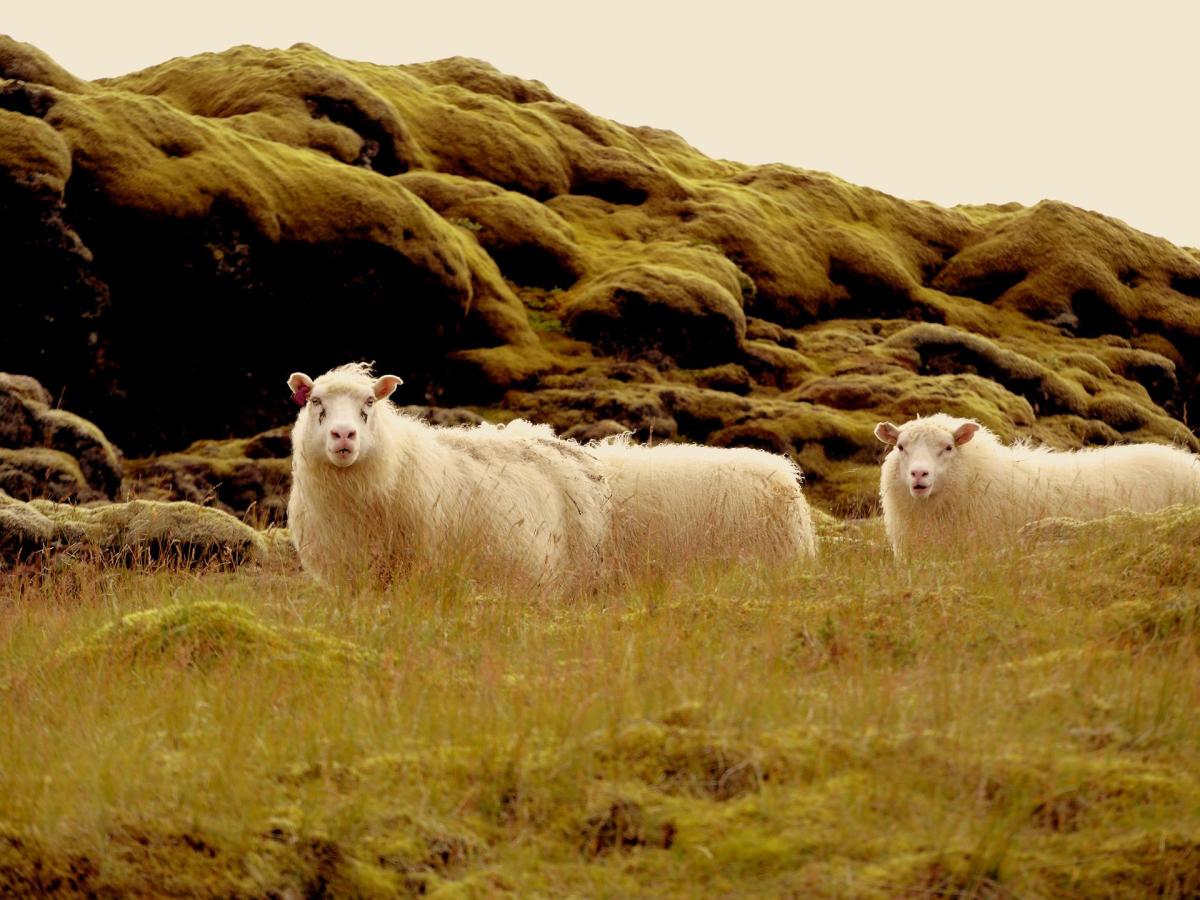









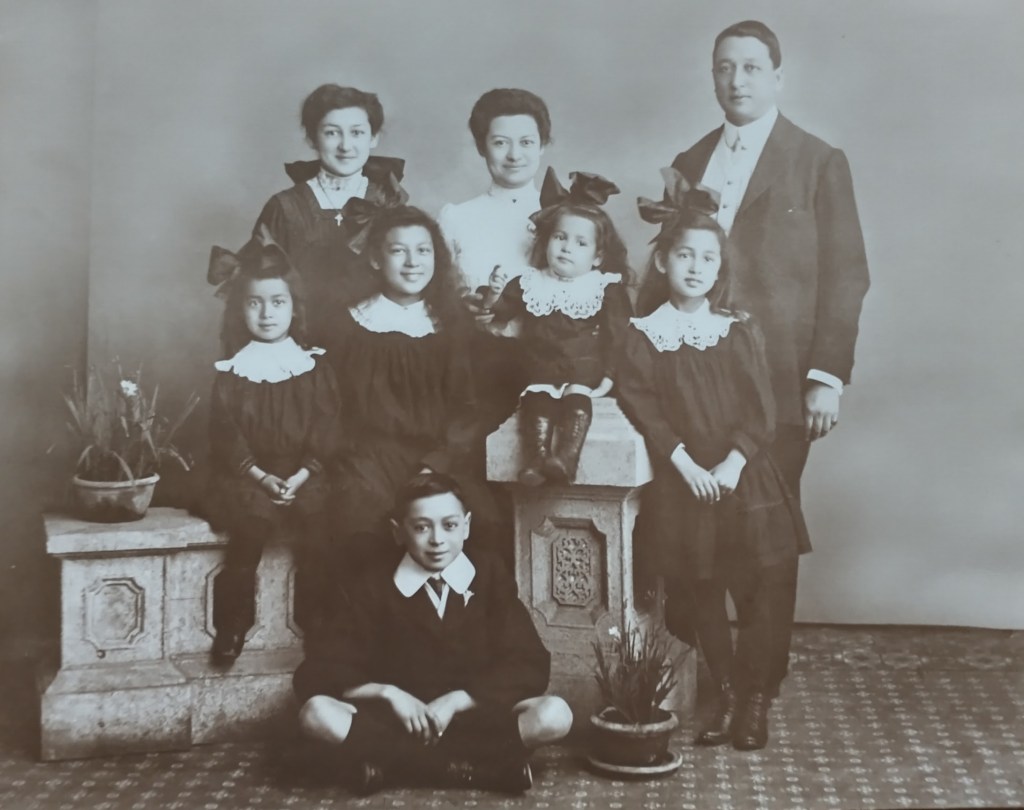
 From Earth to the Stars