
In this post, Donald McCarthy talks about the process of writing “Unspeakable Knowns”, in our [May/June issue, on sale now!], and how he determined the tone to take.
By Donald McCarthy
“Unspeakable Knowns” has a few origins; this is a tale where I pieced together various strands, some of which I originally envisioned as separate stories. The most important strand relates to the title. During the Iraq War, Donald Rumsfeld had a habit of discussing “known knowns” and “known unknowns,” along with the dreaded “unknown unknowns.”
Since all wars involve censorship, I thought there should be another phrase added: “unspeakable knowns.” This phrase would refer to the events that occur in war that we know happen but do not speak about. It could be about a president with a lack of a plan. It could be about a genocide. It could be a statement as simple as “I think our side is the wrong side.”
These are ideas and observations that often go unspoken out of fear during times of conflict. The phrase “unspeakable knowns,” and the story in general, can be “about” almost any war, although it is most influenced by the Iraq War, which I grew up during, Vietnam, and Gaza. The war in Iran had not yet begun when I wrote this tale, although it sure fits in well. Unspeakable knowns exist throughout history, sadly; so, too, do con men like the narrator of this story, someone for whom lying in favor of war is as natural as breathing.
The next strand of the story came from its tone: a satire.
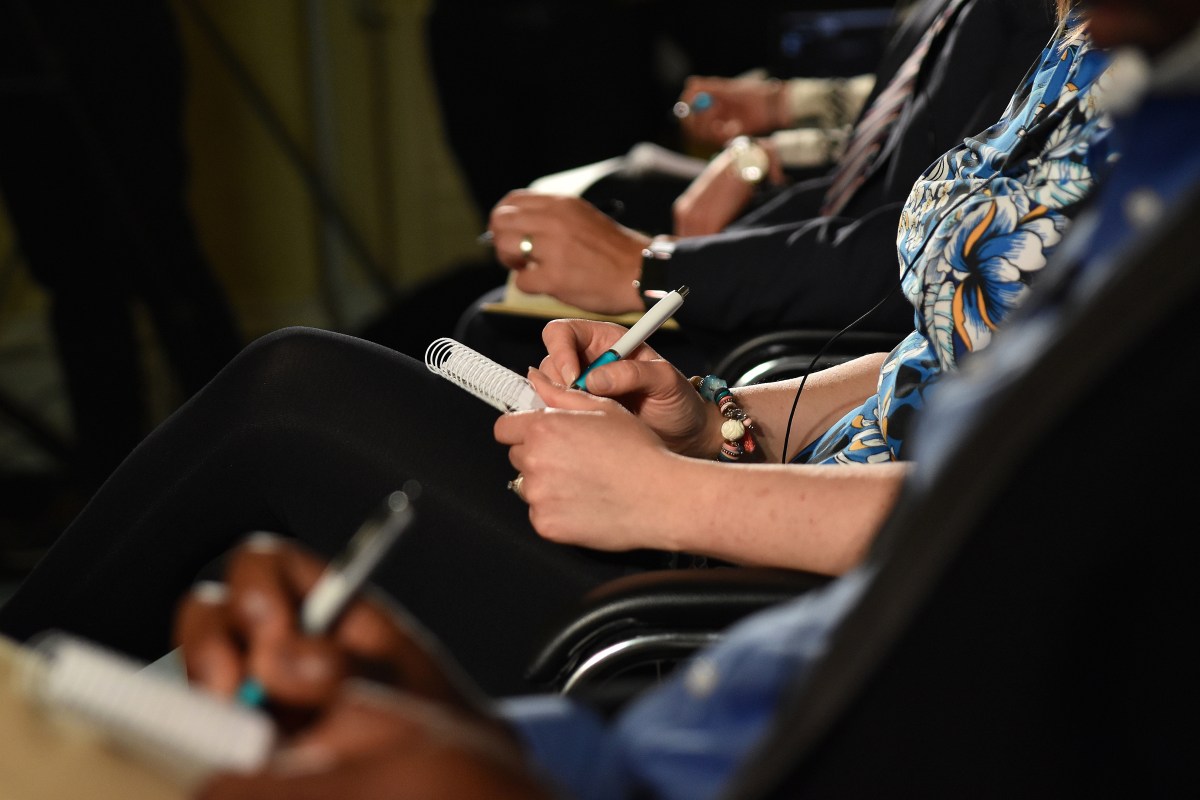
To make the point I wanted to make, I did not think a lecturing tone would work. A character telling you “it’s bad to lie to your people about war” while other characters nod along seems neither engaging nor illuminating. I needed tension and an edge; I needed to see the lies in action, to challenge them by diving into them. If I did that, perhaps I could better expose how truths are twisted and wars born.
Now, you could argue, probably accurately, that no single story can change the way humanity views war. But you know what? Hope springs eternal, so here I am anyway. I was therefore left with a decision on how to make the point I desired; two scenarios hit me as optimal. One would be to approach it as horror, a genre I’ve written a lot in. The other would be to approach it as satire, which is a genre I had long wanted to try out but so far hadn’t. Perhaps, then, this could be the opportunity.
How to find the right satirical angle would be the next conundrum. I could go bonkers, like The Onion does. But I settled on a slightly grimmer form of satire, one influenced by a 1970 Italian anti-fascist film called Investigation of a Citizen Above Suspicion. I first watched the movie during the pandemic and then one year used it in my International Short Stories class, wherein I always show a foreign film once during the semester (if you’re wondering, the other film I use some years is the excellent and still timely State of Siege).
Investigation of a Citizen Above Suspicion concerns a fascist police captain who murders his lover. He leaves plenty of clues that it was him, but because the state cannot punish a police captain, increasingly ridiculous excuses have to be made for clear signs of guilt. It is a funny and eerie film. If you haven’t seen the movie, give it a watch. I took it as inspiration while getting into the headspace of this story’s morally vacant narrator.
I needed tension and an edge; I needed to see the lies in action, to challenge them by diving into them.
Of course, the genre of the story is not just satire. It’s space opera, too. How did that strand come about? After all, I could have written a satire about Henry Kissinger or Donald Rumsfeld. Or I could have written one about the United States going to war with a fictional or unnamed country, such as occurred in the satirical film In the Loop.
Opting for science fiction, however, allowed me room to develop my own personal geopolitical crisis and allowed me to explore not just the United States’ war crimes but many other countries’, as well. The lies my narrator tells wouldn’t sound all that different from Joseph Goebbels, y’know?
Plus, my passion plays a part. I love political space opera, and I’m always itching to write some. The science fiction and fantasy I enjoy usually deals with power and politics. Whether it was watching Babylon 5 in middle school (I was a weird kid) or reading A Song of Ice and Fire and Foundation in high school or having The Word for World is Forest assigned in grad school (what a great class that one was!), political speculative fiction has always called to me.
So, with those various strands, I put together this story. I did not write the entire piece in order. I sometimes just wrote the back-and-forth dialogue between the narrator and the reporters, later cutting any that I didn’t find effective enough. There were even a few lines I found very funny that I had to cut simply because they didn’t push the narrative forwards or veered towards more general political satire as opposed to the targeted look at war propaganda I was going for; I guess that’s where the phrase “killing your darlings” comes from.
I wrote the horrific monologue about bombing hospitals before I knew who the narrator would deliver it to (later, I had to tweak it once I realized who’d be on the receiving end).
Then, I stitched the scenes together. I had a buddy read the result, and he told me which parts didn’t work and which areas made him start to lose interest. In terms of critiquing, there’s nothing better than having a writing friend you trust who tells you when they’re confused and, most importantly, bored. Someone has to tell you when you’re bloviating too much!
It turned out the beginning especially went on for too long. There were too many unnecessary political details in an area already bursting with exposition. So lots of cutting needed to be done.
Lastly, I read the piece a couple times more, and then I let it escape. I’m happy to report it found a home at Asimov’s. There’s no place cooler to have your space opera tale.
I hope you enjoy the story. Unfortunately, I suspect you’ll see the narrator again. No, not in another story of mine, not necessarily. You’ll see him on the television or on your phone. He’ll tell you all wars are terrible except for this current one. This one is necessary. There won’t be mistakes like in the past. This war will be an honor to fight, and your support, your unquestioning support for it, is necessary.
This time, the killing will be justified. Just take his word for it. And, no, he doesn’t have time to take questions.
End note: Some nonfiction books I read that inspired me in terms of the political content of this story were Kill Anything That Moves by Nick Turse, To Start a War by Robert Draper, and The Hell of Good Intentions by Stephen J. Walt.

