Michael Libling answers questions about his novelette, “Trial by Harry”, in our [May/June issue, on sale now!]. Read on to learn about the tragic catalyst for this story and about his career as a writer in multiple fields.
Asimov’s Editor: How did this story germinate? Was there a spark of inspiration, or did it come to you slowly?
Michael Libling: The answer you’re looking for is slowly. Very slowly. By my estimate, TRIAL BY HARRY was over twenty years in the making.
In retrospect, I suppose, the idea began with my mother. She had been diagnosed with Alzheimer’s disease and though she was well into her eighties, it in no way softened the blow. She had always been confident, witty, outgoing, and as sharp as anyone when it came to business. To see her reduced to what gradually amounted to a shell of her former self was, to say the least, painful for all who had known her.
Often, while sitting with her or taking her for walks, I tried to imagine what might be going on inside her head. I wondered if it was possible that two worlds were at play, the one my mother was now trapped in versus the world she’d left behind, the one we continued to live in without her. The last two years of her life were especially tough, made all the more inexplicable by these rare moments in which it seemed as if she’d returned to us—offering a fleeting glimpse of the person she had been.
Once, in the dining room, of the residence where she was living, she spit the seed of a lemon onto the floor during dinner, and a caregiver chided her. “You know you shouldn’t spit on the floor, Mollie.” To which my allegedly oblivious Mom quipped, “Where do you want me to spit, on the ceiling?”
For a good month or two leading up to her death, most of her time was spent in bed, unresponsive to anything or anyone around her. She didn’t recognize any of us. But then, less than a week before my mother would ultimately pass, the youngest of our three daughters came to visit after school. “Hi, Bubby,” she said, as she always did, “bubby” being a variation on the Yiddish for grandmother. My mother blinked awake for the first time in a long while, smiled at my daughter as if it was merely another day, and said, “Hi, Margie. How are you doing?”
Sadly, despite these instances and the flicker of hope that a miraculous turnaround might be underway, my mother’s awareness was gone as quickly as it had appeared. It was like she was dropping in on us every now and then, just to say hello, before returning to that unknown realm where she now spent the greater part of her time.
While there was little promise of a cure during my mother’s lifetime, recent research into senolytics, GLP-1 receptor agonists, and other therapies have offered hope, with some suggestion of even adding years to one’s life.
It was against this entire backdrop TRIAL BY HARRY took shape, with potential scenarios exploring various shades of light and dark, before the dark won out, yet again, and the cautionary tale before you emerged.
AE: Do you particularly relate to any of the characters in this story?
ML: Yes. Definitely. Harry’s children.
I see my sister, my wife, my daughters, my brother-in-law, and myself at my mother’s bedside, holding her hand, talking to her, consulting with doctors, chatting with the nurses and caregivers, protecting her interests in the same way she had always fought for ours. It was here, in the midst of all the sadness, I was struck by the extent to which small talk prevailed. My mother was dying, her kidneys were failing, and yet we continued to natter on about the weather, the news, movies, TV shows, restaurants…. I hated the fact it was all so business as usual, all so ordinary. Nothing could resist it, not even Death.
AE: Clearly, you have a strong personal connection to the story. Did this make it easier or more difficult to write?
ML: Neither, really. While the writing brought back many memories, good and bad, of those days with my mother, fiction is fiction, however personal its roots. My goal was, as always, to tell a good story—period. Had I written TRIAL BY HARRY years earlier, closer to the time of my mother’s passing, I suspect the story might not have been as dark in terms of character and plot. Back then, emotions were running in a far different direction.
While the writing brought back many memories, good and bad, of those days with my mother, fiction is fiction, however personal its roots. My goal was, as always, to tell a good story—period.
AE: How much or little do current events impact your writing?
ML: Current events—whether politics or conflict or science or culture or anything— inevitably slip into every story. Sometimes more, sometimes less. In the case of TRIAL BY HARRY, I took recent developments in Alzheimer’s research and extrapolated them to some future date. It’s an optimistic “if this goes on” approach, which, admittedly, is the only optimistic aspect of the story. Whether the current research ultimately amounts to anything, of course, will determine whether I was prophetic, misguided, or just plain twisted.
AE: How did you break into writing?
ML: I’d wanted to write since I was a kid, thanks to the encouragement of my older sister, Mara, a couple of great high school teachers, and, in university, the teacher/writers Clark Blaise and Mordecai Richler. I sold gaglines to cartoonists and concepts to greeting card companies. I wrote term papers at seven bucks a page. I had newspaper and magazine features published. I wrote and edited a Canadian stock market magazine. And I landed a job in advertising, rising from junior copywriter to creative director. (Yes, I accept full responsibility for writing “Ex-Lax. It can make your day overnight.”) Throughout these other writing pursuits, my fiction submissions gathered nothing but rejections. Hundreds! Often, the rejections would include personal, sometimes handwritten notes inviting me to submit more work, but in my mind a rejection was nothing but a rejection. In fact, I preferred form rejections over the personal ones that noted how “your story came closer than most.” Not every writer would agree, but I found editors’ simultaneous encouragement and rejection too damn frustrating. If my story came “closer than most,” why the heck didn’t you buy it!!?? What does coming close even mean? It was only after I landed an agent, the late Virginia Kidd, that my fiction began to sell. Fact is, within a month of her signing me, I made my first fiction sale. Amazingly, pretty much every story I’ve written since has found a pro market. I can also say that every sale is as much of a thrill as my first.
AE: How do you deal with writers’ block?
ML: I’ve talked about this several times in previous interviews and realize now my answer is never the same. Frankly, I struggle with writers’ block every single time I complete a project. Look, I know this will sound nuts, but I forget how I managed to pull off all previous stories. While I’ve read endless articles on how to overcome writers’ block, I’ve never found any method that works for me with any consistency. My only solution is to write, write, write ANYTHING—often with only the glimmer of a concept in mind. I put down sentences. I complete paragraphs. I fill pages. And I keep going until suddenly—and I have zero understanding as to why—the story takes over my life and I’m zipping along with an end in sight. Yeah, I just might be the most clueless working writer out there.
AE: You mention you worked in advertising. Did this or any other job you might have had affect your writing? If so, how?
ML: Advertising taught me focus, discipline, self-editing, and the importance of meeting deadlines. Advertising also taught me to roll with the punches, to never take rejection personally. Indeed, rejection was an everyday occurrence, where your best ideas—the most daring—usually ended up in the trash. Trust me, the most troublesome editor you’ve ever dealt with is a saint compared to your average client in the advertising world. I should also add that I, personally, have yet to encounter a troublesome editor. (Yeah, I’m covering my butt here, just in case.)
With a nod to your previous question, copywriters’ block never once reared its head, and I’m at loss to understand why. Kind of odd, really.
Now and then, I’ve incorporated my advertising days into stories, along with other jobs I’ve held. As a kid, I worked in a marina, which factored into my novel HOLLYWOOD NORTH. I also spent a lot of time in my parents’ small diner in Trenton, Ontario, where I scooped ice cream among other things, which played a big part in my most recent novel, THE SERIAL KILLER’S SON TAKES A WIFE. Yeah, ice cream and serial killing. Hmm…notice how subtly I managed to plug my novels?
AE: What are you reading right now?
ML: I’ve been reading a lot of nonfiction in recent months. Just finished Ben Macintyre’s ROGUE HEROES: THE HISTORY OF THE SAS, the book on which the terrific BBC series ROGUE HEROES is based. I was surprised by how faithful the teleplay is to the actual story. Week before that it was HITCHCOCK’S BLONDES by Laurence Leamer. As of today, I’ve started MOONWALKING WITH EINSTEIN, Johsua Foer’s foray into The Art & Science of Remembering Everything. I have long had the habit of gathering odd facts and bits of information. My library runs the gamut from literary and genre fiction to books on history, geography, science, pop culture, and the weirdly offbeat—including CLUCK!: THE TRUE STORY OF CHICKENS IN THE CINEMA by Jon Stephen Fink to name but one.
AE: Interesting. Has this habit paid off in your writing or in other ways?
ML: All the time! For instance, pop culture trivia is peppered throughout HOLLYWOOD NORTH. As well, I was once on a team that won the CBC TV Trivia championship for Quebec, eventually placing second in the national finals, losing only in the closing seconds after leading throughout. Grrr…that loss still rankles. I did, however, manage to parlay my knowledge into a twenty-year gig in radio, creating, writing, and co-hosting The Trivia Show on CJAD in Montreal. Although I left in December of 1999, the show is still running on Sunday mornings and remains a fun listen. It’s nice to know that something I created from scratch continues to thrive after forty-four years on the air.
AE: How can our readers follow you and your writing?
ML: My website and occasional blog can be found at http://www.michaellibling.com. I can also be contacted by email through the site. Elsewhere, you’ll find me on…
Twitter, Bluesky, or Mastodon: @michaellibling
Instagram: michaelliblingwriter
Facebook, well, just search for me: Michael Libling
Please follow or “friend” me. As I’ve said in other interviews, if you’ve managed to tolerate my babbling to this point, it should be clear that I can use all the friends I can get, real, imaginary, and otherworldly.
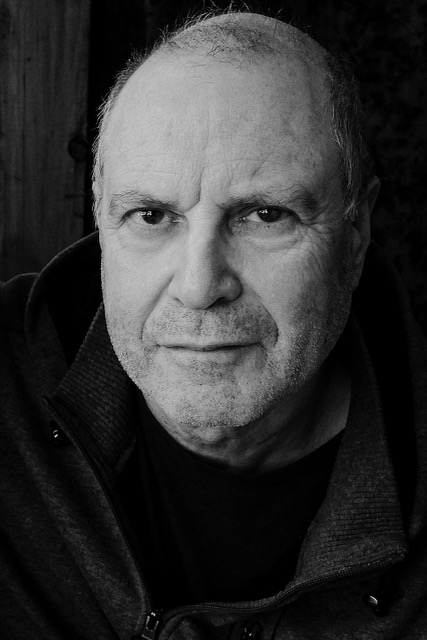
Michael Libling is a World Fantasy Award finalist whose short fiction has appeared in F&SF, Realms of Fantasy, Amazing Stories, and several anthologies, including the Year’s Best variety. His fantasy noir, Hollywood North: A Novel in Six Reels (ChiZine/Open Road Media), was published in 2019 and his horror/thriller novel, The Serial Killer’s Son Takes a Wife (WordFire Press), in 2023. You can find him online at michaellibling.com and pretty much every social media outlet, Instagram, Facebook, Mastodon, and Blue Sky among them.




 From Earth to the Stars