The Story Behind “Barbarians”

by Rich Larson

Rich Larson’s novella, Barbarians, appears in our [May/June issue, on sale now!] In this blog post, Larson discusses how a vivid dream, as well as the animated film Treasure Planet, led to this latest work.

As is the case for about a third of my work, this novella was inspired by a vivid dream. I woke up one morning in Ottawa recalling a dark cavern, an ancient technology activated by blood, and a single disparaging remark: barbarians. Mechanized human sacrifice has haunted my subconscious for some time; in this case I decided a hidden treasure had been genecoded to a specific family line and gruesome death was the required toll.

I wrote Barbarians fairly slowly, starting it pre-pandemic and finishing it off on August 1 2022. Much of it was written concurrently with my novel Ymirโ€“thus the decapitation motif, which also crept into my Reactor story โ€œHeadhunting.โ€ Itโ€™s my first novella, so I didnโ€™t realize I was heading for that length until I hit whatโ€™s now the midway point and saw much yet to be done.

Though the initial spark came from a dream, Barbarians drew from many other sources during the writing process. Eric Kowalickโ€™s creature art inspired the ecosystem of the decaying deepswimmerโ€“both the deadly razormug and stately shell-pelicanโ€“while the floaties came from a Wiki on Half-Life enemies that never made it into the actual game.

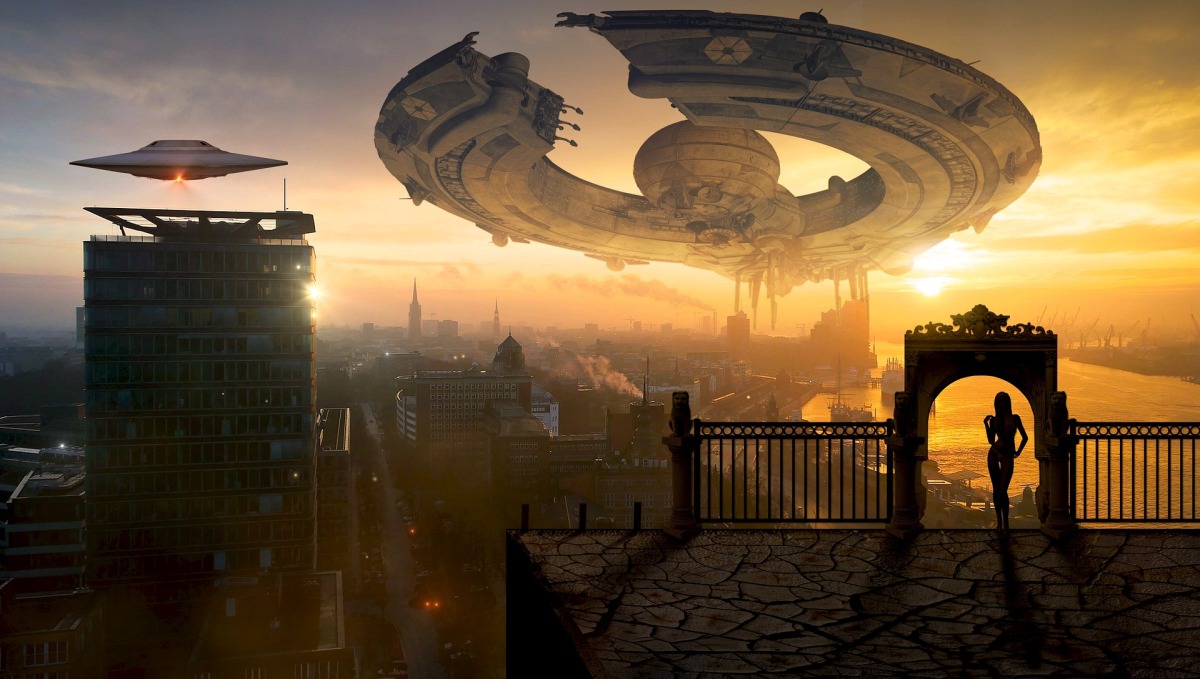
The general set-up and vibes owe much to Treasure Planet, one of the best animated movies of all time. Once, in a small town in Spain, I faked my way through a book club discussion on Treasure Island solely with knowledge of Treasure Planet. If I ever fail to tear up during that scene with the Trent Reznor song, something is very wrong.

The Indefinite Cypher was inspired by that movieโ€™s globular map, though the name is a reference to my never-published novel Cypherโ€“which, thanks to the pitiless vagaries of online retail algorithms, exists in a sort of horrible limbo alongside my actually-published novel Ymir. If you like Barbarians, you might like Ymir. Iโ€™m still trying to sell people on Ymir, even though it sold poorly and won no awards, because I still believe itโ€™s a very good, difficult book.


Once, in a small town in Spain, I faked my way through a book club discussion on Treasure Island solely with knowledge of Treasure Planet. If I ever fail to tear up during that scene with the Trent Reznor song, something is very wrong.


But, back to Barbarians. Since this was my first novella, I wasnโ€™t immediately sure where to send itโ€“which is maybe why it ended up getting published in French before English. I had mentioned the project in passing to my friend and translator Pierre-Paul Durastanti, and it piqued his interest enough that he started working on the French version soon after I sent him my first draft.

He took it to Le Bรฉlial, the Paris-based publisher who did La Fabrique des lendemains (Tomorrow Factory) and Ymir (Ymir). They bought it for their novella line, and it came out in Franceโ€“plus Quรฉbec, where I currently liveโ€“as Barbares. I completely failed to mention all this to Asimovโ€™s when I subbed them the English version, giving Sheila Williams an unnecessary shock when she saw the novella sheโ€™d so recently accepted already on shelves, albeit in another language. Mea culpa.

I was forgiven, the contract was amended to specify language rights, and here we are: standing on the threshold of a rip-roaring intergalactic treasure hunt that some French people found โ€œpercutante et trรจs richeโ€ and others called โ€œpas bien original ni recherchรฉ,โ€ now available for your reading pleasure in one of the very best magazines to ever publish science fiction.

I hope itโ€™s a thrill.


Rich Larson was born in Galmi, Niger, has lived in Spain and Czech Republic, and is currently based in Montreal, Canada. His newest novel Ymir, which shares DNA with Barbarians and was nominated for the Philip K. Dick Award, is now available in print, ebook, and audio. Both works blend far-future invention, rapid-fire action, and a healthy dollop of dark humor.

On Finding Time to Write as a Mother

by Bunny McFadden

Bunny McFadden makes her Asimov’s debut in our [March/April issue, on sale now!] with her short story “Peck.” Here she discusses some of the unique challenges of being both a mother and a writer

I oscillate between creation and consumption. Iโ€™ll go through phases where I am insatiably hungry for books, movies, television shows; I devour science fiction like a true bookworm and I binge limited series with the best of โ€˜em, cozy in my floral flannel sheets with my chin resting on my pillow.

And then Iโ€™ll enter a period where I create and discard projects like Iโ€™m shaking a bag of seeds in a freshly-tilled field. I form and subsequently abandon novels with intricate plots that lay about my Google Drive like half-formed chrysalides. I pull out all my sewing patterns and match them to old thrifted curtains and kidsโ€™ bedsheets and fun yardage. I tab every tempting recipe in an obscure cookbook and fill the cupboard with the ingredients required to become an entirely different person, one who is familiar with cassava flour and anise.

As a mother, I have discovered myself in these twin cycles. During pregnancy, the venn diagram of creation and consumption expands, each swallowing the other to form a big circle. You eat constantly but your blood feels drained of nutrients. Your hair grows faster until it chokes you. Then when the baby is born, you must sustain it. Create and consume, feed and drink in the smells of the thing. This is much like writing. I pull words from the thesaurus or word association network and drop them like nuts into a pouch. I drift through passages of reference books, sometimes annotating four or five at a time simultaneously. My mind feels loose and distant but also omnipresent, like a mother who isnโ€™t paying any attention but whose presence is essential for play.

A mother is one of the few professionals who is reminded of the brevity of time constantly. During her shift, sheโ€™s likely to hear the public weigh in at least once about how dedicated she must be to creation, if not verbally then through subconscious reinforcement. Thereโ€™s oblique messaging like the lack of paid parental leave that drives the plot of a familiar sitcom; even during the commercial break a mother sees herself pantomimed as a busy chef / business lady saved by the grace of Prego or Ragu. Thus, finding time to write becomes a game.


I drift through passages of reference books, sometimes annotating four or five at a time simultaneously. My mind feels loose and distant but also omnipresent, like a mother who isnโ€™t paying any attention but whose presence is essential for play.


I wish I could say that finding time to write as a mother is as easy as asking your community for support, capitalizing on naps and early bedtimes, taking turns supervising playgroups. In reality, the tips Iโ€™ve gained would grant me gasps from even the chillest California mom-who-has-it-all. You know how you give a dog a thinking toy or puzzle covered in peanut butter and they wear themselves out trying to lick it out of every corner? Turns out that works on kids, too. And coffee is another thing that everyone jokes about, but I donโ€™t think I can get out of bed without it, let alone write. One tip you might find useful if youโ€™re trying to balance it all: Destruction is the most fun a kid can have. Give them some cardboard recycling to break down, or hand them some old paperwork and some crayons. If you have a stuffed animal who is falling apart at the seams, even better.

Writing itself ebbs and flows between inking and blotting out, cooking something up and devouring it. Remember that if youโ€™re in despair over the shock of having tiny humans rely on you, wondering if youโ€™ll ever have uninterrupted writing time again, these things come and go. One day your kids will be old enough to swordfight unattended, eat cherry tomatoes and grapes with wild abandon, and listen to your rewrites. 


Dr. Bunny McFadden (she/they) <DocBunny.com, Instagram: @bunny.the.doc> is a Chicana mother who has gained recognition for her unique style of storytelling. Her work has been praised for its gritty imagery, spirited characters, and thought-provoking themes. In addition to her writing, Bunny is also a passionate advocate for justice and education. The authorโ€™s writing often tinkers with the complexities of relationships and the joy of life. Their first story for Asimovโ€™s takes a look at both.

Alternate Histories, Personal and Otherwise

by Ray Nayler

Ray Nayler discusses a childhood event that helped shape the rest of his life, and inspired his latest story, “Charon’s Final Passenger,” from our [March/April issue, on sale now!]

I was kidnapped when I was three years old.

It was not by a stranger (an exceedingly rare form of kidnapping, to which we devote a lot of cultural handwringing and television shows). Instead, it was the most common kind of child abduction: I was kidnapped by my father.

My mother had left my father twiceโ€”once in Quebec, and again in California, after he came begging for her to take her back. He was able to convince her for a while: he had a way of convincing peopleโ€”a charm that was a combination of his accent, his artistic pretensions, his frenetic energy, and his fragile good looks.

He was also, unnoticed by the people around him, displaying the first signs of the severe schizophrenia which, in late 2022, claimed his life. But this was not 2022: it was 1979. He was young (my god, they were so young, neither one of them yet 25). Any odd mannerisms he had could be attributed to his rural origins in Quebecโ€™s north, where he was the youngest son in a family of fourteen, or his overwhelmingly large ego: he was an Artist, capital A, and expected everyone around him to treat him like one.

My mother left him the second time when, coming home from work, she found the apartment empty. She finally tracked us down at The Starry Plough, the local bar, where he was passing me around from one person to another while he drank away our money.

Sheโ€™d had enough. She kicked him out. As expected, he quickly took up with another woman, the daughter of the man who owned the gas station where he sometimes worked. The separation was amiable enough, and they worked out a custody arrangement while the divorce went through.

But after one of my visitations with him, my mother called his girlfriend to tell her she was headed over to pick me up. Was my father there?

โ€œDidnโ€™t you know?โ€ the woman said. โ€œWe broke up. I kicked him out. Heโ€™s been gone for over a week.โ€

My mother understood immediately what had happened. My father had done what he had threatened to do once during an argument. It was a statement she had thought was an empty threat, made in the heat of the moment. Now, too late, she understood it had been a real threat, and one he had followed through on. He had taken me away. And that meant back to Quebecโ€”over 3,000 miles distant, and across an international border.

My mother told me, โ€œI was paralyzed. I could hear my own blood in my ears. It was the most terrifying thing that ever happened to me in my life.โ€

He had left with me the day he picked me up. He took me to Tilden Park, near our home, where we rode the miniature railway. Then, carrying only a backpack, he hitchhiked with me in tow all the way to Vancouver. He fed me out of vending machines and at gas station cafรฉs. In Vancouver he took a train to Montreal, and then a bus north to the village where he was born, on the shore of Lac St. Jean.


Historyโ€”our real historyโ€”is just one of many possible paths, as contingent on the seemingly incidental and the decisions of a moment as the fatal route of Franz Ferdianandโ€™s motorcade, or the bomb that might have killed Hitler but did not, or so many other moments in which the world is changedโ€”or not changedโ€”and the consequence becomes our reality.


By the time my mother got to Canada, he was moving from place to place, leaving me in the care of various relatives. She went to a lawyer to see what could be done to get me back. The lawyer was bluntโ€”there wasnโ€™t much. There was no finalized divorce. Quebec was unlikely to take US court decisions about custody or anything else very seriously. To them, I would be a French-speaking kid living with my legal father, and my English-speaking mother would be the one trying to take me away. In the middle of Quebecโ€™s cultural awakening and separatist movement, her chances of getting me back were not good. I might spend years in protective custody while the courts came to a decision.

So my mother made a decision. She would kidnap me back.

Contacting one of my fatherโ€™s brothers, she convinced him to help her. When my father left me briefly in his brotherโ€™s care, he drove me to my mother.

โ€œWere you scared?โ€ My mother asked me when she saw me.

โ€œNah,โ€ I said. โ€œI knew you would come.โ€

She took me on a bus to Montreal, and then to the airport.

As we crossed through customs, it almost fell apart. My mother had accidentally packed my passport and documents into our checked luggage. The French-Canadian authorities were suspicious. โ€œHow do we know he is your son? How do we know you arenโ€™t kidnapping him?โ€ One of them said, probably half-joking, but hitting the mark.

And then a minor miracle appeared. The US security noticed that I was wearing a set of pearl-handled toy revolvers in a belt and holsters. My prize possession, they had accompanied me throughout this entire odyssey. They insisted that I would not be able to board the plane with them, and they would need to confiscate them. I began, apparently for the first time during all of this, to cry.

This enraged the French-Canadians, who got into a furious argument with the US authorities over their idiotic rule, and their bullying of a little boy. By the time they had extracted a promise that the toy guns would be mailed to me, everyone had forgotten about my lack of documents. We boarded the plane for San Francisco.

A few weeks later the toy guns arrived, as promised.

But I am haunted by a ghost. What would have happened if my mother had not managed to get me back? What if she had not made the bold decision to kidnap me? What if she had not gotten away with it? What if I had languished instead in protective custody, passed around foster homes in a broken system? What if the French-Canadian courts had not decided in her favor in the end? After all, it was the worst possible time to try to convince authorities in Quebec of the rights an English-speaking mother from California should have over a French-Canadian child she intended to take away from his โ€œheritage.โ€

The ghost haunting me is this alternate selfโ€”the one who, instead of growing up in the San Francisco Bay Area in California, grew up in northern Quebec, entangled with a father in mental distress and a large, complex family struggling with all the intricate problems of rural poverty.

That person would have been nothing at all like the person I am today: so much of what I now am relies on my motherโ€™s decision. Her decision is a crossroads, and the other way leads to a life very different from the one I am now leading. And, I would argue, to a person who is fundamentally different from the person I am now. I call that person a ghost because I sometimes almost see himโ€”this person who might have been, but was not.

This is the root of my fascination with alternate historiesโ€”the worlds that might have been if a different path was opened up by a decision, or by luck, or by happenstance. Historyโ€”our real historyโ€”is just one of many possible paths, as contingent on the seemingly incidental and the decisions of a moment as the fatal route of Franz Ferdianandโ€™s motorcade, or the bomb that might have killed Hitler but did not, or so many other moments in which the world is changedโ€”or not changedโ€”and the consequence becomes our reality.

โ€œCharonโ€™s Final Passenger,โ€ in this issue of Asimovโ€™s, is an exploration of this. A sequel to โ€œThe Disintegration Loopsโ€ and โ€œA Rocket for Dimitrios,โ€ the story takes place in the same timeline as my stories โ€œFatherโ€ and โ€œBerb by Berb,โ€ all of which were published in Asimovโ€™s (and all of which are available at raynayler.net). โ€œCharonโ€™s Final Passengerโ€ continues to trace a path from an alternate 1938 in which a flying saucer crashes in the New Mexico desert, and the United States uses reverse-engineered technology to defeat not only the Nazis and the imperialist Japan, but also the Soviet Union and the communist forces in China, becoming a unilateral global superpower with no real checks against its will. What happens to a country no-one can resist? What happens to the world, with such a country in it?

Far from being frivolous, I think alternate histories help us, just like science fiction stories set in the future, to better examine our own society and its possibilities. Like those stories, alternate histories predicate a world based upon an alteration. In so doing, they are able to explore the consequences of โ€œwhat ifโ€ in an engaging wayโ€”but they also allow us to turn the lens on the world we are reading from and to explore the question of โ€œwhy this?โ€

What my own alternate history teaches me is humility. I am aware of how much luck and happenstance has been involved in allowing me to be where I am today. When I think of the series of seemingly random events that brought me to where I am, that allowed me the life I have, I know I cannot take much credit for what I have been given.

But not all of those events were random: some were the result of determination and personal will. I feel a great sense of gratitude to this extraordinary woman, my mother in 1979. Twenty-four years old, alone, extraordinarily braveโ€”she saved me. I owe her the shape of this life, and itโ€™s a debt I cannot ever fully pay.

When you think about it, all of us are living out our personal alternate histories, inhabiting one of the million branches of โ€œwhat if?โ€ I think it is also good for us to take a look at some of the turning points in our lives and think, โ€œwhy this?โ€

And, where deserved, give thanks.


Ray Nayler is the author of the critically acclaimed, Locus-Award-winning novel The Mountain in the Sea, published in the U.S. by MCDxFSG and in the UK by Weidenfeld & Nicolson. It was a best book of the year at Amazon and Slate, and a finalist for the Nebula Award and for the LA Times Book Awardsโ€™ Ray Bradbury Award for Science Fiction, Fantasy, and Speculative Fiction. His story โ€œMuallimโ€ (Asimovโ€™s November/December 2021) won the Asimovโ€™s Readersโ€™ Award and his novella The Tusks of Extinction was published in January by Tordotcom. A Russian speaker, Ray lived and worked outside the United States in the Foreign Service and the Peace Corps for nearly twenty years. Ray is currently a diplomatic fellow and visiting scholar at the George Washington Universityโ€™s Institute for International Science and Technology Policy.
Sere Glagolit and the World of Tempest

by Alexander Jablokov

Learn about the worldbuilding process behind Alexander Jablokov’s latest story, “How Sere Kept Herself Together,” now available in our [March/April issue, on sale now!]

โ€œHow Sere Kept Herself Togetherโ€ is the third of my stories about Sere Glagolit, a young woman who is forced to become a kind of detective to make ends meet after her ex-boyfriend takes off with the assets of their business.

That their business involved reselling discarded body parts molted centuries before by an alien species called the Bik tells you something about the city, Tempest, that she has grown up in. And that she uses the knowledge she gained from that earlier business to solve a case (โ€œHow Sere Looked for a Pair of Bootsโ€) involving her cousinโ€™s missing boyfriend shows sheโ€™s finally found the right career.

Tempest, City of Storms, started with the idea of intense, localized weather within a large urban area. I was inspired by a couple of posts in the great BLDGBLG (https://bldgblog.com/), by Geoff Manaugh, particularly one about lightning, which was the key weather event in Sereโ€™s first case, โ€œHow Sere Picked Up Her Laundryโ€. And the story really is about laundry, though not strictly her own.

Lots of other ideas lurk at BLDGBLG, though Manaugh doesnโ€™t post anywhere near as often as he once did. Things other than giving me story ideas seem to have occupied more of his time. Some people are just selfish that way.

Tempest, a vast city on an unnamed planet, contains a wide range of neighborhoods, each with its microclimate. And each of these neighborhoods tends to be occupied by intelligent species who are most comfortable there.

Tempest is a kind of strange attractor for the various intelligent species of the galaxy. Over the centuries a wide variety of fugitives, vagabonds, and exiles have landed and found themselves a place there. Sere grew up among a variety of these nations, and is familiar with a lot of their behaviors, needs, and quirks. Since her cases invariably require informative and sometimes fraught interactions with other nations, her past experience stands her in good stead.

Sere herself is an Omโ€”human, if you must. She has basic ambitions, such as getting out of the room at the back of her auntโ€™s house and into her own place, meeting people, and succeeding at this new, somewhat accidental career. Sheโ€™s pretty fun to hang out with. As a result of her background, which helps her solve her cases, she runs into a wide variety of Tempestโ€™s nations.


Tempest is a kind of strange attractor for the various intelligent species of the galaxy. Over the centuries a wide variety of fugitives, vagabonds, and exiles have landed and found themselves a place there.


For example, in this new story Sere crosses paths with a few Darkwings because of an unfortunate habit they have. Those whoโ€™ve been following Sereโ€™s career know sheโ€™s met a Darkwing before, in hot, dusty Amtoum, making boots. Despite the fact that Darkwings or their immediate ancestors evolved to fly, Tempest Darkwings either canโ€™t or stubbornly wonโ€™t, and despite the fact they are about as sturdy as a paper-and-balsawood kite, appear everywhere in Tempest. Their wings, on the rare occasions that they extend them, are beautiful, and much admired, though as beauty often is, can be a cause of trouble.

And Sere, more significantly, met a Darkwing when she was a girl, and that relationship disrupted that Darkwingโ€™s life, with serious consequences that will only appear in a future story, not this one. So just keep that quiet.

Sere also deals with an Iffrin, a parasite seller, a common profession among this easily infected nation, who have turned a physical weakness into a commercial strength. The last one Sere met was growing a crop of a kind of gill fluke that an aquatic nation put on their own gills in memory of past infestations, then eat in a kind of gustatory revenge. Iffrins are successful citizens of Tempest, and honest in their dealings. Just be careful what you end up buying from them. You may never get rid of it.

I wonโ€™t tell you much about one key nation that appears in this story, because their main skill is that you never quite know if youโ€™ve actually encountered them.

Well, thatโ€™s enough of that. The Darkwing and the Iffrin had a background in other stories that I thought might be interesting if you havenโ€™t read those stories, but this one is new here, and somehow crept in without my noticing it.

Sere and I are together for the long haul, and Iโ€™m pleased this case of hers has found a home at Asimovโ€™s.


Alexander Jablokov is pleased to have finally gotten back to the cases of Sere Glagolit, and is currently working on another one. Her casebook is, in fact, quite thick. He is also revising his latest novel, Holdfast, and hopes that doing so wonโ€™t turn into a hobby like making birdhouses for his old age.

How I Started Writing Crazy Things Again

by Ian Baaske

Follow Ian Baaske’s writing career from its earliest beginnings in this deeply personal essay. Also, don’t forget to read Baaske’s latest story, “The Man in the Moon Is a Lady,” in our [March/April issue, on sale now!]

When I was a kid, I wrote whatever I wanted.

In my elementary school, we had a program called “Young Authors,” where we got to write and illustrate our own books. The teachers would help us apply professional(ish) bindings and at the end we’d have our own real book that we wrote.

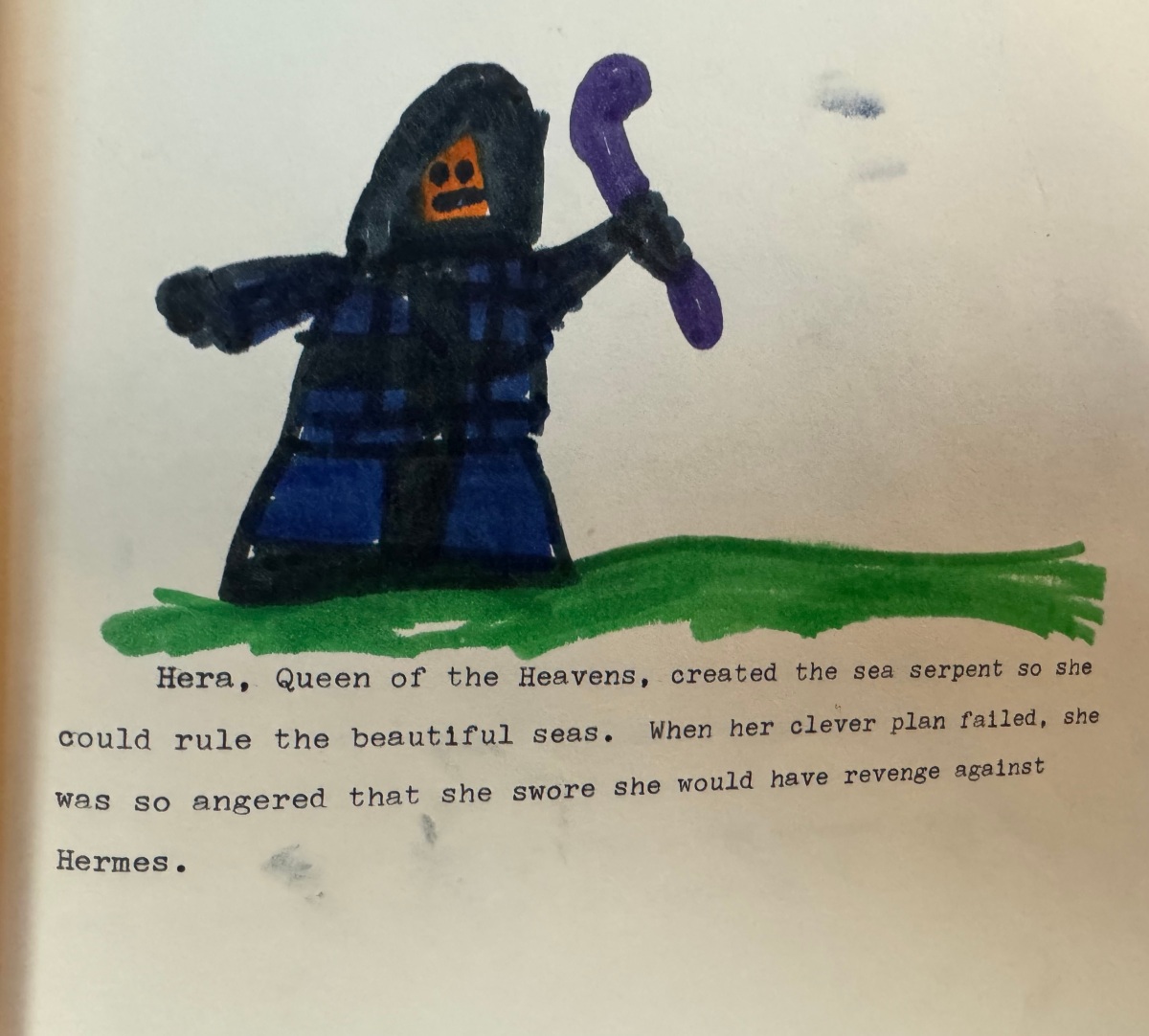
My submission in second grade was called “The Revenge of Hera,” and I still have it. I was way into Greek mythology then and I liked the idea of “revenge” because the title of the new Star Wars movie had been promoted as Revenge of the Jedi.

In the story, the goddess Hera tries to kill Poseidon and take control of the “beautiful seas.” When Hermes foils her plot, she takes revenge on him by sending him through time to World War III. Zeus then takes revenge on her by turning her into a green serpent-like monster called The Amanta.

I don’t remember much about writing it. But I do have a vague recollection of thinking as I went: This is cool. And I remember it being fun. And I remember it feeling free. Like anything could happen in this story.

My fellow students didn’t care for it very much, and, despite my silver-haired teacher Mrs. McKasson putting it up for consideration for the various Young Author awards, it didn’t win anything.

That didn’t bother me. In fact, I think if someone had complained that there was something unrealistic in the story, I wouldn’t have cared in the slightest. If someone had told me there was something that didn’t make sense, I’d have just shrugged. Who cares if it doesn’t make sense? I think I would have thought.

The following year I wrote a comedy called “Triple X.” (Triple X was the name of a planet. Iโ€™m sure I had no concept of any other meaning.) Reading it now, I’d say the plot defies any real summary. A pair of people meet and fall through an open manhole, only to fall through a second manhole in the sewer from which they end up in a flying saucer. From there it’s a series of introducing more and more characters who say things like, โ€œThey call me Alec, because Iโ€™m a smart Alec,โ€ until mercifully it ends.

My class, which was a particularly nasty one, hated it. As did my teacher, who made no attempt to pretend not to hate it.

Looking back now I can see a clear difference between the two stories. The second was desperately trying to please while the first hadn’t any interest at all in how it was received. Put another way, the first was written for myself. The second was written hoping people who already didn’t like me would somehow like me. The first was always going to succeed, and the second wouldnโ€™t ever.

The next few years I wrote fantasy books that were based largely on Dungeons and Dragons and The Lord of the Rings. Glorified fan fiction, really. All the rules and boundaries were already established and I didn’t push them at all. Everything existed safely in already created worlds. An orc was an orc. A sword was a swordโ€”unless it was magical, then it was magical in the exact way swords are usually magical. As I got older, I tried creating my own worlds but they were so derivative as to be funny in retrospect. Instead of a ring, for example, it was a necklace and, instead of going east, the party headed south.


I was way into Greek mythology then and I liked the idea of “revenge” because the title of the new Star Wars movie had been promoted as Revenge of the Jedi.


As an adult, I stuck to writing in real worlds for a long time. I sometimes wrapped them in a neo-gothic cloak of nightmares and murders, but it was still the real world. Other times, I wrote and still write purely realistic fiction. I like it. I like reading it. Itโ€™s not a bad thing.

I felt like I would never have the time and vision to fully create a new world. I didn’t understand then that you donโ€™t always have to. In fact, the parts of the world that are off the edges and just out of sight are some of the most interesting. Two works really drove this home for me.

The first was seeing 2001: A Space Odyssey for the first time. It was at the Music Box in Chicago. I remember this feeling of awe lasting throughout the viewing. It was the only movie I could remember that was about the sensation of wondering itselfโ€”instead of rushing to an explanation. I’ve since read a decent amount about what some of the mysterious aspects represent but to me at first sight I felt like there was no resolution at all. The final image of the Star Child deepened the mystery, it didn’t end it.

Similarly, Edgar Allan Poe’s novel, The Narrative of Arthur Gordon Pym of Nantucket, moves structurally in odd steps. (Spoilers here but you have had nearly 200 years to read it.)

The plot is a long strange sea adventure aboard several different ships, encompassing blood and mutiny and claustrophobia and shipwrecks and a tropical island south of the Cape of Good Hope, which was a theory at the time. There are some questionable depictions of race throughout, but especially on that island, which Mat Johnson explores brilliantly in his own book called Pym.

The novel comes to an abrupt and mystifying end when the narrator Pym and a couple others escape from the natives on the island and sail off, only to enter a thick fog. The fog suddenly opens and the sea turns milky white and a bunch of white birds fly from the fog and they approach a huge, shrouded human figure. Then . . . the novel ends. Thereโ€™s a throwaway post-script, ostensibly from the editors, about Pym dying and the rest of his manuscript being lost. It reminds me of Poochie’s death in The Simpsons.

I had the same reaction to Poeโ€™s ending as I did to the Star Child in 2001: this sense of awe and mystery. What on earth is this thing? Is it God? Is it something else? What does it mean in relation to everything else that happened? I found the utter lack of explanation more intriguing not less. A lot of people on the Internet (and probably everywhere else) say something to the effect of “Well, Poe didn’t know how to end it.” This may be true, who knows? But if that was the problem, a less enigmatic final image would have called a lot less attention to the problem.

Again I thought of this as proof thatโ€”at least as far as my taste goesโ€”a world doesn’t have to be fully drawn out with everything explained. World building doesn’t have to mean building everything. It can mean building to the edges and then bleeding off out of sight and it can be really cool to think about whatโ€™s just out of view.

I’d seen the musical Mame a long time ago, and, at the time, there was one moment that really stood out to me: Mame’s best friend Vera (played by Bea Arthur on Broadway) describing a show within the show. She calls it “this terribly modern operetta about a lady astronomer who makes a universe-shaking discovery.” (When you Google it, most lyric sites get this line wrong with the same grammatical error!)

There was something about this phrasing. The sentence says so many things in a short number of words. This was what I wanted to be writing, I thought: the mix of the futuristic and the historical (Mame is set partly in the 1930’s). But I didn’t know how. I remember sitting in the dark theater, thinking: What? What could it be? What would be this universe-shaking discovery?

From there, Vera sings “The Man in the Moon,โ€ which explains that her discovery is that the man in the Moon is actually a lady. Itโ€™s a good song, and I like it. It’s got some cool imagery and clever wordplay and a soothing cosmic vibe. But it doesn’t really go anywhere. It answers its own question, and it folds the sense of wonder in on itself in the same way that a punchline to a joke ends the joke. Nobody says “Well, what did the 12-inch pianist say to that?”

Over the years I sometimes thought about how I’d like to write this terribly modern operetta. I hadn’t a clue how to do it. I knew something about music and composition but certainly didn’t know how to write the full score to an operetta. Even if I did, that wasn’t exactly what I wanted to create anyway. It wasn’t just the operetta. It was the operetta and the context around the operetta. It couldn’t be “terribly modern” within itself. I’d have to somehow create both the show and the viewing of the show.

I decided to try it. I only had to paint the edges of the world anyway, like in the works I admired. I could do that with the music. I could do that with the audience. I could do that with the moon and its populace. It’s always been true for me when I write that if I can just figure out the direction to start in, the rest reveals itself as I go.

I don’t know where it all comes from. I really don’t. It’s hard to think of these fictional worlds we make up as fictional worlds we make up. Because it feels so much more like discovery than invention.


Ian Baaske has appeared in Bellevue Literary Review, Baltimore Review, and Pacifica Literary Review. One of his screenplays was a semifinalist in the 2022 Austin Film Festival. Ian likes to write at night when heโ€™s done with everything else he planned to do that day and the rest of the household is asleep and itโ€™s very quiet. Read more of his work at tantabus.org

The Pros and Cons of Nostalgia

by Peter Wood

Peter Wood discusses the role of nostalgia in his fiction as well as that of others. Be sure to read Peter’s latest story, “Une Time Machine, S’il Vous Plait,” in our [March/April issue, on sale now!]

Margaret Atwood  and I both grew up in large Canadian cities and our fathers ran summer camps in rural Ontario. Atwoodโ€™s father, a forest entomologist, took his family from Toronto into the wilds of Ontario to live with graduate students. As a teenager, Atwood worked as a camp counselor for three years.

I tell you this, because our family lived at the northern Ontario summer camp my Dad ran for the Ottawa Boys Club every summer until we moved to Florida. I worked for three years as a camp counselor in college. No need to cue the Twilight Zone music, but the settings of two of Atwoodโ€™s short story collectionsโ€”Moral Disorder and Cats Eyeโ€”spoke to me because of her descriptions of rustic Ontario in the summer and cold dark winters in Toronto.

Like Atwood, I often use my own memories to embellish my writing. “Une Time Machine, Sโ€™il Vous Plait” has scenes in a summer camp in northern Ontario and sections in ย the dead of winter in Toronto and Ottawa in the 1970s. Those scenes were some of the easiest in the short story to put to paper, because they are still vivid to me. Their impressions are much stronger than memories of much more recent events.

Running on the Raleigh, North Carolina, greenway, I get strong waves of nostalgia. If thereโ€™s a nip in the air or the leaves are changing color, or the sky is overcast with a light frigid drizzle, my mind floods with memories of Ottawa, Canada where I lived until eighth grade. Sunny, hot, and humid? No problem. Then my mind wanders to Tampa, Florida, where I graduated from high school.

Hardwiring of formative memories is true for most people. Thatโ€™s why Kurt Vonnegut, along with futuristic works like “Harrison Bergeron” and Sirens of Titan, returned to his small town Indiana roots with stories like “The Kid Nobody Could Handle.”

Innocents Abroad and Roughing It are brilliant romps based on Mark Twainโ€™s travels. But Twainโ€™s soul remained in his childhood. Huckleberry Finn and the Adventures of Tom Sawyer couldnโ€™t have been written if Mark hadnโ€™t grown up in the Mississippi river port town of Hannibal, Missouri.

Ray Bradburyโ€™s childhood in Waukegan, Illinois, lives on in many of his novels and short stories. Something Wicked This Way Comes and Dandelion Wine are filled with band stand concerts and drug store soda fountains.  Even in futuristic stories or settings far from Earth, Bradbury still wrote about his boyhood. Science be damned, Bradbury lifted Waukegan and dropped it off on Mars for the Martian Chronicles.

Nostalgia doesnโ€™t have to make sense.

Thatโ€™s why I have craved Canadian winters lately. Part of me wants to return to Ottawa and bundle up in front of a warm fire while the latest blizzard rages outside. I have it good in Raleigh. Four seasons. Winters with maybe one or two snowfalls and temperatures that still allow me to run in January. Why would I want to return to snow flurries in October and darkness at four thirty in the dead of winter? Because the pull of those memories cannot be denied.

These hard-wired memories are like having videos you can rewind and reference over and over. They are great fodder for stories, because the little tidbits we rememberโ€”the cold wind in your face at the school bus stop or smell of your momโ€™s Chef Boyardee pizzaโ€”might resonate with readers as well. Those morsels have stuck around for a reason.

The good thing about personal nostalgia is that nobody is going to fact check you. Fuzzy memories are okay. Sure I might have one of those walk to school uphill in the snow both ways moments, but then again if I write about delivering newspapers at five p.m. in January in pitch blackness on iced-over streets, nobody is going to call me on it. I hope.

Shared nostalgia is trickier. The downside is that a lot of other people have the same experiences and theyโ€™ll point out missteps. The great thing is that you can tap into a well of collective memories. My story touches on two old science fiction series. A lot of folks have seen the original Star Trek. Not so with the Starlost. Harlan Ellison, a.k.a. Cornwainer Bird the supposed creator and writer, wishes fewer people had seen the quickly cancelled 1973 Canadian series. If youโ€™re curious, all the episodes are on YouTube.


Sure I might have one of those walk to school uphill in the snow both ways moments, but then again if I write about delivering newspapers at five p.m. in January in pitch blackness on iced-over streets, nobody is going to call me on it. I hope.


Writers have to be careful with nostalgia. They canโ€™t wallow in it. Glossing over bad memories and remembering the good is a great coping mechanism, but not ideal for world-building.  Mark Twain observed, โ€œWhen I was younger I could remember anything, whether it happened or not; but I am getting old, and soon I shall remember only the latter.โ€โ€

Great personal memories donโ€™t lead necessarily to great storytelling.  I laugh about the good old days on monthly Zooms with my sister and cousins, but thereโ€™s a reason our partners donโ€™t participate in those calls. They hope we get all of the family stories out of our systems before the next in-person meeting. We probably wonโ€™t.

There is no Camelot in the past. Every time has good and bad aspects. As kids, my brother and sister and I watched Happy Days. Growing up in 1950s Milwaukee looked ideal. My dad, who lived in Milwaukee in the 1950s, knew better. He didnโ€™t spoil our fun despite the reality of the times. The Tv show never mentions Jim Crow or womenโ€™s rights or the threat of nuclear war.  Hell, it never mentions Joseph McCarthy, a Wisconsin senator.

The best writing acknowledges the complexities of the past. Margaret Atwood didnโ€™t just write about the great times she had at summer camp in the 1950s. She uses her memories to flesh out good and bad family complexities. Mark Twain didnโ€™t write a Hardy Boys level childrenโ€™s novel about hijinks on the Mississippi. He explored the dark side of the era and was not afraid to call out the evils of slavery and the hypocrisy of religion. The colonists who steamroll over Martian culture to recreate small town America in the Martian Chronicles ainโ€™t the good guys.

My most nostalgia-infused story is probably “Searching for Commander Parsec” published by Asimovโ€™s in September, 2015. A young boy hears impossible radio transmissions from a long canceled radio show. His mother investigates the source of the transmission. A reviewer said that I had copied the premise of ย “Jeffty is Five” by Harlan Ellison. I had never heard of the story but sought it out.

Ellisonโ€™s tale is a tour de force. Relying on his memories of old time 1940s radio, Ellison simultaneously sucks us in with inviting images of a simpler time before televisionย  when radio was king and kids tuned in every night to listen to the further adventures of radio serials. Then he pulls a bait and switch and the story turns into a cautionary fable about living in the past. Ellison has the same entrenched memories we all have, but heโ€™s moved on and we should too.


Peter Wood is a writer and attorney from Raleigh, NC, where he lives with his wife. His work has appeared inย Stupefying Stories,ย Daily Science Fiction,ย andย Every Day Fiction. He grew up in Ottawa, Canada, in the 1970s and watched a lot of science fiction on television.

The Future of Dating and Mating is Now

by Zack Be

Zack Be discusses the technology behind modern love and its future implications for human connection, two topics he also explores his his latest Asimov’s story. Read “Early Adopter,” in our [January/February issue, on sale now!]

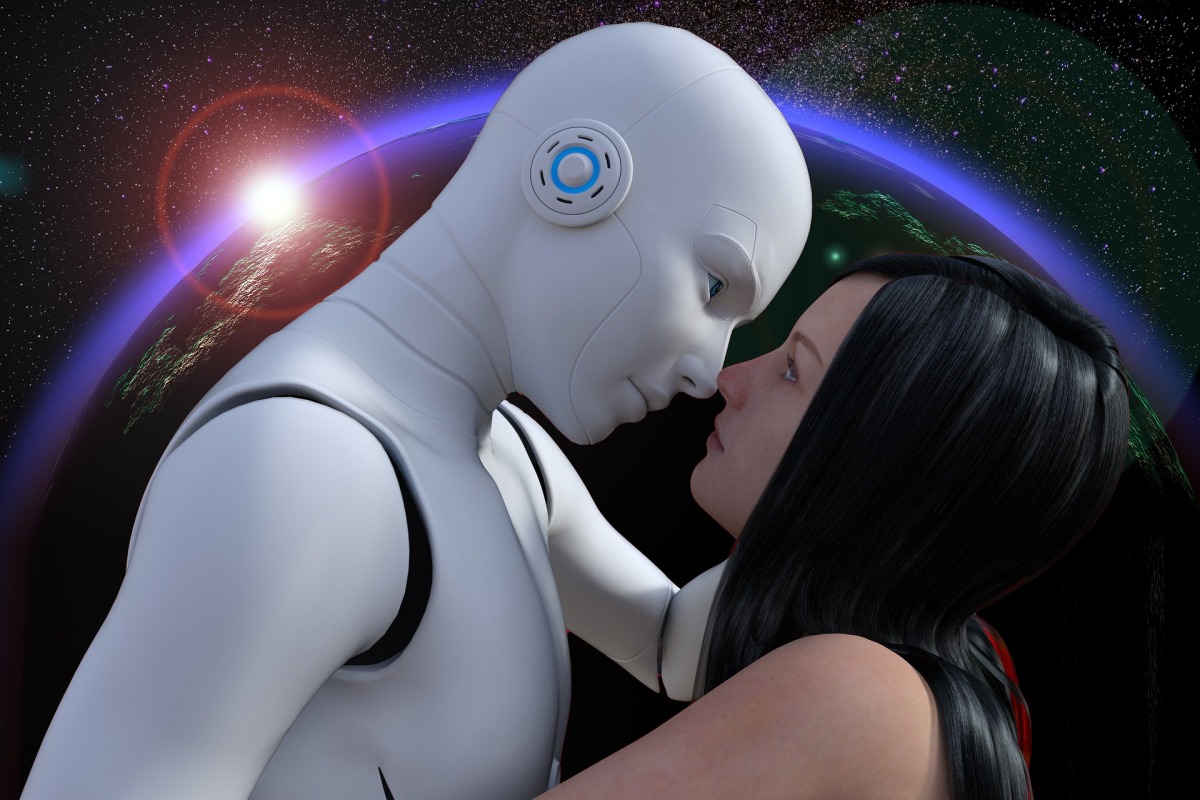
Do you remember your first kiss, first time on a date, or your first time being intimate with a partner? I am sure there was some mix of excitement, nervousness, doubt, and/or desire. Now ask yourself thisโ€”how might that experience have been different if it had occurred in virtual reality, or utilized an artificial intelligence, or been communicated wordlessly through neural implants? Technology is a powerful shaper of human social and political behavior, and as we inch toward a transhumanist world of human-computer integration, a major, and often over-looked question is: how will these advancements alter human dating and mating?

This is the question I was toying with when I wrote โ€œEarly Adopter,โ€ my short story in the January/ February 2024 issue of Asimovโ€™s. I had just heard about Neuralinkโ€”Elon Muskโ€™s hypothetical implantable brain-computer interface company, now facing a accusations of past animal cruelty as it barrels toward FDA-approved human trialsโ€”and the description of the tech triggered me to start writing the story.

Muskโ€™s mission for the project is multifaceted, and like many of his businesses, boarders into the realm of the once-science fictional. First, he hopes Neuralink will restore some autonomy to paralyzed individuals by allowing them to control simple computer interfaces with their minds. Second, and much more vaguely, he has expressed a hope that the technology will, per the mission statement on the Neuralink website โ€œunlock human potential tomorrow.โ€

It was in this cloud of vagueness where I found the spark of an idea that would eventually become โ€œEarly Adopter.โ€ The story follows the trials, tribulations, and unforeseen consequences of a souped-up, consumer-grade product similar to Neuralink that allows users to surf the web and engage in something like telepathy with other users.

While this idea is fairly boilerplate as far as sci-fi goes, the great reward of this genre is the opportunity to see all the different directions a diverse set of authors might take a basic idea. You never know what consequences a mechanic might see in a piece of hypothetical tech that a sociologist might not, and vice versa. My thoughts on new tech are filtered through my professional lens as a licensed couple and family therapist who provides sex therapy to a wide array of clientele. In the case of a technology like Neuralink, which promises a near-future where our minds will begin to integrate with computers, my first thought was: how will people use this for sexual pleasure and romance? ย ย ย ย 

Sex is an intrinsic human need that drives much of our behavior, and there is always a huge demand in the market for new ways to find partners or engage in erotic pleasure. As such, we often find ways to sexualize new technology. The most recent available data suggests that 13% of web searches and 20% of mobile searches are for porn, and porn content may represent anywhere from 4% to 30% of all the data on the internet. Meanwhile, 30% of U.S. adults say they use or have used dating apps, including 53% of adults ages 18-29, 37% of adults ages 30-49, 28% of straight adults, and 51% of lesbian, gay, and bisexual (LGB) adults (more demographics available at: Pew Research).ย 

Clearly, we are good at turning new tech into a tool for dating, mating, and sexual pleasure. There is no doubt that whatever the next big technological shift is, people will find a way to capitalize on its possible sexual and romantic appeals. If that new technology is a chip that goes in your brain so you can interface with the internet, then the possibilities are endlessโ€”good, bad, and weird.

You see, these types of advancements are a double-edged sword, especially when it comes to dating and mating. On the one hand, increasing the means of connection between people can benefit those who struggle to find the right partner. This likely explains the popularity of dating apps among LGB adults, for whom the internet has long provided more access to community and potential partners with less fear of harassment. Similarly, apps like Feeld provide a dating platform specifically targeted at people seeking polyamorous and/or consensually non-monogamous connections with others. Internet mainstay Fetlife.com is another example that offers a totally NSFW experience perhaps best described as โ€œkinky Facebook.โ€


Clearly, we are good at turning new tech into a tool for dating, mating, and sexual pleasure. There is no doubt that whatever the next big technological shift is, people will find a way to capitalize on its possible sexual and romantic appeals.


Inevitably, this access leads to tradeoffs. At the beginning of โ€œEarly Adopter,โ€ the narrator is fairly far down the rabbit hole of near-future online dating, sleepwalking through one-night stands and wondering, somewhat hopelessly, if he will ever find the right person in the virtual deck of suitors. As the story progresses, the various impacts of this lifestyle on his mental health, and some more radical concerns brought on by his newly-implanted Neuralink-esque technology, become increasingly complex.       

The narratorโ€™s plight reveals the dark side of our rapid advancements in online dating and mating. For every dating app success story, there are perhaps a hundred more stories of distance, detachment, loneliness, and ghosting (i.e. when someone you were talking to simply disappears, without a trace). Where some users face a โ€œparadox of choiceโ€ that causes them to never invest too much in a single partner based on the promise of something better on the next swipe in their dating app, many others deal with the problem of having no prospects at all. Research has suggested that people will attempt to match with partners who are at least 25% more desirable than themselves (desirability is based on how many users try to match with them), which creates a gradient effect that leaves a large number of users with very few possible matches.

If you want to get even more dystopian, you should know that every major online dating app from Tinder to OKCupid to Hinge and beyond (except Bumble) is owned by the same massive, publicly traded company, Match Group. These apps are built more like dopamine-feeding slot-machines than effective match-making utilities, mostly focused on gaining and maintain daily active users, tracking their activity, showing ads, and funneling certain high-volume users toward paid Premium accounts that prey on desperation. Is it any wonder that the vast majority of Americans are either unsure (43%) or outright do not believe (35%) that dating app algorithms can predict love (Pew Research)?

Moreover, what do you suspect might be some of the mental health impacts of trying to find love in this environment? Itโ€™s easy to imagine hopelessness, shame, and other anxious or depressive symptoms stemming from interacting with this machine (although more research needs to be done to study this connection). Exhaustion, defeat, and reduced self-worth all appear to be reasonable expectations of swimming in this pool for too long.

In my therapy practice, I often find myself helping clients to navigate the pleasure and the pain of the interaction between their sexual and romantic needs and the unstoppable force of technological progress and economic process. For the most part, research and clinical work has not had time to study the short and long-term impacts of this technology on mating and dating, and given the exponential speed of tech, itโ€™s likely we never will. This means evidenced-based practices for helping people navigate this new world does not exist, and many peopleโ€”especially early adoptersโ€”will be on their own in trying to navigate the impacts of dating and mating technology in the 21st century.

As we continue toward this uncertain future, we will have to face many more questions about the impacts of new technology on dating and mating. Some issues are indirect, for example: how will the proliferation of artificial intelligence (AI) and virtual realities (e.g. Meta) improve dating and mating for some while dispossessing others? What will our relationship with AI entities be both sexually, romantically, and legally?

Elsewhere, other issues are more direct: what (if any) technologies will we invent to stop the spread of โ€œforever chemicalsโ€ such as phthalates and PFAS, which may catastrophically reduce sperm counts to zero by 2045? And how will dating and mating be disrupted by potential reductions in human fertility? Inversely, how will dating and mating be impacted by the proliferation of gene editing technology such as CRISPR that may allow for designer babies? What types of changes will society see in dating and mating when we are able to grow babies in artificial wombs? How will climate change, including water shortages and mass migration, impact our sense of romance, sex, and community? And per โ€œEarly Adopter,โ€ how will mating and dating change, for better or worse, when we can use cranial implants to get inside each otherโ€™s minds? Most of these hypotheticals would have seemed outlandish even 20 years ago, but now these possible futures rest right on our doorstep. Neuralink may be coming soon, and its integration into our sexual and romantic lives will premiere sometime after. In the meantime, I encourage you to consider for yourself the various trade-offsโ€”consequences good, bad, and weirdโ€”that await those who adopt these new technologies.


Zack Be is an author, obscure songwriter, and psychotherapist trapped in the Washington, D.C., area gravity well. His fiction has appeared in Analog, Asimov’s, Writers of the Future Vol. 36, and The Science Fiction Tarot anthology. He is the editor of Inner Workings, an anthology of SFF stories and craft writing essays from Calendar of Fools. In 2022 his band Pretty Bitter released their LP Hinges on all streaming platforms. More info about Zack’s writing and music can be found at zackbe.com or anywhere @bezackbe.

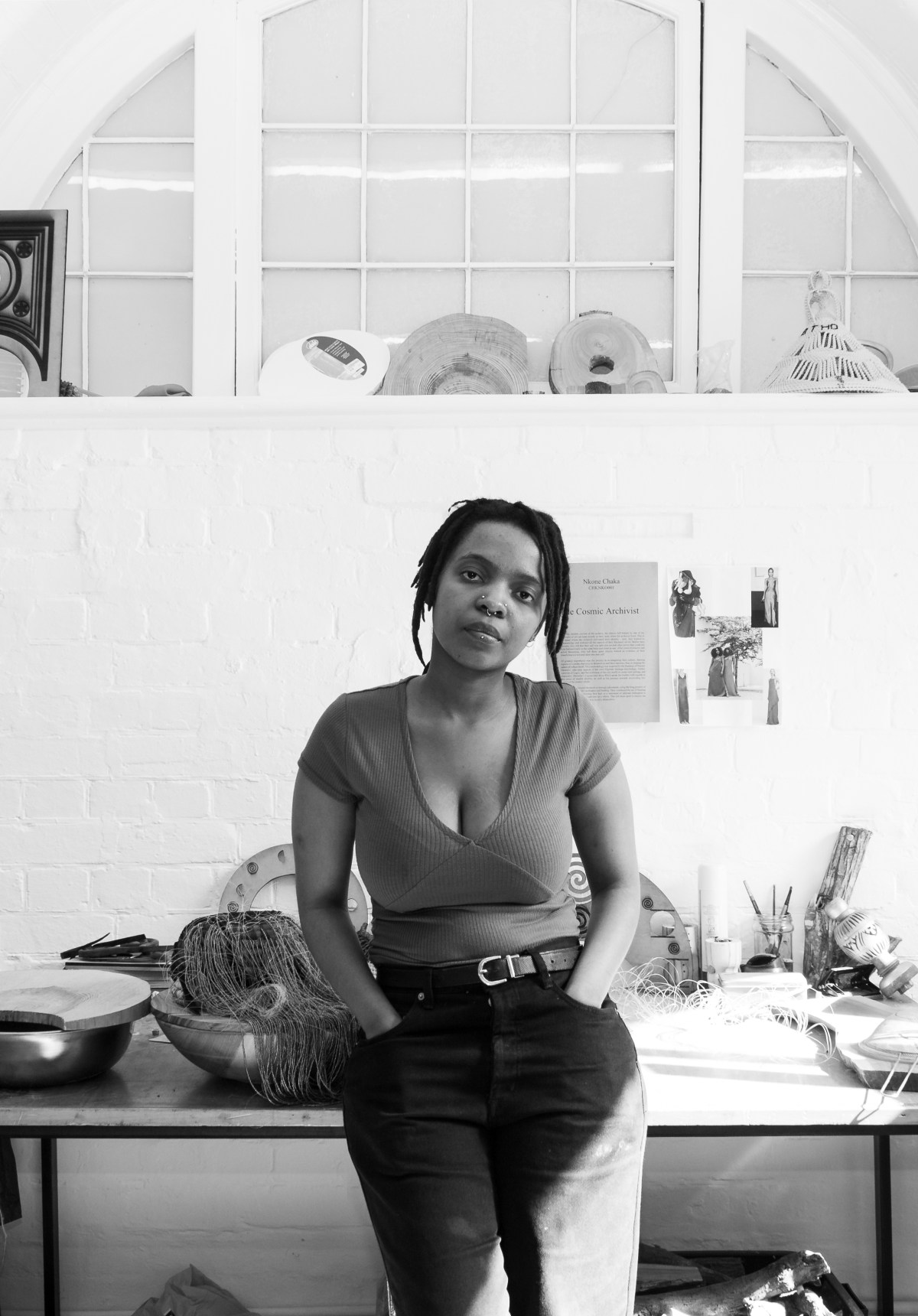
Q&A With Nkone Chaka

Nkone Chaka is a writer and visual artist originally from Maseru, Lesotho. Read about their interest in polycephaly in animals, their unique approach to writers block, and more in our Q&A with Chaka. Find their latest story “To Eat Your Own Head” in our [January/February issue, on sale now!]

Asimov’s Editor: What is the story behind this piece?
Nkone Chaka: “To Eat Your Own Head” is about repressed frustration and anger. Pusetso, our main character, has lived in the equivalent of a pressure cooker all her life, enduring emotional and physical abuse in her early childhood. The pent-up frustration continues as she enters the work force, her research constrained by underfunding, corruption, and arbitrary bureaucratic hoops that make her feel like the subject of her scientific enquiryโ€”the bicephalic chameleon snake. Trapped in her own mind and consumed by years and layers of rage, “To Eat Your Own Head” explores the role of early repression in later self-destructive behaviors. It is also an exploration of the ways that unaddressed trauma can result in real difficulties with emotional self-regulation. Iโ€™m not a mental health professional, but writing this piece was especially helpful in attempting to unravel some of these concepts for myself.

AE: How did this story germinate? Was there a spark of inspiration, or did it come to you slowly?
NC: The story came from a few different places, all of which coalesced over the course of a month or so. First was a long-standing fascination with polycephaly in several different animal species. This is a sustained interest, and it will show up more than once in my writing should I be lucky enough to get published again. ย Also of interest was the relationship between being in captivity and self-harm in snakes. The simulated environments of snakes in captivity sometimes results in restricted mobility and overheating. These are identified by herpetologists as the main drivers behind self-cannibalism. This imagery was branded on the inside of my eyelids for weeks before I sat down to draft the story, even causing vivid dreams of snakes attacking and consuming themselves out of fear and frustration. Trying to map that sense of physical and emotional claustrophobia onto the human psyche was difficult, but I like to think that Pusetso is an accurate, or at least an interesting, depiction of this experience.

AE:Do you particularly relate to any of the characters in this story?
NC: Unfortunately, yes. Rage is a very strange emotion, particularly because of the many social norms that dictate how and when it is acceptable to express. There are so many questions regarding whether anger is ever justified, and who has the right to process it in public. Pusetsoโ€™s relationship to rage as a black woman in a very specific setting is at the core of the story. While I am non-binary, our experiences are quite similar. Academia and anger are assumed to be diametrically opposed, but some of my personal research is rooted in trying to understand and channel both individual and collective rage. Itโ€™s messy and unpleasant, but also liberating and fulfilling.


I have designated time in my week for daydreaming. If something in a story is proving difficult to decipher, Iโ€™ll make myself a cup of tea and a dedicated playlist, unroll my yoga mat, and spend hours just staring at the ceiling imagining all the ways that the story can play out.


AE: Who or what are your greatest influences and inspirations?
NC: I tend to focus on single projects rather than specific peopleโ€”I donโ€™t always identify or find merit in one artistโ€™s entire body of work. These inspirations often vary from time to time and from project to project, but for the last year or so, Nala Sinephroโ€™s jazz album Space 1.8 has been the soundtrack for almost all my work. It hasnโ€™t been out for long, but I can tell that Andrรฉ 3000โ€™s New Blue Sun is also going to be pivotal to my writing process in 2024. Phaelehโ€™s Illusion of the Tale is one of the best ambient albums for moody science fiction, Shabaka and the Ancestorsโ€™ song Joyous is a favorite for my weekly daydreaming sessions, and the soundtrack to Ari Asterโ€™s Midsommar as well as the film itself are at the heart of my current work in progress.
In terms of books, some of my favorites include Jeff Vandermeerโ€™s Annihilation, Toni Morrisonโ€™s Beloved, Arundhati Royโ€™s The God of Small Things, Susanna Clarkeโ€™s Piranesi, and Becky Chambersโ€™ A Psalm for the Wild-Built. While the novel in its entirety wasnโ€™t my favorite, there are passages from Rivers Solomonโ€™s Sorrowland that had me crying in bed for days.

AE: Are there any themes that you find yourself returning to throughout your writing? If yes, what and why?
NC: In addition to polycephaly in animals, I think I will probably always write about people trying and failing miserably at assimilation.ย  Some of that is personal experience, but a lot of it is a vested interest in understanding the contradictions between peopleโ€™s true feelings and the ways that they are forced by their respective societies to behave. Social conditioning is compelling for its ability to create very strong internal conflicts. Characters forced to sit with contradiction are the best kind not just because it is realistic, but because it is messy. Despite advice from more skilled writers against melodrama and inconsistency, mess to me is what makes characters worth following because warring with who you are and who you think you should be is such a universal human experience.

AE: How do you deal with writersโ€™ block?
NC: I have designated time in my week for daydreaming.ย  If something in a story is proving difficult to decipher, Iโ€™ll make myself a cup of tea and a dedicated playlist, unroll my yoga mat, and spend hours just staring at the ceiling imagining all the ways that the story can play out. Sometimes, I will read or consume other media that is adjacent to the project I am working on, but for the most part, scheduling my imagination time has proved the best solution to writersโ€™ block. I also have a dedicated notebook that I call my โ€œbrain fart book,โ€ where I jot down every thought I have about anything from writing to fashion on a daily basis. There are nuggets of coherence in the ramblings that have gotten me out of a writing jam more than once. I highly recommend it. It is also important to note that I am currently a childless postgraduate student using academia to delay real life. I know that not everyone has this luxury, so take this all with a grain of salt.

AE: If you could choose one SFnal universe to live in, what universe would it be, and why?
NC: Iโ€™d choose Panga from Becky Chambersโ€™ A Psalm for the Wild-built. Iโ€™ve only read the first in this series of novellas, but outside of the main characterโ€™s internal conflict, Panganโ€™s seem to have biophilic infrastructure and environmentally sound policies figured out. The setting is lush, serene, and acutely sensitive to the foibles of heavy capitalist industrialism. The people of Panga have worked hard to create empathetic, inclusive, and well-rounded societies. Emphasis is placed on the importance of social and emotional safety nets as well as compassionate collaboration. The setting is such an open wound in that it addresses the industrialist myths that have come to dominate this epoch while also juxtaposing the current state of the world with what is possible should we choose to make the necessary changes. The entire piece is a gorgeous green solar-punk dream.

AE: What other careers have you had, and how have they affected your writing?
NC: Calling it a career is a bit of a stretch, but I am a visual artist. Because of this, a huge part of my brainstorming and planning process includes various sketches. It can be very difficult to find visual inspiration for speculative fiction, especially if I havenโ€™t yet encountered references for what I have in mind. I draw anything from settings, potential characters, manifestations of magic systems or future technologies if they are present in my story, and I sometimes even storyboard my shorts instead of using traditional outlining methods.

AE: What are you reading right now?
NC: I am trying very hard to read The Three-Body Problem by Liu Cixin. What a book.

AE: Do you have any advice for up-and-coming writers?
NC: Prioritize your pleasure if you can. As a bit of a hedonist, I have found that associating my writing time with taking care of myself or personal enjoyment has made it significantly easier to write even when everything else in my life is falling apart. I would also encourage writers to be as delusional as possible in private. Write like no one is watching because in the beginning, nobody really is. In addition to more serious and polished pieces, I also write mountains of unedited and rambling fanfiction, poetry, graphic novels, and flash fiction. No one will ever see these, but they were fun to write and have been the source of some of my most interesting ideas.ย  I am an up-and-coming writer as well, so if anyone has advice for me after reading “To Eat Your Own Head,” I would really appreciate it!

AE: How can our readers follow you and your writing?
NC: You can find me on Instagram @nkone_chaka and Twitter (?) @nkonechaka.

Instagram: https://www.instagram.com/nkone_chaka/

Twitter: https://twitter.com/nkonechaka


Nkone Chaka is a writer and poet from Maseru, Lesotho. They hold a BA FA from the Michaelis School of Fine Art at the University of Cape Town. Their work has previously appeared in Fiyah Literary Magazine and Reflex Fiction. Their favorite things in the world are hearty meals (cooked by someone else to avoid accidentally poisoning themselves) and long, cozy naps. Find them on Instagram @nkone_chaka, and on the cursed platform previously known as Twitter @nkonechaka.

Q&A With Sean McMullen

Learn more about author Sean McMullen’s writing process as well as some of his upcoming projects in this informative Q&A. Also, don’t miss his latest novelette After the Winter Solstice in our [Jan/Feb issue, on sale now!]

Asimov’s Editor: What is the story behind this piece?
Sean McMullen: The setting for After the Winter Solstice is a world with an orbit more like that of a short period comet.ย  During the brief, intense inner summer, the world is closer to the host star than Venus is to the sun, but in the long outer winter the temperature drops so very low that breathing unheated air is lethal. In these months all life forms enter a state called hiber, in which they can safely be frozen solid. They then thaw and revive as the world approaches its star again. Lady Sendal, an astronomer in a civilization at about the level of Fifteenth Century Europe, has devised a way to survive unfrozen during the outer winter, and she explores her world during this bleak and deadly season. Inevitably, her breakthrough brings with it the scope for entirely new types of criminal activity and immense social disruption.

AE: Is this story part of a larger universe, or is it stand-alone?
SM: After the Winter Solstice is the first chapter in a novel that I recently completed, The Outer Solstice. The novel follows events during a full orbit of the world, from outer winter to outer winter. The characters realise that being awake during the outer winter might give them absolute power over those who choose to enter hiber and freeze solid, yet if every kingdom has hiber suits and hiber refuges, nobody will have an advantage. There will still be wars, they will just be fought differently. Worse, those who remain awake for the entire year will age twice as fast as those who spend half the year frozen. Only the very rich will be able to afford the huge amounts of firewood and fuel needed to last the outer winter months awake and unfrozen, yet the frozen poor will live longer. Worst of all, Lady Sendal has built an intelligence test into her new technology: people have to understand the science behind it if they want to use it without getting themselves killed.

AE: What made you think of Asimov’s for this story?
SM: The story unfolds on two levels. We are introduced to a habitable planet where extreme climate change is an annual event, yet we also see the beginnings of the enormous social changes that Lady Sendal’s new technology will cause. The story’s foundation of hard science, alongside the threats, opportunities and temptations that are unleashed by Sendal’s technical innovations, seemed to make After the Winter Solstice ideal for Asimov’s and its readership.

AE: What is your history with Asimov’s?
SM: My story Exceptional Forces was published in the February 2016 issue of Asimov’s, and was a finalist in the magazine’s readers awards the following year. Other than that, I have been particularly interested in stories by Australian and New Zealand authors that appeared in Asimov’s. When not writing my own science fiction I have written histories of science fiction in Australia and New Zealand: Strange Constellations (1999โ€”with Van Ikin and Russell Blackford), Outpost of Wonder (2017), and New Zealand Science Fiction and Fantasy 1872โ€”2019 (2020โ€”with Simon Litten). All three of those works involved chasing up a lot of excellent stories written by Australians and New Zealanders that were published in Asimov’s.

AE: How much or little do current events impact your writing?
SM: Current events can be powerful influences when writing stories involving the way society can be changed by technology. I was working in scientific computing just as the internet and the world wide web were expanding from novelties to become the foundations of society in general and commerce in particular, so I had a great overview of how it happened. Two decades later social media transformed our personal lives just as radically, and now AI and data manipulation have allowed people to construct and publish their own versions of reality, independently of the real world. How can one’s writing not be influenced current events like that?


Strange ideas and themes for stories have always been tumbling about in my mind, the inside of my head is a pretty weird place.


AE: What is your process?
SM: I wish I could nail down my process, ideas for stories just arrive in my mind all by themselves. If I have any control over the creative part, I suppose it is only to do lots of reading, listening and watching in a great variety of areas. This gives my subconscious processes something to work with andโ€”hopefullyโ€”throw good plots and ideas my way. I seem to get along pretty well with my subconscious, and so far it’s never failed me.

AE: What inspired you to start writing?
SM: Strange ideas and themes for stories have always been tumbling about in my mind, the inside of my head is a pretty weird place. At high school I got honors grades for a couple of my science fiction stories, but at the time I thought I had no hope of getting published. I had the idea that professional science fiction authors were so intelligent that they were not entirely human, and that no publisher would ever take an ordinary person like me seriously. Then in 1979 a friend of mine at Melbourne University, Coralie Jenkin, formed a sort of two person book club with me. One of the books she gave me was The Altered I, an anthology of science fiction stories written by aspiring Australians during a workshop run by Ursula LeGuin, and sponsored by the 1975 World Science Fiction Convention. The anthology had attracted some serious critical praise, but after reading it I decided that I could write at least as well. I bought a little electric typewriter and started typing. Fast forward to 1985, when Australia hosted another World Science Fiction Convention. This time the organisers ran a short story competition. I submitted my story The Deciadโ€”and it won! Suddenly I had something on my literary cv with “World” beside it, and that opened a lot of doors.

AE: What SFnal prediction would you like to see come true?
SM: Genuine artificial intelligence. What we have now is at best a sort of mimicry of human creativity and talent. At worst it is artificial stupidity. A true artificial intelligence would not have a taste for fame, status, wealth or recreational reproductive activity, and it might not even be interested in world domination. That means trying to imagine how it would behave is quite a challenge, and I don’t think any author or futurologist has managed to describe a true AI convincingly. The thing will be really alien to us, in fact it will be the first true alien that humanity will encounter. It will probably be created by around 2035, and its attitude to us will probably be: “You humans are weirdos, go away and leave me alone.”

AE: Do you have any advice for up-and-coming writers.
SM: We are currently living in a science fiction epic, and have been for a long time. Computers, nuclear power and space probes transitioned from science fiction to real life in the 1940s. Fifteen years later viewers saw a lot of cool futuristic technology in episodes of Star Trek and decided that a bit more science fiction could easily be turned into reality. In 1984 Neuromancer gave us a vision of a futuristic wired society, yet the foundations of the modern internet had already been laid the year before when ARPANET adopted the TCP/IP protocols (trust me, that was important). The excellent television series Black Mirror presented some highly confronting predictions about social media, but by the time the episodes aired many of those predictions had become history. Conclusion? Aspiring writers should ask themselves what sort of science fiction would be popular with people living in this science fictional epic, because that is the readership that is already out there.

AE: What other careers have you had, and how have they affected your writing?
SM: I had a brief career as a librarian, reasoning that by working in university libraries I could attend lectures more easily, and that by doing evening shifts I would be free to attend lectures during the dayโ€”and I would have way better access to textbooks. Eventually I got a job in the Bureau of Meteorology, starting in satellite tracking, then moving on systems development, spending five years as Year 2000 conversion project coordinator, and finishing up in disaster contingency planning. ย Quite a lot of meteorology rubbed off on me while I worked in the Bureau, and later went into my climate change revenge novel, Generation Nemesis (Wizard’s Tower Press, 2022), in which everyone born before the year 2000 is put on trial for climate crimes.
All that hardware and hard science gave me a very strong taste for using workable science in my fiction, and led to me writing novels like The Centurion’s Empire (Tor, 1998) and Souls in the Great Machine (Tor, 1999), and stories like Eight Miles (Analog, Sept, 2010), Steamgothic (Interzone, Jul/Aug 2012) and Technarion (Interzone, Sept/Oct 2013). That said, I was also a semi-professional folk singer in my spare time during the 1970s, and folk music ballads about elves, sorcerers, witches and magical things in general led me to reading fantasy novels – ย and eventually writing them. Lastly, I am a 4th dan karate instructor, and my background in martial arts has given me a very good grasp of how my characters can defend themselves using real muscles, real weapons, and realistic martial arts skills.

AE: How can readers follow your writing?

SM: Website โ€“ (www.seanmcmullen.net.au) has news of my latest work, plus myself reading some of my stories.

Facebook โ€“ (Sean McMullen) is an open site, and whenever I have any literary news I include it amid the cat pictures, family gatherings and martial arts events.

Instagram โ€“ (sean-c-mcmullen) I have been running a feature on Retro Australian SF Art (1940s to 1980s) but will soon be starting a new feature on the artwork done for my own novels and stories.

Youtube โ€“ (www.youtube.com/watch?v=XCsS6RYqbqo) Hard Cases is a short climate change movie, directed by Terry Shepherd, screenplay by myself. It is a prequel to my novel Generation Nemesis and stars Mike Bishop, Liam Amor and Eve Morey. It even has me in a cameo as Mr Guard/Death.


For thirty-three years Sean McMullen had a career in scientific computing with the Australian Weather Bureau by day, then went home to write science fiction. Today he writes full time. Sean has had Hugo and BSFA award nominations, won seventeen other awards, and currently has 102 stories and thirty-two books published. His latest novels are the climate change dark comedy Generation Nemesis (Wizards Tower Press, 2022) and a childrenโ€™s fantasy (with Paul Collins) This Spells Trouble (Ford Street Press, 2023). He has a PhD from Melbourne University, where he is an instructor at the university karate club.

Q&A With Marguerite Sheffer

In our latest Q&A, Marguerite Sheffer discusses her greatest influences, her writing process, and the piece of family history that helped inspire “The Disgrace of the Commodore,” her latest story in our [Nov/Dec issue, on sale now!]

Asimov’s Editor: What is the story behind this piece?
Marguerite Sheffer: This flash story is based on a maybe-true bit of family lore that was passed down to me: the story of a famous Commodore who surrendered a ship to the British.ย  I have a drawing of the ship itself hanging near my writing desk.ย  The Commodore has been the subject of a lot of conversation, and a lot of jokes at family reunions.ย  I began to imagine what the Commodore would think about our family as it is today, if he were eavesdropping somehow on those conversations: what would shock him, what would infuriate him, and what would spark his curiosity.ย  Along the way I began to feel more tenderness towards him and found him to be more than a joke.ย  I hope the story is able to be a little brutal towards his worldview, but also give him a little bit of softness and hope, too.

AE: Do you particularly relate to any of the characters in this story?ย 
MS: Yes!ย  I am one of the โ€œdescendantsโ€ in the story who is tearing apart the purgatorial version of the ship.ย  Thatโ€™s my secret self-insert character, and I had such fun writing myself and my cousins in, from the Commodoreโ€™s point-of-view.

AE: What made you think of Asimovโ€™s for this story?ย 
MS: Iโ€™ve been a reader and admirer of Asimovโ€™s for so long! I had submitted several stories for consideration before this one, and had some encouraging near-misses.ย  In one of her kind rejection notes, Sheila Williams mentioned being open to slipstream. This is one of my more unhinged, slippier pieces, so I hopedโ€”and was rightโ€”that it might be a great fit.ย  Iโ€™m so glad and honored to see my words among so many authors I admire!ย 

AE: Who or what are your greatest influences and inspirations?
MS: Iโ€™m a particular fan of authors who are merging historical fiction with speculative fiction, in particular Sofia Samatar, Ken Liu, P. Djeli Clark, E. Lily Yu, Sam J. Miller and Caroline Yoachim. Iโ€™ve been lucky enough to speak with several of these writers about their work and their process.ย  Their stories inspire me to imagine the voices missing from the historical narrative, and to speculate, wildly and curiously, into those gaps.
My own writing has grown enormously as a result of writing together with others, in writing groups. Iโ€™ve been lucky to write as part of the Nautilus Writing Group with Kendra D. Sims, Gwen Whiting, Amy Johnson, and Archita Mittra. We were matched together as part of the (free) Clarion West virtual Write-a-Thon, and Iโ€™ve been so lucky to learn from them!ย  โ€œDisgrace of the Commodoreโ€ began as a flash piece I shared with that group.ย  I write nearly daily with Tierney Oberhammer and Corinne Cordasco-Pak (Wildcats Writing Group) and their incredible work and insights continually push me to be braver in my writing.

AE: Are there any themes that you find yourself returning to throughout your writing? If yes, what and why?
MS: While I donโ€™t (consciously) write about current events, I do find myself, even when writing about history, circling some themes: of failing the next generation, of adults failing to protect the children in their care. I think in our era of looming climate disaster this is a subject that haunts me.ย  I was a high school teacher for ten years, and I also find myself writing about the ways in which adults can be complicit in systems which restrict or harm children.ย  One of the things I love about writing science fiction is the chance to imagine the world otherwise, even when it hurts to do so.

AE: What is your process?
MS: I could say so much about this one!ย  Iโ€™m a new parent with a full-time day job, so Iโ€™ve had to get creative and scrappy with my writing process to make the most of minimal time.ย  I write most mornings with a beloved writing group, the Wildcats, over zoom.ย  We check in, say what weโ€™re going to work on, do that, then celebrate each other for every little bit we accomplish. Sometimes, thatโ€™s a full hour, other times, just a handful of minutes on the Most Dangerous Writing App. ย 
My day job is in teaching design thinking strategies as a tool for problem-solving and social impact, and I also apply design thinking to my writing: I write to explore, do a lot of brainstorming and ideation, and go through many (many) iterations of each piece. I try to set aside the idea of โ€œgood writingโ€ and instead play around and see what happens.


One of the things I love about writing science fiction is the chance to imagine the world otherwise, even when it hurts to do so.


AE: What other projects are you currently working on?
MS: Iโ€™m in the final revision stages of my first novel, which is both thrilling and scary!ย  The novel is historical speculative fiction, set in the Gulf South (Louisiana and Florida) in the early 1900s, and concerns early conservation efforts during the โ€œplume wars:โ€ a time when egrets were nearly hunted to extinction for their feathers, which were worth as much as gold.ย  A female journalist, Theodora, heads to a remote island to cover a new egret sanctuary, and learns an other-worldly secret. Iโ€™m going to be seeking representation for this novel, hopefully in early 2024, after working on it for the last four years.

AE: What are you reading right now?
MS: Right now I am reading Zadie Smithโ€™s The Fraud, as well as a nonfiction book (research for a new project) about Cold War espionage: Spies by Calder Walton.ย  Iโ€™m also reading my favorite genre mags: Asimovโ€™s, Uncanny, Apex, The Deadlands, and The Dread Machine (among many others!).

AE: Do you have any advice for up-and-coming writers?
MS: Writing with others keeps me inspired, and helps keep the work itself fresh, fun and playful.ย  So, my advice is to start joining communities and looking out for writers whose work excites you!ย  Kickstart a writing group: it is an investment of time and energy that pays off massively, in my experience.

AE: What is something we should know about you that we havenโ€™t thought to ask?
MS: I love to use playlists as I write to get into the right mood and voice for each different story.ย  Sometimes I will go further and break it down by characters and scenes.ย  For โ€œThe Disgrace of the Commodore,โ€ one song that I listened to over and over again was โ€œIron 2021โ€ by Woodkid. Hereโ€™s the whole playlist on Spotify.

AE: How can our readers follow you and your writing? (IE: Social media handles, website URLโ€ฆ)
MS: Readers can find me at my website, www.margueritesheffer.com, and on social media at @mlensheffer.ย  The Wildcats Writing Group is going to launch a Substack soon with information about workshops and publications.ย  You can sign up early here: wildcatswritetogether.substack.com.


Marguerite Sheffer is a writer and educator who lives in New Orleans, Louisiana. Her work has appeared or is forthcoming inย Asimovโ€™s Science Fiction, Epiphany Magazine, HAD, The Cosmic Background, Tales to Terrify, The Dread Machine, Cast of Wonders, The Pinch,ย andย The Adroit Journal, where she is a 2023 Anthony Veasna So Scholar in Fiction. Maggie is a founding member ofย Third Lantern Lit,ย a community writing collective.