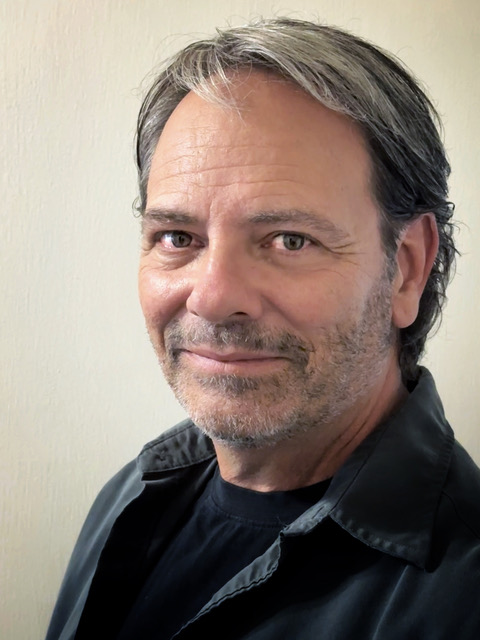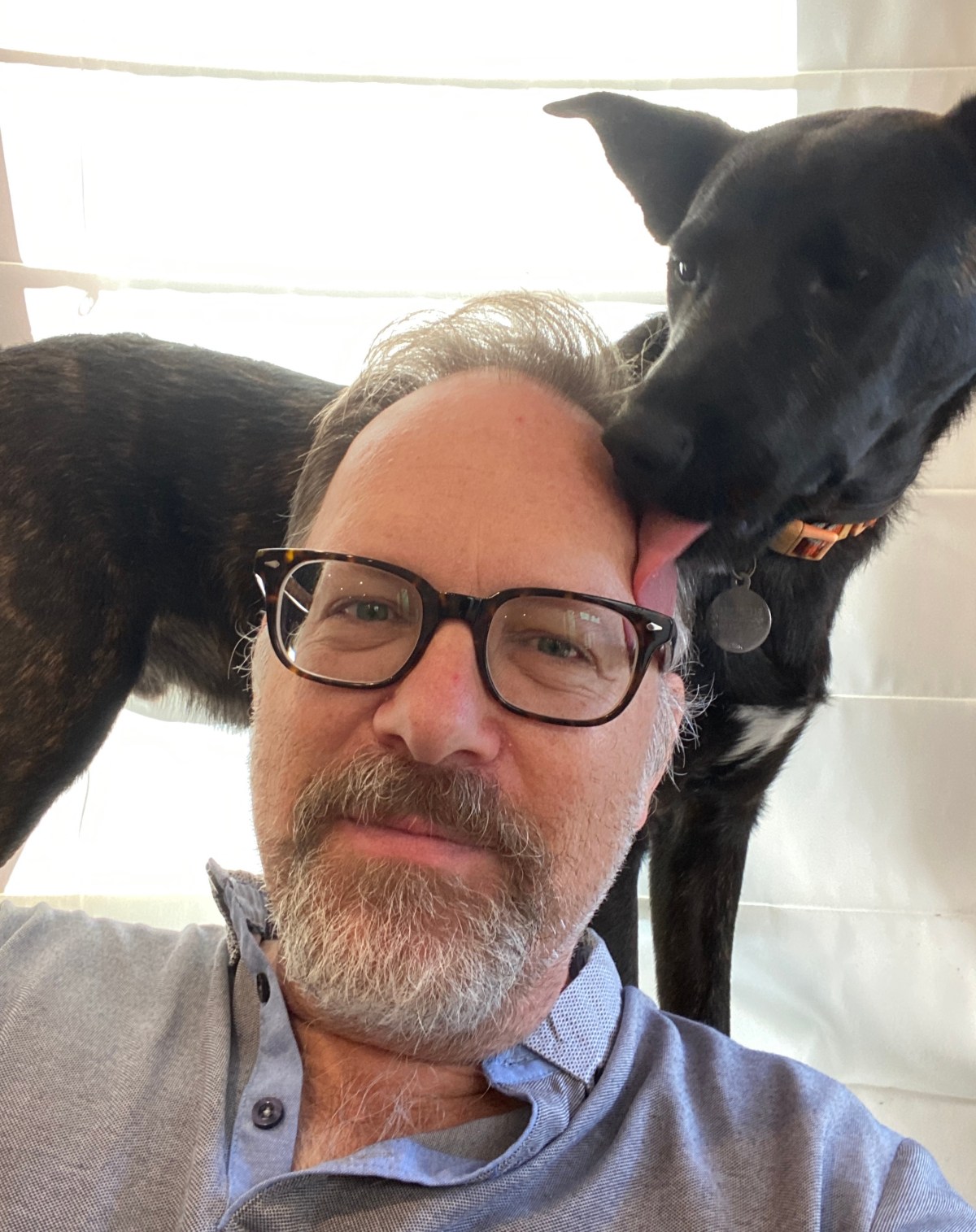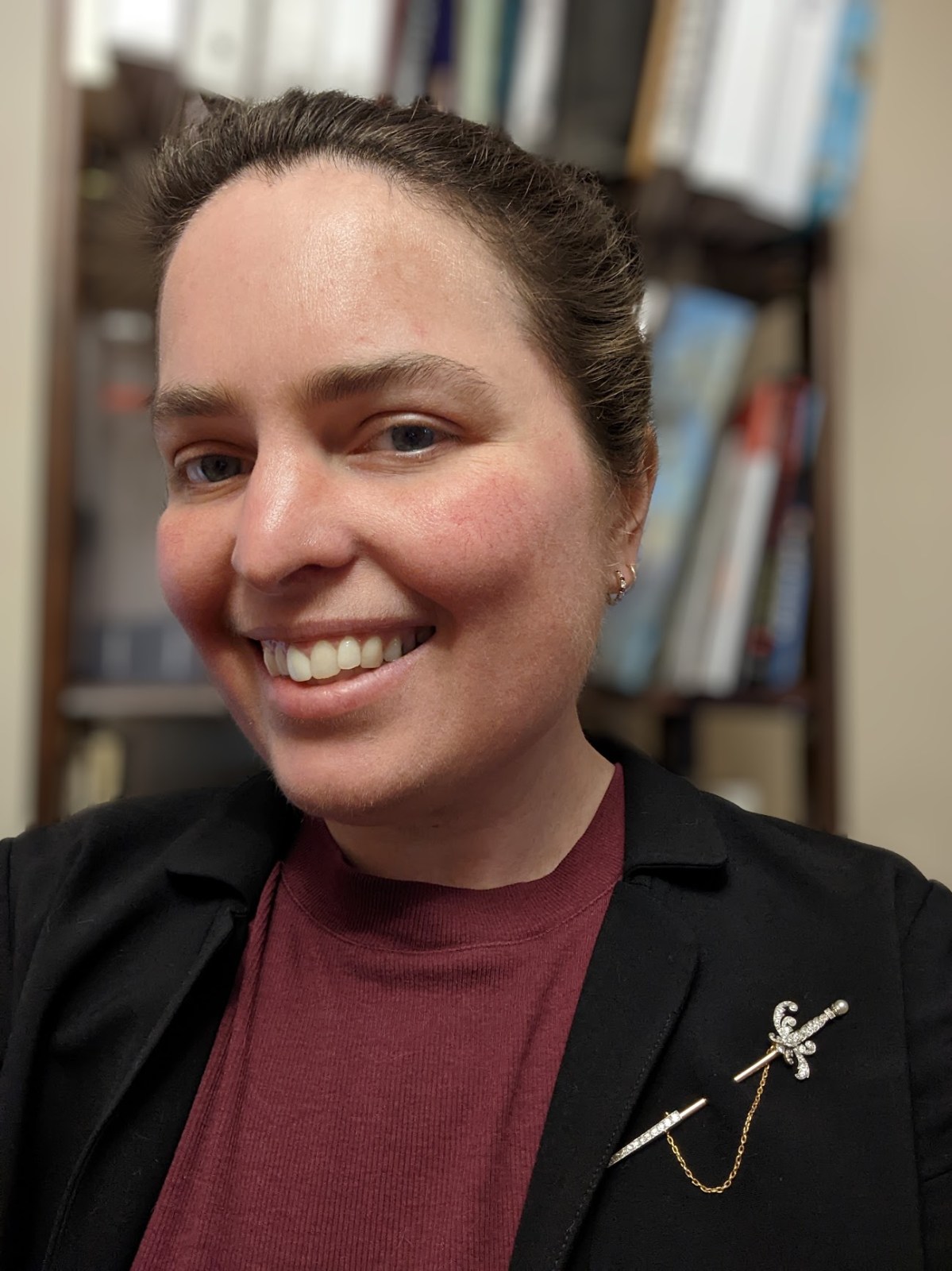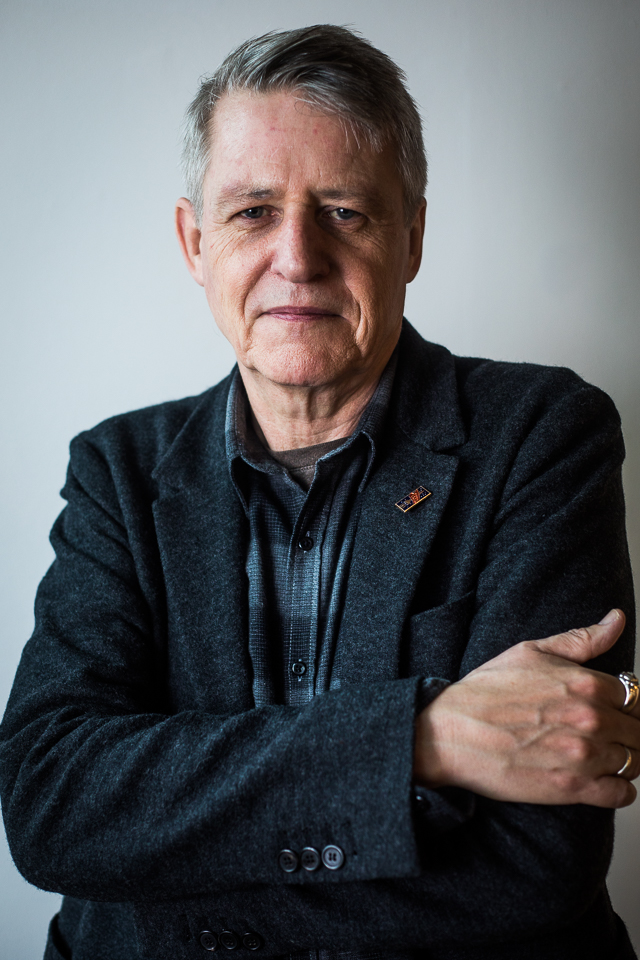
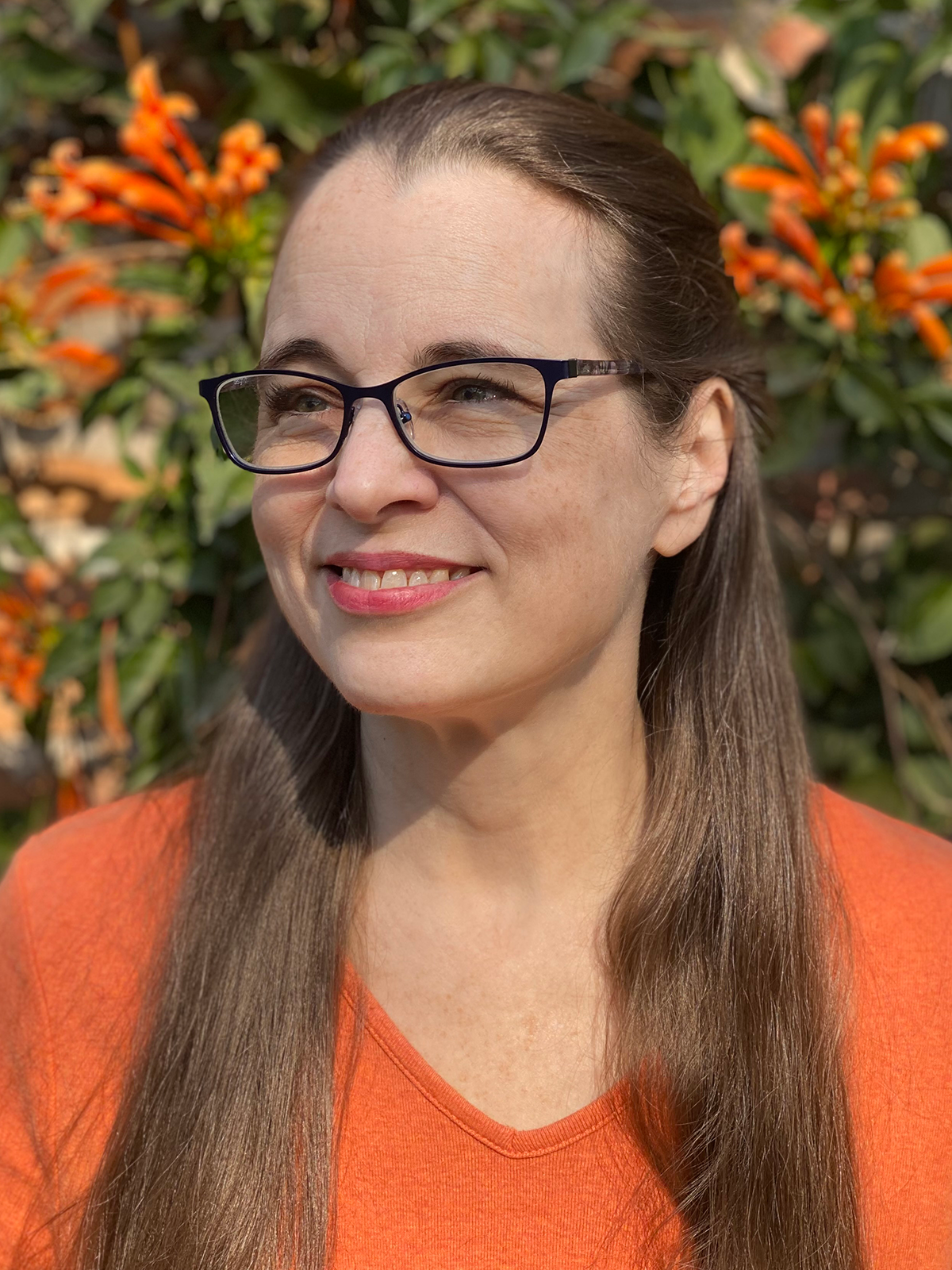
Karawynn Long on Autistic Representation

Author Karawynn Long shares her experience as an Autistic person and discusses the ways Autistic people are beginning to make their voices heard in blogs, essays, videos, and literature. Read Long’s latest story for Asimov’s, “Hope Is the Thing With Feathers,” in our [July/August issue, on sale now!]

โ€œHope Is the Thing With Feathersโ€ exists because in late 2019, mere months before my fiftieth birthday, I accidentally discovered that Iโ€™m autistic.

I managed to reach age forty-nine without the slightest clue to this important fact about myself because for decades the academic study of autism has been dominated by non-autistic researchers who began with erroneous assumptions about the condition and conducted their research unscientifically and through a biased lens. The result has been widespread circulation among psychologists of non-representative stereotypes and flatly inaccurate information; those in turn have been magnified and perpetuatedโ€”again by non-autisticsโ€”in popular media.

I was able to celebrate my fiftieth birthday as a self-aware Autistic person only because, in the last decade or so, authentic Autistic voices have gotten significantly louder. The number of first-person blogs, essays, books, podcasts, and social media posts has exploded, both driven by and driving a veritable tsunami of adult epiphanies. A whole cohort of self-aware Autistic research psychologists have entered the field, particularly in the UK, and their publications have begun shifting the academic conversation in a more accurate direction.

My first clue came from an unexpected quarterโ€”a podcast episode which told the story of a woman very much like myself who went looking for help for her anxiety andโ€”surprise!โ€”ended up discovering she was autistic. I responded to this information in (what I now realize is) the most autistic way ever: by hoovering up absolutely every piece of information about autism that I could find. I quickly became aware of the vast divide between most of the academic literature and the lived experience of Autistic people, so my research leaned ever more heavily on memoirs and other first-person accounts.

In the beginning, I gravitated toward experiences and presentations that were similar to my own, but eventually my curiosity grew to encompass the experiences of autistics whose situations are very different. My particular version of autism came packaged with hyperlexia; I learned to both speak and read at a precocious age. But there are others who have almost the exact opposite experience.

So I sought out stories from autistic people who experienced various sorts of profound communication challenges. Some autistic kids are simply delayed: they donโ€™t speak at all for many years, but eventually develop spoken language indistinguishable from non-autistic children. Others have โ€œunreliable speech,โ€ where they have imperfect mental control over the words and sounds they utter. And still others have verbal apraxia, a brain-body disconnect that impedes their ability to shape their mouths in the intricate ways required for speech. These challenges are often accompanied by full-body dyspraxia or apraxia, an experience that at its most severe might be likened to being โ€œlocked-in,โ€ except that oneโ€™s body is not inert but acts in unexpected ways and contrary to oneโ€™s wishes.


I was able to celebrate my fiftieth birthday as a self-aware Autistic person only because, in the last decade or so, authentic Autistic voices have gotten significantly louder.


In these first-person accountsโ€”blog posts and videos and published memoirs โ€”a pervasive and tragic pattern emerged. Autistic teens and young adults described living without any way to communicate, often for a decade or more, while the adults around them mistook their lack of coherent speech for lack of intelligence. Kids who felt frustration and shame every time someone spoke about them as stupid, who were in terrible pain but had no way to explain the problem, who could read fluently but were forced to repeat the same basic alphabet drills for years. So much creativity left fallow, so much curiosity left to witherโ€”it was horrifying to imagine. And these were the voices of the few whoโ€™d been offered a way out of the endless silence. How many more never get that chance?

In the wake of this awareness, I reached out to a former coworkerโ€”someone I liked and respectedโ€”who had just posted to social media about his challenges with his nonspeaking autistic daughter. I wrote and expressed sympathy for his difficulties and offered to share my insights and suggestions for a way to proceed that didnโ€™t involve institutionalizing her. We corresponded in detail for about three months.

By the time I started talking to my friend about his adopted daughter, his family had already been living with the situation for almost a decade. He had very entrenched ideas about who his daughter was, and what her capabilities were, and my perspective challenged that narrative. He seemed open and grateful when we began our dialog, but ultimately he told me that what I had to say produced too much โ€œcognitive dissonanceโ€ for him, and he rejected my viewpoint and my advice.

My heart broke: for him and the rest of his family, but most of all for this girl Iโ€™d never met. From his stories and descriptions it was obvious to me (though not to him) that she was in frequent and severe physical and emotional pain, and it was equally clear that without intervention, her circumstances would only deteriorate. It gutted me that I couldnโ€™t do more to help her.

After a few months of sheer empathic agony, I attached myself to a new goal: to share something of the experience of nonspeaking Autistics with people who would not ordinarily encounter it, thereby doing some small part to push back against the misinformation and misunderstanding. A character voice coalesced in my mind, synthesized out of the memoirs Iโ€™d read and my own autistic experience.

The study of intelligence among non-human animals has been another long-term fascination for me, and I drew on that knowledge to create the Bird Lab and its psittacid and corvid denizens. (Being an autistic fiction writer is extremely satisfying when you can take two unrelated โ€˜special interestsโ€™ and combine them into something that feels greater than the sum of its parts.)

Because portraying a realistic character was my paramount aim, I hired two nonspeaking Autistic young adults to read and give me feedback on โ€œHope Is the Thing With Feathersโ€ before I submitted it. One of them, Emily Grodin, is a poet and co-author of her own memoir, I Have Been Buried Under Years of Dust; I recommend it to anyone who is interested in a nonfictional account from a nonspeaking, dyspraxic Autistic. Other good books that I drew on include The Reason I Jump and Fall Down 7 Times Get Up 8 (by Naoki Higashida, translated by David Mitchell of Cloud Atlas fame), and Ido in Autismland (by Ido Kedar).

I had chosen to end the story with a quote from Ursula K Le Guin. My other nonspeaking reader, a young man named Otto Lana, told me (in email) that his feelings about โ€œHopeโ€ were summed up by a different Le Guin quote: โ€œYou cannot buy the revolution. You cannot make the revolution. You can only be the revolution. It is in your spirit, or it is nowhere.โ€

Whichโ€”because I admire Le Guin so profoundly, and because it is both what my character was doingย inย the story and what I was seeking to doย withย the story โ€”might be the loveliest response I could ever hope for, from anything that I write.

Thank you to Sheila Williams for giving โ€œHopeโ€ an audience.

Karawynn Long lives in central Mexico with her partner and three cats, where sheโ€™s writing an epic science fantasy novel. She also writes personal essays atย https://karawynn.substack.com/ย and can be found on Mastodonย https://wandering.shop/@karawynn

Q&A With Sam W. Pisciotta

Sam W. Pisciotta’s work has appeared in many other fiction magazines, but “Morning Glory” is his first piece for Asimov’s, and you can read it in our [July/August issue, on sale now!] To mark Sam’s Asimov’s debut, we spoke with him about his favorite novels, his love of Virginia Woolf and Ray Bradbury, and his decision to give “Morning Glory” story an uplifting ending.

Asimov’s Editor: How did this story germinate? Was there a spark of inspiration, or did it come to you slowly?
Sam W. Pisciotta: I read an article about children not spending enough time playing outside. The idea is that as children spend an overwhelming amount of their time indoors on phones and video games and televisions, theyโ€™re spending less time in their backyards and in their neighborhood parks. A result is an increasing number of kids who are afraid of (or at least uncomfortable with) bugs and birds and other forms of nature. Honestly, I donโ€™t know if the argument holds water, but it got me thinking.
Daisy is afraid of everything, and Iโ€™ve put her in a situation where sheโ€™s forced to confront her fears. She instinctively reaches for the technology that brings her comfort. Ironically, technology is the big, bad wolf knocking at her door.

AE: This is a dark story that takes a positive turn. Can you talk a little bit about why you made that decision?
SWP: Sure. โ€œMorning Gloryโ€ could easily have developed into a dystopian story, and readers might even expect a dark ending as they plunge into Daisyโ€™s world. But I wanted this to be a story of hope. I love both nature and technology, and I spend a lot of time with both. I believe that humanity can find equilibrium on this issue, and the idea that technology can bring us closer to nature appeals to me.

AE: How did the title of this piece come to you?
SWP: โ€œMorning Gloryโ€ plays off the nature of those blossoming flowers: They open with light; they attract pollinators; theyโ€™re both fragile and resilient. Morning glories are an apt symbol for a character who comes to see the world differently and a world transformed by technology in a positive way.

AE: What is your history with Asimovโ€™s?
SWP: This is my first story in Asimovโ€™s, but Iโ€™ve been a fan of the magazine for much of my life. Iโ€™m so proud to have โ€œMorning Gloryโ€ take a place in Asimovโ€™s long history of beautiful and thought-provoking stories.

AE: Who or what are your greatest influences and inspirations?
SWP: Three names come to mindโ€”Ray Bradbury, Virginia Woolf, and Ken Nordine. I loved what each of them had to say, and especially how they expressed their thoughts. Although they spoke with unique voices, I find a common thread in their works: language is beautiful and powerful and, above all, fun. I inherited that from them, I believe.
Also, Iโ€™m a fan of horror and dystopian literature, but I very much love a happy ending. Mostly thatโ€™s what I choose to write. For that, you can blame my lifelong addiction to Star Trek. I believe the direction of evolution is upward.


โ€œMorning Gloryโ€ could easily have developed into a dystopian story, and readers might even expect a dark ending as they plunge into Daisyโ€™s world. But I wanted this to be a story of hope.


AE: So, if you could choose a science fiction universe to live within, you would choose the Star Trek universe?
SWP: Absolutely. A life of exploration in a society that values tolerance and respect for others. Thereโ€™s so much hope for humanity in those stories. The Federation establishes a society that allows for the expression of the individual. Itโ€™s the best of both worlds.
And of course, transporters. As a person who habitually runs late, I really appreciate the idea of a transporter. Oh, and who wouldnโ€™t want to take a turn on the holodeck?

AE: What are some of your favorite books?
SWP: To the Lighthouse by Woolf and Dandelion Wine by Bradbury for their beautiful language. Iโ€™ve really enjoyed Okoraforโ€™s Binti series, Wellsโ€™ Murderbot Diaries, and P. Djรจlรญ Clarkโ€™s books in the Dead Djinn Universe. One of my all-time favorite works is The Street of Crocodiles by Bruno Schultz. It blurs fantasy and reality brilliantly, and Iโ€™ve always considered it a masterpiece. More recently, I finished Anthony Doerrโ€™s Cloud Cuckoo Land. What a read! Itโ€™s enthralling and utterly poignant. I admire the way the novel spans centuries but still ends with a splinter-sharp narrative focus.

AE: Do you have any advice for up-and-coming writers?
SWP: Read a lot of books, both fiction and non-fiction. Read poetry. Go to museums and art galleries. Talk to strangers. Walk through forests and sit on beaches. Every now and then, lie down and look up at the stars. Your creative soup requires ingredients.
Writing has always been an important part of my life. I remember writing stories for my mom when I was a kid. But I was older when I started writing seriously and with purpose. I sometimes wish I would have started writing speculative fiction sooner, but I was living life and gaining experiences that would eventually work into my fiction. The years have taught me the value of balancing hard work with daydreaming.

AE: How can our readers follow you and your writing?
SWP: You can follow me on Twitter and Instagram at /silo34. Iโ€™m also a visual artist, so youโ€™ll find my artwork online, as well, particularly on Instagram and at my website: http://www.silo34.com.


Sam W. Pisciotta lives in Colorado. After years of difficult training in daydreaming and doodling, he now calls himself a writer and visual artist. Thousands of cups of coffee and hours of contemplation have prepared him to pull worlds from the ether. Sam is a member of SFWA, HWA, and Codex Writers. He holds a Master of Arts in Literary Studies from the University of Colorado. His fiction has appeared or is forthcoming in Analog, F&SF, Factor Four Magazine, and other fine publications. Samโ€™s award-winning artwork has been shown throughout Colorado.

Q&A With Garth Nix

We’re kicking off our latest series of blog posts with an interview featuring acclaimed author Garth Nix! Read on to find out how he started writing, whom he writes for, and what he believes is the best kind of writing practice. Nix’s latest story for Asimov’s, “Showdown on Planetoid Pencrux,” appears in our [July/August issue, on sale now!]

Asimov’s Editor: How did this story germinate? Was there a spark of inspiration, or did it come to you slowly?
Garth Nix: I had the two main characters in mind early on, and as is usual for me, they lurked there for quite some time before I started writing. I didnโ€™t know a lot beyond that they were survivors of a lost war, and differently human, and it wasnโ€™t until I started actually putting words down I realized I wanted to write it as an SF Western. Also part way through, when I needed some small genetically engineered animals, I was reminded of the character Eet from Andre Nortonโ€™s novels The Zero Stone and Uncharted Stars, so I named my eets after Eet, in an homage to one of my favourite authors from my childhood and teenage years.

AE: Is this story part of a larger universe, or is it stand-alone?
GN: This is a standalone story, or at least it is now. But I have a tendency to set up everything I write as if it could be part of something bigger, while still being satisfying on its own. It is quite possible I might revisit the characters and the setting in future stories.

AE: How did the title for this piece come to you?
GN: I usually come up with titles very early, sometimes before I write anything else. In this case, I wrote the first few paragraphs and knew it would be an โ€œSF planetary adventure/Westernโ€ and so I wanted a kind of classic Western-style story title, and โ€œShowdownโ€ is such a good word, I had to use it.

AE: How did you break into writing? My first paid writing pieces were role
GN: playing game articles and scenarios (for D&D and Traveller) written in my teens, and then short stories. I had a great early start where I sold the first story I sent out when I was nineteen years old, but it was rather illusory, as I wrote maybe twenty stories over the next few years but couldnโ€™t sell them, and in fact sold my first novel when I was 25 before I ever had another story published. But it is all good practice, writing a story is never wasted time, no matter what happens (or doesnโ€™t) with that individual story.

AE: What inspired you to start writing?
GN: Reading. I started writing simply because I wanted to emulate the writers whose work I loved, I wanted to write stories like they did. This has largely driven my entire writing career, I want to write the kind of stories I want to read.


“…Writing a story is never wasted time, no matter what happens (or doesnโ€™t) with that individual story.”


AE: What other projects are you currently working on?
GN: I usually have multiple projects underway. I am finishing a childrenโ€™s dark fantasy/horror novel right now, which is scheduled for publication in 2024; and noodling away on an adult SF novel due out in 2025; and making notes for a fantasy novel in one of my existing series which if all goes well will be out in 2026. But I also have several stories partly written, and no doubt will finish them and start some new ones, and I have some screenwriting work as well.

AE: What are you reading right now?
GN: I read very widely across all kinds of fiction and non-fiction, but in terms of SF/F, I just read and enjoyed: Some Desperate Glory by Emily Tesh, and Unconquerable Sun by Kate Elliott. I also caught up with the third novel (which Iโ€™d never read) in Alexei Panshinโ€™s highly entertaining Antony Villiers series from the 1960s, now collected with the first two in New Celebrations.

AE: Do you have any advice for up-and-coming writers?
GN: There is no writing advice that works for everyone. Try out different things, donโ€™t take one approach as gospel. That said, if you have something out on submission, or have self-published, donโ€™t sit around waiting for something to happen with acceptance or sales, get to work on something new. It will take your mind away from worrying about that past work, and whatever happens for good or ill, a new work will give you new opportunities. Every new story, book, play, poem, screenplay, gets you another spin of the wheel. You canโ€™t make things happen, but every finished work creates possibility.

AE: How can our readers follow you and your writing? (IE: Social media handles, website URLโ€ฆ)
GN: @garthnix on Twitter
facebook.com/garthnix
http://www.garthnix.com


Garth Nix has been a full-time writer since 2001, but has also worked as a literary agent, marketing consultant, book editor, book publicist, book sales representative, bookseller, and as a part-time soldier in the Australian Army Reserve.

Garthโ€™s books include the Old Kingdom fantasy series: Sabriel, Lirael, Abhorsen, Clariel, Goldenhand, and Terciel and Elinor; SF novels Shadeโ€™s Children and A Confusion of Princes; fantasy novels Angel Mage; The Left-Handed Booksellers of London and sequel The Sinister Booksellers of Bath; and a Regency romance with magic, Newtโ€™s Emerald. His novels for children include The Ragwitch; the six books of The Seventh Tower sequence; The Keys to the Kingdom series and Frogkisser!

More than six million copies of Garthโ€™s books have been sold around the world, they have appeared on the bestseller lists of The New York Times, Publishers Weekly, The Bookseller and others; and his work has been translated into 42 languages. He has won multiple Aurealis Awards, the ABIA Award, Ditmar Award, the Mythopoeic Award, CBCA Honour Book, and has been shortlisted for the Locus Awards, the Shirley Jackson Award and others.

Q&A With Ursula Whitcher

In this week’s blog post, we chat with Ursula Whitcher, whose latest Asimov’s story, “The Fifteenth Saint,” appears in our [May/June issue, on sale now!]. Read on to learn about what inspired “The Fifteenth Saint,” and discover how Whitcher balances her fiction career with her work as a mathematician.

Asimov’s Editor: What is the setting of “The Fifteenth Saint”? Is this story part of a larger universe, or is it stand-alone?
Ursula Whitcher: “The Fifteenth Saint” takes place on the far-distant planet of Nakharat. That’s the same setting as several of my other published stories, including “The Last Tutor,” which came out in Asimov’s in 2022. But “Fifteenth Saint” is set quite a few years earlier than “Last Tutor”: the characters and situations stand alone!

AE: What was the inspiration for this piece?
UW: The spark for this story is extremely eruditeโ€”maybe that’s fitting for a piece involving a judge obsessed with poetry! In his dissertation on the early modern Ottoman empire, Jonathan Parkes Allen describes a sprawling book written by a sixteenth-century Sufi mystic and equipped with a marvelous technology: an index. By consulting the index, a reader could find whichever piece of the holy man’s advice was most relevant to their specific problem. The book simulated the mind of the saint.
I loved the way Allen’s analysis highlighted the disruptive potential of the lowly index, a technology we take for granted. I also knew that my far-future Nakhorians were intensely suspicious of certain technologiesโ€”specifically artificial intelligence, which they viewed as destructive and amoral. I wondered how they would respond to a simulation of a saint.

AE: The protagonist of “The Fifteenth Saint” is named Sannali Emenev, but some characters call him Sani or Nalek. What’s with all the different nicknames?
UW: If Tolstoy’s characters can have a stack of different names, so can mine! But more specifically, the man Emenev is in love with calls him Sani, while Emenev’s family calls him Nalek. Nalek is the normal Nakhorian nickname for a boy named Sannali; Emenev’s family has used it ever since he was a little kid. Sani is a gender-neutral nickname, and by using it, Emenev’s friend acknowledges that Emenev’s approach to gender and sexuality is more complex than one might guess from his very conventional public presentation.

AE: It sounds like you do a lot of research for your writing. What’s the most surprising piece of research that went into “The Fifteenth Saint”?
UW: I learned that nobody manufactures snow tires for buses! I replayed the same thirty seconds of a news story on Montreal bus maintenance on a loop, watching city workers adapt tire surfaces for winter weather and imagining how the process would look different with lots more robots.

AE: The artificially intelligent book in “Fifteenth Saint” often quotes poetry. What’s your favorite poetic form?
UW: I’ve never met a poetic form I didn’t enjoy, from Latin hexameters to iamb patterns inspired by Yoon Ha Lee’s dystopian hexarchate. But one of the forms that has most fascinated me in recent years is the duplex, an English form involving cascading couplets that Jericho Brown invented after experimenting with ghazals. I first encountered the duplex in a poem that ends:

What’s yours at home is a wolf in my city.
You can’t accuse me of sleeping with a man.


AE: A fraught, queer relationship and hints of the supernaturalโ€”I can see why this poem resonated with you! What other poetry have you been enjoying recently?
UW: I really enjoyed Alycia Pirmohamed’s collection Another Way to Split Water, especially the poem “Meditation While Plaiting My Hair.”


There are ways in which fiction can feel more personal than mathโ€”but I never have to worry that a fictional lemma will be false!


AE: In an earlier interview, you mentioned Le Guin as an influence. What other science fiction writers are major influences on your work?
UW: When I was twelve or so, I read and re-read R.A. MacAvoy without knowing how to explain why: her books weren’t conventionally escapist in a way I recognized, and there were definitely pieces I was too young to understand. I think some of MacAvoy’s meditative approach from books like Tea with the Black Dragon seeps into “The Fifteenth Saint.”
On a more recent re-read of C.J. Cherryh’s Downbelow Station, I was startled by her invocation of “the Deep”! In Cherryh’s work, the Deep is the parts of the galaxy that aren’t well-traveled, while in the universe of Nakharat it’s a different kind of space that enables faster-than-light travel. But I unconsciously picked up on Cherryh’s use of the Deep for symbolic effect!

AE: Writing and submitting creative work can entail setbacks and heartbreak. Why do you keep doing this?
UW: I think I have a different take on this process than many newer writers because, in my day job, I’m a mathematician. The cycle of submission, rejection, and resubmission is broadly similar across disciplines. But when doing research mathematics, not only do you inevitably worry about whether your project will be popular, you have to confront the possibility that you might be utterly, incontrovertibly wrong. I spent three months last summer trying to count solutions to the same equation in three different ways and getting three different answers, and this is a story with a happy ending: I eventually figured out which of those numbers was correct!
As a PhD student, I spent a lot of time being scared, first that I would never prove an original result, and then that the first time was a fluke. But as I matured as a mathematician, I realized that every project had its share of confusion and uncertainty, as well as flashes of joy. I began to treat managing the swirl of emotion around research not as separate from the work, but as part of the work.
I took some of that acceptance of the swirl with me as I started to submit fiction for publication. There are ways in which fiction can feel more personal than mathโ€”but I never have to worry that a fictional lemma will be false!

AE: Can you tell us about some mathematics you’ve been enjoying lately?
UW: I loved playing with the tools on Gabriel Dorfsman-Hopkins’s website that offer ways to visualize arithmetic in the p-adic numbers. Individual p-adic numbers are familiar fractions, but the notion of distance for p-adics is very different from our usual ideas of what makes two numbers close together. These tools suggest different kinds of intuitionโ€”and they’re full of rainbows!

AE: Are there more Nakharat stories in the pipeline?
UW: Yes! I am absolutely thrilled to tell you that North Continent Ribbon, a collection of Nakharat stories including an all-new novelette, is coming out from Neon Hemlock Press in 2024. When you put all the Nakharat stories together, the society itself becomes a character, with its own sort of arc plot. I’m so excited to share that transformation with the world.

AE: How can our readers follow you and your writing?
UW: I’m on Twitter as superyarn and I’m yarntheory@wandering.shop on Mastodon. My website is yarntheory.net, and if you want updates about what I’m writing and publishing, you can subscribe to my newsletter at buttondown.email/yarntheory. I try to make sure every newsletter issue has at least one really good cat picture.


Ursula Whitcher is a mathematician, editor, and poet whose writing can be found everywhere from the magazine Cossmass Infinities or the anthology Climbing Lightly Through Forests to the American Mathematical Societyโ€™s Feature Column

Q&A With Andy Dudak

by Andy Dudak

Find out how, spy novels, the nature of propaganda, and a Peter Gabriel song inspired Andy Dudak’s latest Asimov’s story, “Games Without Frontiers” in our [May/June issue, on sale now!]

Asimov’s Editor: What is the story behind this piece?
Andy Dudak: I had the notion of a KGB assassin lining up a snipe thatโ€™s meant to look like a missed kill, resulting in paralysis, so that a Russian mole can gain trust in the State Dept. I came up with this after digesting various spy novels, including The Spy Who Came In From The Cold by John le Carrรฉ. Then this sniper story lined up with an older sci-fi idea Iโ€™ve tried to use before: an entertainment future where the superstars are improv actors/gamers interacting with complex game worlds and AIs.

AE: How did the title for this piece come to you?
AD: The title is a Peter Gabriel song. I was a kid during this era and I later got into shows like The Americans and Deutschland 83 which juxtapose the music and the geopolitics of the timeโ€”the Cold War set to โ€˜80s pop.

AE: What are you reading right now?
AD: Iโ€™m currently translating “Hyper Distance” by An Hao for Clarkesworld, which certainly involves reading. I have books lined up for when I have time/bandwidth: A Memory Called Empire by Arkady Martine, Confessions of an English Opium-Eater by Thomas de Quincey, Invasion of the Spirit People by Juan Pablo Villalobos, Frog by Mo Yan, Gideon the Ninth by Tamsyn Muir, Eichmann in Jerusalem by Hannah Arendt, and Fifth Sun by Camilla Townsend.       

AE: What is your history with Asimovโ€™s?
AD: “Games Without Frontiers” will be my first original in Asimovโ€™s. My translation of Chen Qiufanโ€™s “Forger Mr. Z” was in the Nov/Dec 2020 issue. I think I was submitting during the before-times of paper submissions, but I know I got serious again around 2012.

AE: Are there any themes that you find yourself returning to throughout your writing?
AD: I often come back to the nature of propaganda, secret police, paranoia, fear, PTSD, and re-education. Thatโ€™s partly down to some strange life experiences, but also great books like The Sympathizer by Viet Thanh Nguyen, The Orphan Masterโ€™s Son by Adam Johnson, and The Feast of the Goat by Mario Vargas Llosa.   

AE: What inspired you to start writing?
AD: Dungeons & Dragons, without a doubt.

AE: What other projects are you currently working on?
AD: I just finished novelizing my short story “Salvage” (Interzone Jan/Feb 2020, The Best Science Fiction of the Year: Volume 6 edited by Neil Clarke, and The Yearโ€™s Top Hard Science Fiction Stories #5 edited by Allan Kaster). Now begins the great querying challenge.

AE: How can our readers follow you and your writing? (IE: Social media handles, website URLโ€ฆ)
AD: andydudak.home.blog
Twitter: @andy_dudak


Andy Dudak has translated 39 stories by 24 science fiction luminaries, including Liu Cixin, Chen Qiufan, and Bao Shu. His original fiction is featured in Neil Clarkeโ€™s Best Science Fiction of the Year, Jonathan Strahanโ€™s Yearโ€™s Best Science Fiction, and three volumes of Rich Hortonโ€™s Yearโ€™s Best Science Fiction and Fantasy. His story “Love in the Time of Immuno-Sharing” was a finalist for the Eugie Foster Award. He believes in the healing power of Dungeons & Dragons. 

Q&A With Lavie Tidhar

Lavie Tidhar can find inspiration in almost anything, from space junk to vending machines. Find out what Lavie is reading these days in today’s blog post, and read his latest story for Asimov’s, “Zoo Station,” in our [May/June issue, on sale now!]

Asimov’s Editor: What is the story behind this piece?
Lavie Tidhar: I was really interested in space junk for a number of years, having met someone who was working on it in Hong Kong, and then discovering the work of Australian space archaeologist Alice Gorman. I eventually did a short story called โ€œJunk Houndsโ€ to explore some of that stuff, but it was still sort of itching at me. I think I was looking into what it would take to keep livestock in space, and these things sort of converged, and combined with my being into re-reading (or in some cases, discovering new) some of that low-key 1950s SF, which is quite downbeat, like Fredric Brownโ€™s โ€œThe Last Train.โ€ So those things all came together at the same time, and this was the result!

AE: Is this story part of a larger universe, or is it stand-alone?
LT: Weirdly, this one is stand-alone. Most of my SF stories take place in a shared universeโ€”I guess weโ€™re calling it the Central Station universe at this point, just because that book did quite wellโ€”but that world is brighter than the one in this story. I have a bunch of stand-alone SF stories (Iโ€™m thinking of something like โ€œBlue and Blue and Blue and Pinkโ€ from Clarkesworld) but theyโ€™re relatively rare!

AE: What made you think of Asimovโ€™s for this story?
LT: I never assume anyone is going to publish anything I write, so all I ever do, and have done since the beginning, is write the stories that come to me and try to send them out. I donโ€™t have some magic wand! So Asimovโ€™s is one of the magazines I will always try, and hope, and sometimes, like with โ€œZoo Stationโ€, I just get lucky!
Saying that, I do find SF is usually easier to place for me. Itโ€™s when I go wacky and wild that it becomes more of a challenge. The same for crime storiesโ€”theyโ€™re very hard to place, unless thereโ€™s a rare anthology open. But thatโ€™s the nature of it! I think itโ€™s pretty amazing I still get to write and publish short stories!

AE: How much or little do current events impact your writing?
LT: I obviously try to keep up with whatโ€™s going on, and thereโ€™s always inspiration hiding in plain sight. So reading an article about as unlikely a topic as vending machinesโ€”something I never paid any attention to in my life!โ€”led to a story called โ€œSirenaโ€ (in The Dark magazine), all because it had a line in it about vending machines killing people every year. I mean, how! And of course with โ€œZoo Stationโ€, questions of conservation, rewilding, space junk, all of this stuff is really important, not as fictional constructs but as urgent real world issues. So I try to keep up, but also, putting on my SF writer hat, try to take a much wider perspective, beyond the present. If that makes sense!

AE: What other projects are you currently working on?
LT: What arenโ€™t I working on . . . My other โ€œhatโ€, which is more recent, is as a more mainstream writer, writing these sort of big novels, starting with last yearโ€™s Maror and continuing this year with the only-slightly-smaller Adama. My UK publishers, Head of Zeus, are incredibly supportive on that side, and Iโ€™m really enjoying suddenly being so . . . respectable. Ha! So Iโ€™m working on a third novel, which sort of goes from the 1850s to the present. No elves or aliens! as I like to say.
On the SF side, Tachyon in the US have been equally supportive, and Iโ€™m lucky to keep doing genre books, or weird mixesโ€”I really love The Escapement, from 2021, and last year was Neom, a science fiction novel set in that wider world of Central Station. This year weโ€™re doing The Circumference of the World, which is all about science fictionโ€”itโ€™s a weird, mixed-genre novel that circles around the idea that an L. Ron Hubbard-like, Golden Age of SF writer just happened to haveโ€”maybeโ€”figured out the true secret of the nature of the universe. Or did he?
I also have The Best of World SF: Volume 3 coming out this year, which has been a joy to edit. The full series is now over half a million words of fiction!
And then, I just keep writing short stories, which is the only part I really love doing. So yes, busy!


I obviously try to keep up with whatโ€™s going on, and thereโ€™s always inspiration hiding in plain sight.


AE: If you could choose one SFnal universe to live in, what universe would it be, and why?
LT: Iโ€™m not sure I would like any of them! But the post-scarcity utopia of Iain M. Bankโ€™s Culture novels is certainly appealing . . .

AE: What SFnal prediction would you like to see come true?
LT: I think itโ€™s a bit like the historian who was once asked, if they had a time machine, what period of history they would like to visitโ€”โ€œnone before the invention of antibiotics.โ€ Medical science is something we take so much for granted in SFโ€”autodocs and nanobots and effortless organ replacement and so on (I just did a story about growing replacement organs, a la the planet Shayol in Cordwainer Smith)โ€”but so little in real life. Iโ€™d love to see some of that start to come in, just as itโ€™s amazing to see how much of it is already here, from brain scanning to new approaches to vaccines.

AE: What are you reading right now?
LT: I just finished an epic re-read of all the Amber novels by Roger Zelazny. That was so much fun! I mostly read for research these days, so my shelves sort of go from circuses to the Thames to Israeli spies to the Romans, depending on what my present obsession might beโ€”right now itโ€™s an academic dictionary of Northern Mythology. For fun, Iโ€™ve started re-reading Barry B. Longyearโ€™s classic Circus World, a mosaic novel first published in a series of short stories in Asimovโ€™s! Such a brilliant book.

AE: Do you have any advice for up-and-coming writers?
LT: Write the things only you can write.

AE: How can our readers follow you and your writing?
LT: My website it at https://lavietidhar.wordpress.com/
And Iโ€™m on Twitter https://twitter.com/lavietidhar And I sometimes post random stuff on Instagram https://www.instagram.com/lavietidhar/


Lavie Tidhar is the author of the World Fantasy Award winning Osama and the Campbell Award winning Central Station, along with many other recent novels. His latest, Neom, began as a short story in Asimovโ€™s. โ€œZoo Station,โ€ he tells us, was inspired by reading about the challenges of raising livestock in space, which combined improbably with discovering Fredric Brownโ€™s classic story โ€œThe Last Train.โ€

Q&A With Laurel Winter

Laurel Winter is a frequent contributor to Asimov’s who has won our Readers’ Award for best poem twice. In this blog post, she discusses her unique writing process, her favorite themes, and why she’s leery of warp drive. Check out her latest poem for Asimov’s,”What if Pomegranates,” in our [May/June issue, on sale now!]

Asimov’s Editor: What is the story behind this piece?
Laurel Winter: It’s possible I was eating pomegranates. Grin. Besides that, I’m fascinated by both Persephone and Eurydice, inhabiting the underworld against their will. I’ve written several poems about both of them.

AE: Do you particularly relate to any of the characters in this story?
LW: I can relate to both Persephone and Demeter. Avenging mother goddess energyโ€”but also the idea that she could have decided to let the girl make her own decisions and live with the consequences. And Persephone might have actually appreciated hanging out with the bad boy for half of the year, as long as she could go home to mama the other half. The best of both worlds.

AE: What is your history with Asimovโ€™s?
LW: I’ve published numerous poems in Asimov’s and won the Reader’s Poll Award for best poem twice. “Why Goldfish Shouldn’t Use Power Tools” and “egg horror poem” each received a Rhysling Award as well. The latter was then picked up for multiple 9th grade literature textbooks.

AE: Are there any themes that you find yourself returning to throughout your writing? If yes, what and why?
LW: I have a particular fondness for characters who think they’re ordinary and find out they are not. Also coming of age stories, rites of passage. I seem to write a ton about music, although I am not musical myself. I have quite a few stories and poems about food.

AE: What is your process?
LW: A while ago I started computer dating. As in dating my computer. An hour a day, six days a week. I also set times on itโ€”if I hadn’t started my date at one, I had to start it by four. That way, I didn’t get to bedtime and blow it off. I got amazing amounts of work done, finishing a middle grade novel I’d abandoned in 2006 and writing a first draft of another one, as well as numerous stories. Every once in a while, if the date was going really well, I fudged a little and gave the computer a little more attention. (I think it likes me like that. Grin. So it didn’t mind.)

AE: What inspired you to start writing?
LW: Being a total bookworm. Words were my friends. Books were my refuge. Notebooks were my infinite possibility.


I have a particular fondness for characters who think they’re ordinary and find out they are not.


AE: What other projects are you currently working on?
LW: I’m spiffing up several novels. The Secret Life of Suzuki England, about a girl who’s three-quarters elf. Lucy, Lucy, and Liz, which is related to Suzuki, about an alien, an elf, and a human girl tasked with saving the worldโ€”with their piano trio. And my newest, Eleven in Wonderland, about an eleven-year-old genius who has to navigate alcoholic parents and eighth grade and the wild new wonderful world of drama club. Plusโ€”alwaysโ€”poetry. And I’ve recently begun to get story ideas from fragments of anything or nothing. So, busy busy.

AE: If you could choose one SFnal universe to live in, what universe would it be, and why?
LW: My first thought was Middle Earth. Hobbits and Elves and Wizardsโ€”but no, maybe Redwallโ€”but, ooh, yes, for sure, Pern. Telepathic communication with flying dragons. Fire lizards. Going between. The pick me, pick me, pick me feeling of a hatching. Yeah, that’s it.

AE: What SFnal prediction would you like to see come true?
LW: At this point, definitely NOT warp drive. I think we need to get more civilized in our local neighborhood before we go gallivanting off across the galaxy. Probably the replicator, because that might ease food & water problems across the globe. Then the Federation could come in and ease us into full galactic citizenship.

AE: Do you have any advice for up-and-coming writers?
LW: Celebrate baby steps. (I submitted a poem/story/novel! I must take myself out for tea!) Embrace baby goals. If you can’t manage an hour for computer dating, write two sentences every day on the current project. If you write, you’re a writer. If you send something outโ€”please do!โ€”start working on something else. And the next something else. Especially if you write novels. It can literally take years for an editor to get back to you with a No, thanks. (And once I had to withdraw a manuscript after said years, because the editor did not respond to any queries, or to the news he was out.) I let myself sour on novels for some years after that. Sometimes it takes creative work of a different sortโ€”even collaging magazine cut-outs for your delight onlyโ€”to get you back in the swing of things. Also, writer’s groups are good, unless they’re bad. Fortunately, I have not had this experience, but some people delight in being cleverly and cruelly critical. Run! And don’t be that guy. Also, celebrate vicarious accomplishments of your friends or acquaintance and keep on keeping on with your own work.

AE: How can our readers follow you and your writing? (IE: Social media handles, website URLโ€ฆ)
LW: Facebook Laurel Winter
Twitter @LuvLaurelWinter
laurelwinter.blogspot.com
laurelwinter.com


Laurel Winter is happy to report that every decade of her life is the best so far. She has two amazing sons she both likes and loves, as well as three bright and shiny grandchildren. She lives in southern Oregon and is doing a good job of practicing house-in-order, creatively and physically and soulfully. She is a proponent of cheerful self-appreciation and believes you can only love others if you love yourself.

Sheila Finch on Her Notebook of Story Ideas

by Sheila Finch

Sheila Finch reflects on the little sparks of inspiration that sometimes become her short stories. Read her latest work Asimov’s, “Wanton Gods” in our [March/April issue, on sale now!]

โ€œWhere do your ideas come from?โ€ Harlan Ellison used to reply: A post box in Schenectady.

No, but really. Where do your ideas come from? Readers want to know the truth.

Would you believe me if I said I often donโ€™t know? Once the story is underway, Iโ€™ve forgotten all about its genesis. Sometimes I consult my trusty notebook for the very first mention of a story. Often the entry I find is incomprehensible: โ€œCzerny wouldโ€™ve had to write eight-finger exercises.โ€ Where did that come from and where is it going? It refers, I remember now, to a book of five-finger piano pieces for beginners. Ah. But why was I thinking about that? I have no recollection, just that ambiguous note. And the next clue is a quote from a book I was reading at the time: โ€œEvolution built minds twice over. This is probably the closest we will come to meeting an intelligent alien.โ€ Thatโ€™s from Other Minds by Peter Godfrey Smith, my notebook tells me, and refers to an octopus. Iโ€™m a charter member of the Long Beach Aquarium of the Pacific, and my all-time favorite marine animal is the Big Red Pacific octopus. Soโ€”an octopus, a child playing a piano . . . A story is born, โ€œCzerny at Midnight.โ€

And away my mind goes. Sometimes I refer to this creative, unconscious part of my mind as Murgatroyd. ย (Some writers name theirs something more prosaic, like โ€œFredโ€ which was apparently Damon Knightโ€™s choice for his creative muse. Perhaps thatโ€™s a better choice. Murgatroyd gets swollen with his own importance.)ย 

From that initial puzzle of a note in my notebook three short stories about the octopus eventually came into beingโ€”two of them published here in Asimovโ€™s. And Iโ€™m now expanding the ideas in those stories into a full-length novel.ย 

What has any of this to do with the current story, โ€œWanton Gods?โ€ Let me consult my notebook.


Sheila Finch is currently working on expanding the stories sheโ€™s written about Lena Keโ€™Aloha and her octopus studies into a novel. Sheilaโ€™s most recent short fiction collection, Forkpoints, was published by Aqueduct Press in 2022.

Q&A With Paul McAuley

In this interview, Paul McAuley discusses his interest in climate change, how he deals with writer’s block, and his upcoming novel about someone getting “caught up in his sister’s bad choices.” We’re excited to feature his novella “Gravesend, or, Everyday Life in the Anthropocene” in our [March/April issue, on sale now!]

(Credit: Lawrie Photography)

Asimov’s Editor: How did this story germinate? Was there a spark of inspiration, or did it come to you slowly?
Paul McAuley: Setting was the spark that came before story. Itโ€™s based on a couple of real places in the Thames estuary: Gravesend, a town some miles downstream of London, and Cliffe Fort, which hosts a free market in the story, a partly ruined artillery fort built in the 1860s a couple of miles further downstream. The area around the fort features marshes, lagoons, abandoned docks and flooded quarry workings (thereโ€™s a plant that processes sea-dredged aggregate behind it). Itโ€™s flat and bleak and full of bird lifeโ€”a large part of it is a wildlife sanctuary. An intersection between post-industrial ruin and raw nature. The story developed from that. A near future when global warming has altered the landscape and climate; a narrative focusing on the ordinary lives of people and the accommodations and adaptations forced by ongoing changes. A character who is trying to come to terms with her damaged life, and stumbles into a local mystery.

AE: Is this story part of a larger universe, or is it stand-alone?
PM: Itโ€™s a stand-alone. At the moment Iโ€™m at the early stage of writing a near future novel which, although it shares a few ideas from the background of the story, attacks climate change from a different angle. But any near future novel has to contend, directly or indirectly, with the effects of global warming, or the effects of efforts to mitigate it. Itโ€™s a hyperobject too large to fully comprehend that casts a shadow across centuries to come.

AE: How did the title for this piece come to you?
PM: From the reflection of the name of the town in a key part of the narrative, and from the idea of writing a climate-change story that was about everyday life in a near future somewhat depleted and ravaged, but not apocalyptically so.

AE: Are there any themes that you find yourself returning to throughout your writing? If yes, what and why?
PM: As your career progresses, you begin to see the patterns your fictions fall into. Some you try not to repeat; others become themes you havenโ€™t yet exhausted. In my case, a good number of my characters are ordinary people who are caught up in mysteries, conspiracies or historical shifts. And from Fairyland onwards, many of my novels have incorporated the effects of climate change in the background, or have foregrounded them. The background history of the Quiet War novels is dominated by catastrophic changes triggered by global warming; my most recent novel, Beyond the Burn Line, is set in a post-Anthropocene future.

AE: What is your process?
PM: There isnโ€™t any set process, except one of discovery. Most often, thereโ€™s an idea for an opening scene at a particular point in the characterโ€™s life, and a rough direction. That develops into a narrative through the characterโ€™s choices and actions, and their uncovering of what they are actually involved in, what they need to do, and how they set about doing it. There isnโ€™t much detailed or consistent “worldbuilding” beforehand. A few ideas and structures, notes on various details and landscapes that may or may not be used. Or may only haunt the story without being mentioned. Nothing too prescriptive. Necessary detail unfolds as the narrative progresses, or is slipped in during rewriting.


As your career progresses, you begin to see the patterns your fictions fall into. Some you try not to repeat; others become themes you havenโ€™t yet exhausted.


AE: What other projects are you currently working on?
PM: A novel about someone caught up in his sisterโ€™s bad choices, set in a depleted near future England. And a story about human foolishness and night.

AE: How do you deal with writersโ€™ block?
PM: By writing through it, whenever possible. By trying not to be too self-conscious about the worth of what Iโ€™m getting down, as long as Iโ€™m getting something down. Most of the workโ€”the most enjoyable part as far as Iโ€™m concernedโ€”is in rewriting, and that involves jettisoning stuff as much as reworking it.

AE: What SFnal prediction would you like to see come true?
PM: Teleportation (does that count as a prediction? If not Iโ€™d like it anyway).

AE: What are you reading right now?
PM: Jonathan Carrollโ€™s Mr. Breakfast.

AE: What other careers have you had, and how have they affected your writing?
PM: I was once a research scientist, and briefly a university lecturer. Is that why Iโ€™m more inclined towards writing science fiction than fantasy? Or was I more inclined towards science because I read an awful lot of science fiction at an impressionable age? In any case, Iโ€™m sympathetic to the amazing idea that a great deal of the phenomenal universe can be unpicked and explicated by the scientific method. People, not so much.

AE: How can our readers follow you and your writing? (IE: Social media handles, website URL . . .)
PM: Iโ€™m on Twitter and Mastodon as UnlikelyWorlds; you can find me there most days. Thereโ€™s a very intermittent blog, Earth and Other Unlikely Worlds, and a web site (which I need to update) with free samples of my fiction and the usual author info at http://www.unlikelyworlds.myzen.co.uk/


Paul J. McAuley has published about two dozen novels and more than a hundred short stories, as well as a Doctor Who novella and a BFI Film Classic monograph on Terry Gilliamโ€™s film Brazil. He became a full-time writer after working as a research biologist in various universities, including Oxford and University of California, Los Angeles, and as a lecturer in botany at St Andrews University. His first novel, Four Hundred Billion Stars, won the Philip K. Dick Memorial Award; his fifth, Fairyland, won the Arthur C. Clarke and John W. Campbell Awards. Other works have won the Sidewise Award, the British Fantasy Award, and the Theodore Sturgeon Memorial Award. Gollancz has recently reissued The Secret of Life in their Masterworks series. Paulโ€™s latest novel, Beyond the Burn Line, is an exploration of our post-Anthropocene legacy.

Central Asia, Center of the World

by Ray Nayler

For Ray Nayler, Central Asia is a grossly misunderstood region that he happened to spend a decade living and working in. His latest story, “The Case of the Blood-Stained Tower,” is his attempt at accurately depicting this part of the world. Read it in our [March/April issue, on sale now!]

I spent almost a decade living and working in Central Asia, in the countries of Turkmenistan, Tajikistan, Kyrgyzstan, Kazakhstan, and Afghanistan. It is a region most Westerners have a fixed idea of as peripheralโ€”a void between Europe and the great civilizations of China. The West has a muddled image of Central Asia, confusing it with the Middle East, with Persia, with the Caucasus and the Balkans. Central Asia is dismissed as a โ€œSilk Roadโ€โ€”as if it were simply a place one passed through on the way somewhere else. And because most of Central Asia was under the dominance of the Russian and then the Soviet (it was no union) Empire, the modern West has long confused it with Russia, and its inhabitants with Russians.

Lost in all this misunderstanding is the fact that, for many centuries, Central Asia was not at the periphery of the world: it was at the center. It was the axis of cultures, the land of a thousand citiesโ€”Merv, Bukhara, Samarkand, Khiva, and Balkh, to name just a few. Into its cultures flowed Chinese silks and mythologies, Hellenistic sculpture and philosophy, Indian mysticisms, Slavic and Viking coins, and Arab religion. Into it flowed Zoroastrianism, Buddhism, Christianity, and Islam. Its syncretic, cosmopolitan kingdoms, with Arabic and Persian as their common tongues, preserved much of Greek thought for the Westโ€”not in amber, but in active engagement with its ideas: in centuries-long philosophical arguments and engagements with Greek and other philosophical thought.

Mathematical treatises, and triumphs of medicine and geography flowed from Central Asia. Central Asiaโ€™s great thinkers included Abu โ€˜Ali al-Husayn ibn Sina (known as Avicenna in the West) a metaphysical philosopher whose medical treatises (a side gig for this extraordinary polymath) were the standard for centuries in Medieval Europe, and whose philosophy influenced Thomas Aquinas, among others. His is just one example of dozens.

Central Asia, once the center of the world, is now lumped by the West under the pernicious generalizing term โ€œthe Muslim Worldโ€โ€”a term which always make me want to refer to the West as โ€œChristendom,โ€ which would be the equally disparaging stereotype. Central Asia is thought of dismissively as a place of religious fundamentalism and โ€œbackwardโ€ politics, Central Asiaโ€™s reputation languishes under stereotypes and misapprehensions applied from afar, with the surety that only ignorance can bring.


Living in Central Asia taught me one thing above others: this place cannot be generalized or stereotyped.


In fact, the nations of Central Asia, apart from Afghanistan, are far more secular than the United States or parts of Europeโ€”carrying not only the deep stamp of atheism caused by Soviet dominance, but also a historically pragmatic attitude toward religionโ€”likely a product of being exposed to so many influxes of faiths. (You may not know, for example, that the mighty Khazars, whose empire stretched along much of the Caspian littoral, were converts to Judaism).

What I wanted to do in โ€œThe Case of the Blood-Stained Towerโ€ is to present medieval Central Asia much as it may have been in its complexityโ€”a place of science as well as superstition, an urban marketplace as well as a landscape of steppe and desertโ€”and a place very much at the center of the world, drawing the marvelous and strange into itself.

Living in Central Asia taught me one thing above others: This place cannot be generalized or stereotyped. Nothing said of it could ever be entirely true. And it is supremely difficult to write about in a way that allows Westerners to grasp it without their prejudices getting in the wayโ€”so difficult that I have had this idea since 2015, without feeling I was a good enough writer to pull it off.

But Central Asia has been such a substantial part of my life that I have to write about itโ€”and that is why I have been honing this idea for a very long time, building my skills until I was sure I could get the voice, atmosphere, and tone just right.

The result, finally, is โ€œThe Case of the Blood-Stained Tower.โ€ I hope you enjoy it, and I also hope it encourages you to go beyond stereotypes and learn more about a region that, while it may seem remote today, was once the center of the world.


Ray Naylerโ€™s critically acclaimed stories have seen print in Asimovโ€™s, Clarkesworld, Analog, F&SF, Lightspeed, and Nightmare, as well as in many โ€œBest Ofโ€ anthologies. For nearly half his life, he has lived and worked outside the United States in the Foreign Service and the Peace Corps, including a stint as Environment, Science, Technology, and Health Officer at the U.S. consulate in Ho Chi Minh City. Ray currently serves as international advisor to the Office of National Marine Sanctuaries at the National Oceanic and Atmospheric Administration. Rayโ€™s debut novel, The Mountain in the Sea, is out now from Farrar, Straus, and Grioux. You can follow Ray on Twitter at https://twitter.com/raynayler, on Instagram at https://www.instagram.com/raynayler/ or on Facebook at https://www.facebook.com/raynayler.