In this blog post, Karol Lagodzki explores dystopia and the themes behind his first work with Asimov’s in our [July/August issue], “Brother Adalbert’s Last Shift”.
By Karol Lagodzki
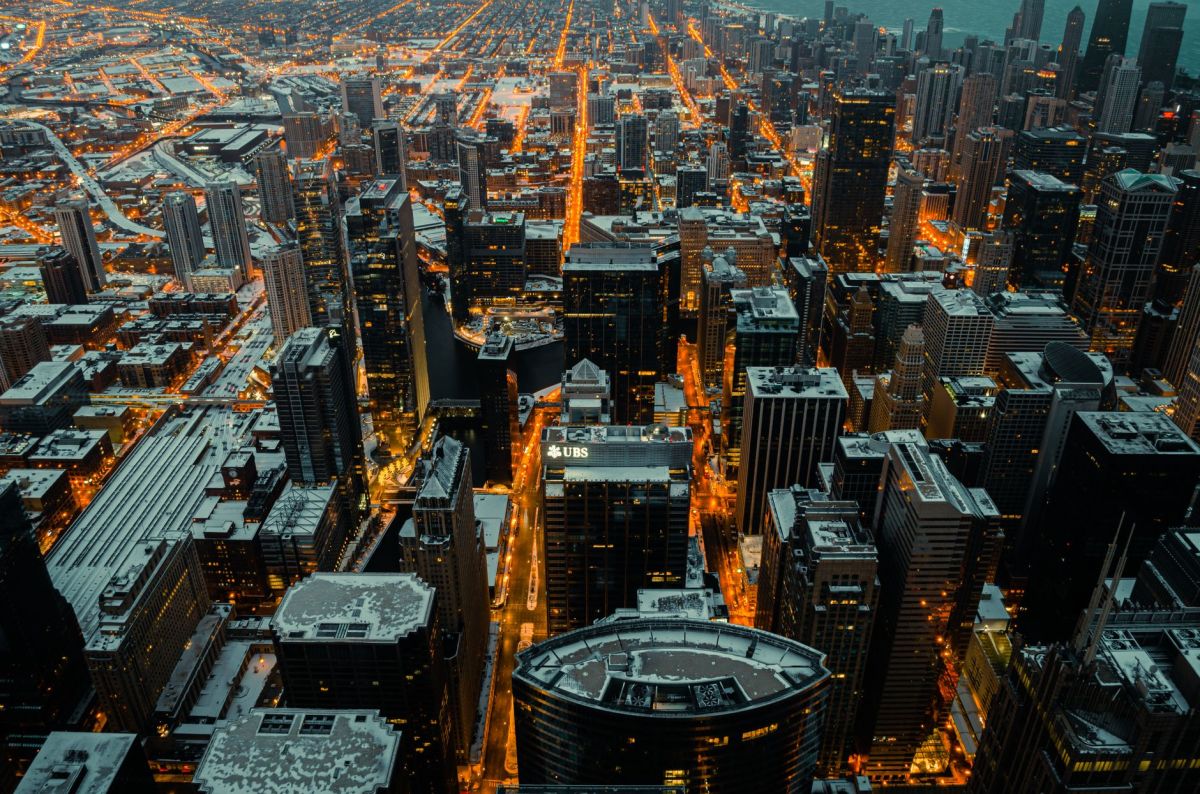
Imagine a city. It is empty of movement. There are no cars in the streets, no pedestrians scurrying to avoid them. Storefronts pronounce their contents, but you know—though not how you know it—that they are a lie. Silence makes your head ring.
Your eye falls on one specific building, and you have no idea why this particular one—its façade is brown and windows square just like any other structure’s—has called out to you. It is sterile and dead.
Then your ear registers the trilling of birdsong.
Dissonance. A conflict between the images and sounds on the page. A subversion of the reader’s expectations. But that’s only one kind of incongruity.
Writers and readers of dystopia are drawn to the genre in part because more than any other it presents an opportunity to examine dissonances, especially cognitive dissonance, on a vast scale. It is also no accident that dystopian societies in literature and film tend not to be democratic. A distinct lack of freedom, challenges to self-determination, and unequal power dynamics are the genre’s core features.
Many works of dystopian fiction engage directly with systemic oppression. One only needs to consider such masterpieces as Margaret Atwood’s The Handmaid’s Tale or George Orwell’s 1984. Their worlds are quite clearly dystopian: each is a “bad place.”
Atwood’s world incorporates active resistance. Orwell’s less so, or at least not as overtly. But one can imagine that Big Brother had at some point faced threats to its rule which, by the titular year, have been vanquished. In 1984, reactions to oppression and inequality consist mainly of accommodation to which cognitive dissonance, or “doublethink,” is central. As someone who came of age in Poland in the 1980s, I recognize Orwell’s world as my own, both then and again now, but also know that that there are reasons to remain hopeful. My story in the July/August 2026 issue of Asimov’s Science Fiction, “Brother Adalbert’s Last Shift,” is intended to be closer to 1984 than to The Handmaid’s Tale in its portrayal of reactions to autocracy.
Adalbert’s contemporaries take the systems of control that dictate their lives, down to their very duration, for granted. Few if any dwellers of New Chicago will look forward to dying at their assigned premature time, but they do not rebel. They have accepted the premise that their deaths serve the common good, that they support the perceived necessity of population control in the context of finite and sharply limited resources.
“Brother Adalbert’s Last Shift” is several things at once—a love story, a piece of environmentalist fiction, dystopian science fiction—but I hope that the readers pause to ask themselves some of the questions extant behind the curtain.
How did we get here?
Who is in charge?
Is everyone’s lifespan subject to rationing, or are some people exempt?
Is this society as egalitarian as it seems?
Why do the living not mourn the dead more openly?
What happens next?
Imagine the answers to these questions as you imagined the city at the beginning of this post. What do you see? Your answers may differ from those others may give, though there is likely to be some commonality between all of us. We are all here, reading science fiction, after all.
Here’s what my imagination tells me, though I can’t say that I had to strain it: the path that leads us to Adalbert’s world is indistinguishable from our observable reality. No imagination necessary, not really. That’s not to say that complete environmental devastation and totalitarianism are inevitable, but objects in motion stay in motion absent intervention (thanks, Mr. Newton), and our world is aimed at Adalbert’s unless we do something about it.
It is still possible to avoid Gilead or Oceania. This is where our imaginations get to do the work.
Imagine that being hopeful is rational and that nihilism doesn’t make any of us more interesting or sexier at parties. Imagine that the little thing you do today, such as getting out of bed or writing this blog post, can help stop some glaciers from melting. Imagine that your vote matters, because it most definitely does.
And most of all imagine that you and your life have intrinsic incalculable value regardless of whether you work sixty hours a week to add to the GDP, choose to care for your family, or spend all day reading sci-fi and pondering. Because you and it most definitely do, and don’t let anyone tell you any different.
 From Earth to the Stars