A Walk on Crete

by Neal Asher


I wake up early in the morning, put on my shorts and T-shirt, and head out into the kitchen living area. A glance out of the small window through the two-feet-thick stone wall reveals the bright lime-wash painted houses of the village, but only because the street lamp up at the top here seems to have a halogen bulb. It’s still dark beyond its reach. I make a cup of tea and sit at my desk. My body aches and I feel slightly nauseated. The former is because of the six-mile kayak run I did along the Cretan south coast through the Libyan Sea. The latter is because, at the best of times, ice cold Mythos beer served in a frozen glass is difficult to resist after such exercise, but I’d also got a nice email while down at the coast. It seems I not only have a story coming out in Asimov’s [“An Alien on Crete,” in our Jan/Feb issue on sale now] but now a novella in Analog. I count up, sip my tea. Is it four or five taken since I started again to write short stories?

With my present physical state I consider forgetting about the walk and making this a rest day—well, until the kayaking—but reject the idea. Finishing my tea, I check out the window again. A hint of division between sky and village now? Maybe. I make a cup of fresh coffee, sit down again, and pull on my walking trainers, puff on my e-cig. After that I pick up my iPad almost by instinct, but again remember I have no internet up here. I really don’t need the distraction, and am getting more done without it. Putting it down again, I look across at my other desk, my work desk. It’s empty of all but pens and stray paper because I hide the laptop away in case someone breaks in. Not that such stuff happens here very much. The danger of burglary is much greater in the UK. My present “short story” is not so short anymore, having just passed ten thousand words. I’ll need to think about what to do with it. I rattle my fingers on this desk—my dead wife’s desk where she used to do her thing—then stand up and check outside again. Maybe it will be light enough by the time I finish my coffee. Stupid to go stumbling about on the rocky tracks through the mountains in the dark. I fear the thought of twisting an ankle and not being able to walk.

I check my supplies: some tissues, and a plaster to go on one blistered toe should the one already on there come off. Even though I’ll be walking for eight plus miles with the temperature heading up to thirty, I don’t take water. Never really felt the need. I went gorge-walking with some people once who said I must carry litres of water. I took about half of what they suggested, and spent much of the gorge walk nipping behind rocks to urinate.

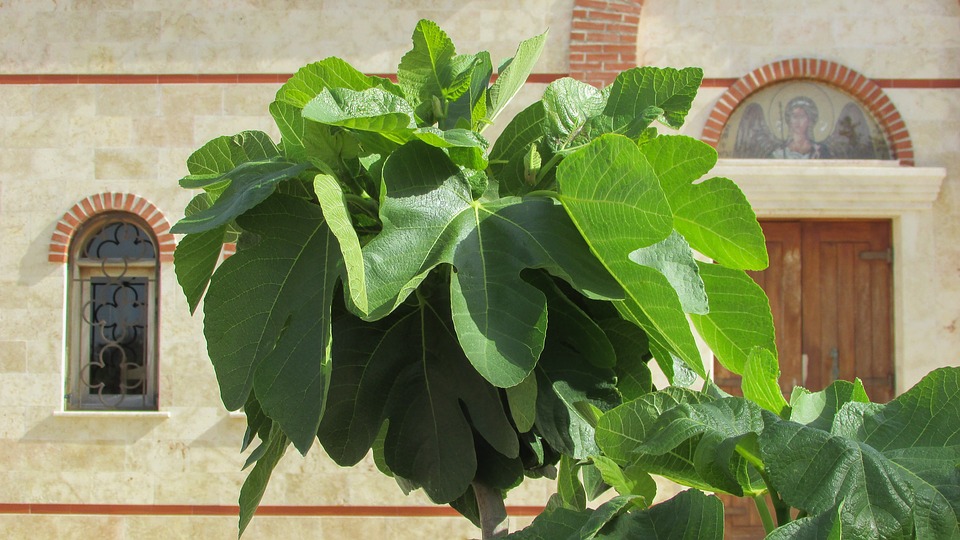
It’s a few minutes before 6:00 a.m. Something like OCD—or perhaps it is OCD—kicks in, and I gulp coffee, pick up my key, and am out of the door on the dot of 6:00. This is supposedly so I will know how long the walk has taken me, but I never check the time when I get back. I schlep up the path from my house, past where my car is parked by a big ugly new house being built, walk up a steep road with olive trees on my left and broom and fig on my right. Even as I reach the top of this, there is enough light for the dense yellow flowers of the broom to be painfully bright. At the top of the road I can see the lights of Sitia and the sea off the North coast. A track from the corner takes me down through olive groves, up past a market garden, then to the track up the hill. I’m warming up and the aches are fading, but still I feel some trepidation about what lies ahead. At the top of the mountain are wind turbines. The track going up has been concreted in places to stop it sliding away because it is so steep. I liken it to climbing about thirty staircases.

I stomp up, slowly, but never stopping. Lungs soon start going like a compressor even though I am walking slowly. Olive trees are everywhere; also the thorny scrub that is the reason for Cretan national dress including thick knee-high boots. By the time I reach halfway, I’m pouring sweat, and take off my shirt. At the top it is cooler below the steady whoomphing of the turbines. Leaning on his stick, a shepherd watches me from a promontory, and I see sheep coming down the track. I change course to take another route because the sheep will run away from me, and then he’ll have a bugger of a job rounding them up.

“Kalimera,” I say.

“Yaa,” he replies after a pause, as if speech is something that has escaped him up here.

After a long walk under turbines, the sun breaking over the mountains in clear blue sky, I come to the turning that will take me down. I remember seeing, in a glance, something bright green here and thinking some idiot had thrown down some rubbish. Closer inspection revealed a bright green lizard over a foot long with a snake wrapped around it. The lizard’s head was in its mouth. I watched for a while and the snake took fright, dropped its catch, and slid away. The lizard looked groggy but still alive. As I walked on I did not suppose he would live long, because surely the snake would be back.


Scribed in the white line at the edge of the road, in English, are the words “Never Stop Writing.”


I head down again. I can now see the landscape laid out below: the market gardens, vineyards, the clustered white houses of Handras, and the rocky mount with its ruins that is my turn around point. That’s Voila, pronounced “Voyla,” and the ruins are of the Tower of Tzen Ali—some Turkish bigwig of the Ottoman Empire. On the way down to the roads that lead there, I pass a monument: a flat slab of marble with a chain fence around it and a marble monolith at the centre. It is on a rough mountain slope with nothing else around but scrub and sheep. I read the words with my mediocre Greek, but only later hear the story. It’s for a guy who was a school teacher when the German army invaded. He became part of the Cretan resistance and was captured. The Nazis tortured him and buried him alive.

Through a small pine grove, I reach the roads again and start heading round to Voila. As always, at the turning that takes me back there, I pause and look down at the white line beside the road. I believe in nothing supernatural, but sometimes things happen in your life that are weird, to say the least. After my wife died, I walked and walked. One day I felt particularly bad and decided to walk until I felt better or collapsed. The point when I did feel better was right here. I stopped and looked down. Scribed in the white line at the edge of the road, in English, are the words “Never Stop Writing.” I’m pretty sure it relates to white line writing, maybe a stencil in the machine, maybe something the people who paint the lines put down every now and again for whatever reason, maybe something someone else wrote—again for whatever reason. But bloody hell, they were some of the last words my wife said to me before she died.

I walk on, past more olive trees, vineyards, market gardens, past where a spring had been routed through ancient stonework like something straight out of C.S. Lewis, and then on past Voila itself. Ruins are ruins—fallen stone walls—but the tower itself is interesting. Off to one side is a church, the door always open, icons and other paraphernalia inside probably hundreds of years old. A dish scattered with money where people have paid for the candles they’ve lit. Not something I would see in Essex.

Next through Handras. Old Greek houses are here, many of them now stripped of their layer of concrete to expose the stone. Beautified. Narrow streets lead off in every direction. Dogs bark, trees are laden with oranges and lemons, and nearly every small garden or yard is a paradise of perfect plants. Another track beyond takes me past more of the local agriculture, past rusted water pump windmills devoid of their canvas sails, their water cisterns sitting nearby, past quince trees that produce rock hard fruit the size of apples. Along here, later in the year, I will be able to sample five to ten different varieties of grape as I walk. They grow in the edges like blackberries in the UK. Armeni is next, another quaint village. I walk out past a yard I remember. Here I saw a jolly fat woman in a frilly apron cradling a rabbit. It seemed a scene out of Beatrix Potter until she snapped the rabbit’s neck.

Another track, past fig trees that will later produce delicious black figs. The cicadas are screaming now. I once considered writing a book about adventures on Crete and titling it “Cicada Scream.” Double meaning there, because yes, it describes the noise, but it also describes just how crazy things can get here in the hot months. On further tracks I am glad of my sunglasses as cicadas bombard me and there are so many one is sure to hit me in the eye. I feel little splashes of liquid, too, as they piss on me.

Beautiful gorge on the left, winding tracks, careful now because I am tired and the loose rock on the tracks can be treacherous. I pass more gardens, low down. Someone is turning on the water for his olives. Black water pipes strew the ground in every direction. Pear trees on my right, but they are not ready yet. I go up past Agios Yorgos (Saint George’s) and am on the track for home. It is yet another beautiful little building on this island where you can point a camera and click in any direction and have a postcard picture.

Finally I stomp down the road to home, and again forget to check how long this walk took me. A frappe seems in order and I enjoy that while I cool down. Next a shower—sweat-soaked clothing into the washing basket—and in clean clothes, I consider the rest of my day. It will be the same as yesterday and the day before, and it will be the same tomorrow. I stoop down and take my laptop from its hiding place, put it on the desk and turn it on. Writerly procrastination sends me off to make a cup of tea, but then I sit down, open the laptop, and begin.


Neal Asher <http://theskinner.blogspot.com> has had numerous short stories and twenty-six books published. His most recent American publications include the first two volumes in his Rise of the Jain series: The Warship (2019) and The Soldier (2018). Both books are from Nightshade. Before becoming a full-time writer, Neal was an engineer, barman, skip lorry driver, coalman, boat window manufacturer, contract grass cutter, and builder. The author tells us, “I’ve been an SF and fantasy junky ever since having my mind distorted at an early age by J.R.R. Tolkien, Edgar Rice Burroughs, and E.C. Tubb.” He lives sometimes in England, sometimes in Crete. Neal’s last tale for Asimov’s, “Memories of Earth,” appeared in our October/November 2013 issue. After too long an absence, he’s back with an unsettling tale.

Q&A with B.S. Donovan

Self-driving cars may have been the spark of inspiration for B.S. Donovan’s first story for Asimov’s [in our Jan/Feb issue, on sale now], but “You’ll Live” itself is driven by its characters. Read on for B.S.’s thoughts on people-centered science fiction, the importance of plotting things out, and why “You’ll Live”’s title is key to the story.


Asimov’s Editor: How did this story germinate?

BSD: It started with self-driving cars, actually. And it veered off from there. I think that when we have real self-driving cars, our lives will be very different. And I don’t just mean that it will be easier to get to work. Since we won’t have anything to do when in the car, we will use it more like a living space. People will pass their time like they would anywhere else, if they’re stuck in the space together and have nothing else to do. A particularly friendly couple will use the opportunity to get busy. Kids will watch TV or play games. This led me to think about what it would be like to be a family together, living in a car. It all kind of went downhill from there.

AE: Do you particularly relate to any of the characters in this story?

BSD: Not exactly, but partly. I don’t think I could have written this story ten years ago. I relate to the protagonist indirectly through my children. I’m a father of two wonderful girls who fight and argue with each other. They also laugh and play together. And despite how much they annoy each other, there are moments when you can see just how fiercely they care for each other. When they were in elementary school, they’d share futons on the floor (we live in Japan), and one of them, usually the little one, would end up facing the wrong way and extending a foot into her sister’s armpit, or even under her chin. It wasn’t exactly that moment that inspired the story. But, as a father, I know what it’s like to see kids sprawled together like puppies under blankets, not knowing which hand belongs to which kid, and worrying whether someone is going to wake up with a bloody nose because of a heel to the face.

AE: How did the title for this piece come to you?

BSD: It came to me as I was writing the fourth paragraph. When I was a kid, like all kids, when I wanted something, I’d say, “I need it.” To which my parents would always answer, “Unless you’re about to die, you don’t need it. You just want it.” Which is true. As an adult with my own children, I can genuinely say that I’m glad that they took the time to reason with me. But to the kid me, it was not only annoying, but clearly false. Just listen to my voice and you’ll know that I might actually die in the next twenty seconds if I don’t actually get what I want because I need it so much. And yes, my folks did tell me, “You’ll live.” And they were right, as evidenced by the words you’re reading now.

Because the title really is the story. Without those words, the story is only just a commentary on a future that is all too possible and too sad to write about without some redemption. The title is the beginning. The title is in the middle. It is the end. It serves as bookmarks for how things change in the story. The end hopefully makes it worth enduring the pain that you imagine right along with them.


Nine times out of ten, if I just synopsize, then I can continue. I get tired, just like anyone. But if I can paint a simple picture in a few words, then it’s like I just have to color it in. Like sketching something before painting it.


AE: What made you think of Asimov’s for this story?

BSD: A very good friend of mine, who is also a writer and also one of my go-to alpha readers, gave me some feedback on the story early on. He is a hard science fiction fan, and he commented that the story could have been set in any time period or setting. While I disagree a little bit (the setting is another character, I think, perhaps more than the boyfriend/father figure of Rich), the comment told me I was on the right track, which is that the story is about the people. It is about our hero and his brother, Greg. That’s the story. Not the self-driving car, not the VR, nor the stims or seds. It’s about the characters.

What attracts me to Asimov’s is just that: the stories are about people. And how we struggle, or love, or fight, or deal with the fantastical worlds that the authors dream. And that’s why I thought of Asimov’s first.

AE: How much or little do current events impact your writing?

BSD: Interesting question; in this case, it impacted me a lot. The current political and economic situation in the states drove me to wonder what would happen if we continued on this trajectory. What would happen if the 1%-ers replaced all workers and we all went on welfare? That said, I believe that there’s a lot more to our subconscious than just current events. And I’m never sure what event (current or otherwise) is going to spark an idea.

AE: What is your process?

BSD: I am what they call a plotter. I discovered this after trying to be a pantser for a couple of years. For those of you who don’t know, a plotter is someone who plots out a story in advance. A pantser is someone who flies by the seat of their pants (thus pantser). As a pantser, I can get a thousand words onto a page without problems. Beyond that, my subconscious stops working. And if I don’t know where I’m going, then I get bogged down. I found that if I can write a synopsis of my story (of whatever length), then I can write much better, faster, stronger than I could otherwise. So now I plot (or at least synopsize).

I need to really know where I want to go with a story in order to start writing. I need to have a scene in my head, a character, a direction. And that is what allows me to let the words come out. From there, things come together—like the title I wrote about above, and the ending.

AE: How do you deal with writers’ block?

BSD: I plot. LOL. Seriously, though. Nine times out of ten, if I just synopsize, then I can continue. I get tired, just like anyone. But if I can paint a simple picture in a few words, then it’s like I just have to color it in. Like sketching something before painting it.

Also, I write longhand. I didn’t used to do that either. But I discovered that the words come out better with a pen in my hand. Yes, I can type. Pretty well, too. I save that for later drafts.

AE: What are you reading right now?

BSD: I’m reading a couple of things. I like science fiction, of course, but I also enjoy thriller, noir, horror, lots of stuff. Specifically, I’m reading Richard Stark’s Parker books, Stephen King’s 11/22/63, and Martha Wells’s Murderbot stories (awesome!).

AE: What other careers have you had, and how have they affected your writing?

BSD: I have been a bunch of things. A bartender, a high school teacher, a finance manager, and (even now) a logistics manager. How they affect my writing is simple, but not what you might imagine. My work life is driven by, well, work. And at some point there needs to be something else. I reached a point where if I had to write one more capital expenditure request, I thought I might explode. I started to study Japanese calligraphy, which is intensely rewarding and about as hard as it looks. And then I found a writers’ group with amazing people, and there you are.

AE: How can our readers follow you and your writing?

BSD: I dislike Twitter. I think it is a dark place. I rarely use Facebook. It is a falsely bright place. I have a blog, which is old-fashioned, and you are more than welcome to follow. You can see my calligraphy and read about me, my stories, and how great Japan is, at http://www.bsdonovan.com.


B.S. Donovan has been a bar tender, English teacher, finance controller, and logistics manager. But his passions are fiction and art. Born and raised in Boston, Massachusetts, USA, he currently resides in Chiba, Japan. In addition to writing fiction, he practices Japanese calligraphy. In his poignant first story for Asimov’s, two young boys learn to appreciate their mom’s sad, wry observations.

Q&A with Doug C. Souza

For Doug C. Souza, writing offers the opportunity to make connections. He took the time to talk to us about connecting with readers, writing connected stories within a larger universe, and how “The Kaleidoscope City” [in our Jan/Feb issue, on sale now] approaches familial connections in a world with lengthened lifespans.


Asimov’s Editor: What is the story behind this piece?

DCS: “The Kaleidoscope City” is about soaking up time with loved ones. Not just in quantity, but with more of a focus on quality. The first nugget of this came about when I started to give my characters the necessary medical adaptations so they could survive extended space travel and living on the moons of Jupiter and Saturn. Once the characters started interacting with the world I created, I noticed how much longer they lived, and I wondered how this would affect relationships within a family.

Would people put things off more frequently if they had more time to live? If so, how would they face the realization that they could’ve simply hung out more with friends and family instead of always looking down the road?

AE: Is this story part of a larger universe, or is it stand-alone?

DCS: My wife tells me most of my stories are connected whether I intend it or not. Looking at “The Kaleidoscope City,” I definitely see it existing in the same universe as “The Callisto Stakes” (a story that appeared in Asimov’s about a year ago). Fortunately, things have improved within my most recent story, so that’s good news for the folks living there. One of my most trusted beta readers continues to point out the shared universe of my stories whenever I mention putting an anthology together. It’s a fun puzzle to toy with.

AE: Do you particularly relate to any of the characters in this story?

DCS: The weird thing with “The Kaleidoscope City” is that I started it from the viewpoint of Lynette, as the kid hanging out with their father. Once I sent the first draft out to my beta readers, it was brought to my attention that the father in the story has a unique perspective. I was stoked when this facet connected with readers in a way I hadn’t anticipated. As a writer, it’s always my greatest hope to make that kind of connection.


If you sell one story a year, or twenty, it’s the connection you make by sharing something sacred that feeds the need to continue. Even if it’s just one person in a local writing group that pulls you aside to share what your story meant to them—that’s gotta be celebrated.


AE: Who or what are your greatest influences and inspirations?

DCS: I’m everywhere with influences and inspirations. One month, I might be hooked on Louis L’Amour, and the next jumping into some graphic novels. I tried A Man Called Ove by chance and had a blast. It’s outside my usual genre of interest.

Recently, I’ve gone back to Ray Bradbury to feel some heart in stories. I also like reading what he has to say about writing. I connect with writers that recommend writing a lot for the enjoyment while keeping the reader in mind. One of the biggest challenges a writer faces is staying focused on their purpose. Success in selling stories can be a double-edged sword in which you start examining your stories to see what made them marketable while others failed. Falling into that trap can mess with your head when you’re trying to write your next story. This might just be my own problem, who knows?

AE: Do you have any advice for up-and-coming writers?

DCS: It’s cliché, but I gotta say, “Don’t give up.” Or maybe, “You’re the only one that can stop you.” I’ve had some huge successes in my writing career that I never thought I’d enjoy. I’ve also had some low times, where a story sale felt like a lost cause. Nearly every successful writer I’ve met doesn’t have a secret to how they sold their stories—it’s mostly, “I just kept writing and submitting.”

Whenever I’m at a lull for story sales, I remind myself of the hot-streak that usually comes after the slow times. Now, for some, they may not call it a “hot-streak,” I can’t judge for others what a success is. Maybe the lack of sales allows me to get back to writing for myself and not lose focus. One constant is true: nothing happens until you put your butt in the chair and write.

If you sell one story a year, or twenty, it’s the connection you make by sharing something sacred that feeds the need to continue. Even if it’s just one person in a local writing group that pulls you aside to share what your story meant to them—that’s gotta be celebrated. I’ve had writers email me who were just starting out, and yes, their stories were a bit messy, that’s part of it. Some gave up; some kept hammering away. Those that put in the work to clear up their message—well, it’s so cool to see them reach new levels. I can’t share their personal details, but just last month one of them placed in an international contest for the second time.

So bottom line: stay at it!

AE: What is something we should know about you that we haven’t thought to ask?

DCS: As a teacher, I’ve noticed kids aren’t reading as much as they used to. Those that do love getting lost in a story the way one can only by reading. Since I don’t develop video games or make movies, I remind myself that writing is a privilege few take advantage of. The tools don’t cost much and the resources can be found at your local library or thrift store. Yeah, it’d be easier to have my stories made into the type of media that’s easier to consume, but then it’d lose something.

When a person takes the time to read a story of mine, I get the opportunity to pull them all the way in for the ride. Knowing that gives me the extra boost of energy when the words won’t come or the characters are stuck.

That being said, I’m not above a multi-million-dollar contract.


Doug C. Souza can be found at dougcsouza.com and on Facebook. He lives in California with his family.

Getting to Know Sheila Finch

For “Not This Tide” [in our Jan/Feb issue, on sale now], Sheila Finch drew on her childhood in war-torn London, and on research enabled by the magic of librarians. Below, she delves into her history with this story, as well as her history with the wider world of literature.


I grew up in London during World War Two, which means I was there throughout the almost nightly bombing raids on the city. I don’t know why I wasn’t evacuated to the safer countryside as so many children were; all I know is there were a lot of children still in the city, and schools were open until they were damaged by bombs. After a while, there were no neighborhood schools open where I lived, so that meant I spent a lot of time with no schooling at all. Right after the war ended, I would’ve told you that I had no lingering bad effects from growing up in a war zone, but the disruption of marriage and moving to Indiana to attend grad school brought some episodes of traumatic memories which I learned to cope with. Friends often asked why I didn’t write about my childhood experiences, but I couldn’t see how to use them.

Then one morning after my oldest daughter and I had spent the previous evening looking at my father’s war record in the Royal Artillery, I found the beginnings of this story in my mind. The first thing I did was give myself a sister I never had, to make sure the story wouldn’t be entirely tied to the narrow plot of my own history (I’ll leave it to the reader to guess which events are from my experience and which belong to Rosemary Forrest). Then I settled in to research the history of the Maunsell Forts, Star Wars-like structures that served as anti-aircraft gun platforms in the English Channel.

At one point I almost gave up in frustration, because every source I found pointed to the same book of first-person recollections of soldiers’ lives on the fort—and I couldn’t locate the book. Just in time, a wonderful friend who happens to be a retired county librarian came to my rescue. There was one lonely copy of this book in the U.S., located in Harvard University’s Special Collection, and not allowed out. Never underestimate the magic of a librarian! The book came to a local county library, where I was allowed to study it for one whole day. It was a treasure trove of fascinating anecdotes and odd facts, many of which made their way into my pages. The title, “Not This Tide,” comes from a poem by Rudyard Kipling, one of the great poets of World War One, and a personal favorite of my father’s.


If you’re wondering how I broke in, I kept sending out my stories and getting rejected over and over, until one day I think an editor said, “Oh for heaven’s sake! Publish this woman’s story and be done with it!”


I always knew I was going to be a writer. I folded bits of paper and wrote “books” on them for my stuffed toys when I was quite young. And I read everything I could lay my hands on—still do. My parents had a good size collection of books which I made my way through, and family members gave me their old books along with their old clothes to be cut down to fit me (clothes were rationed too during the war, and for several years afterward). When the schools reopened, I was only a year away from the dreaded 11+ exam that sorted kids into college-prep schools or ones destined to deliver a workforce for business and industry. All that reading paid off, and I passed. When the library reopened, I devoured E. Nesbitt and Rudyard Kipling, H. Rider Haggard, and eventually John Buchan, Jules Verne, and H.G. Wells. And a few years later, there was a marvelous comic book called EAGLE, full of science fiction stories.

When I wasn’t reading, I was writing—stories, plays, poems. Things haven’t changed much over the years. I still am happiest when I’m writing, though I admit, not at the frenzied pace of my youth where I could complete the first draft of a five thousand word story in a day, finally falling off the chair exhausted after six to eight hours of hard work. My reading today is broad-based, though I must admit to a weakness for suspense as well as science fiction—James Lee Burke and Michael Connelly are favorites, along with Elizabeth George and Daniel Silva. If you’re wondering how I broke in, I kept sending out my stories and getting rejected over and over, until one day I think an editor said, “Oh for heaven’s sake! Publish this woman’s story and be done with it!” Or something like that.

Writing doesn’t pay the bills, especially at first, so I spent a good deal of time on my second career as a teacher. My first experience was a class of second-graders in the East End of London, a mile down the road from the docklands setting for Call the Midwife. Then when I came to California, I found my niche in community colleges and did that for over thirty years. There’s a problem with teaching literature for a writer—and especially teaching creative writing. You become too fixated on technique and method and it tends to get in the way. One day, a fiction writing class challenged me to write a story week by week in class, following my own methods. It was scary and exhilarating at the same time, but it got me over that particular hump. If you haven’t already seen this story, you’ll be able to find “Miles To Go” in a collection of my published stories that I’m currently putting together.

What science fictional prediction would I like to see come true? The establishment of Utopia with world peace. Literary critics complain Utopia is dull, but I’m ready for a little peaceful boredom about now.

How I Wrote a Rondel About Time Travel

Marie Vibbert


My time travel poem [on sale in our current issue] started, appropriately enough, in 14th Century France.

I was researching another topic when I found the poet Eustache Deschamps and fell in love with his short, sardonic verses. His nickname was “The Morel” and he may have been dark-skinned like the morel mushroom.

Look at this poem by Deschamps and you’ll get a hint of his no-nonsense pessimism:


Fleas, stink, pigs, mold,
The gist of the Bohemian soul,
Bread and salted fish and cold.

Leeks, and cabbage three days old,
Smoked meat, as hard and black as coal;
Fleas, stink, pigs, mold.

Twenty eating from one bowl,
A bitter drink -it’s beer, I’m told-
Bad sleep on a straw in some filthy hole,
Fleas, stink, pigs, mold,
The gist of the Bohemian soul,
Bread and salted fish and cold.


One of the forms I really liked of his was the triolet. It was so compact and structured! So I set off, at first, to write a time travel triolet. (For the alliteration alone!)

The triolet consists of eight lines, with the first couplet repeating as the end and the first line repeating in the middle. So we get a rhyme scheme of:


A line one

B line two

a new line that rhymes with one

A line one

a new line that rhymes with one

b new line that rhymes with two

A line one

B line two


It may seem easy at first – the poem only has five unique lines with all the repeating. The skill of the triolet lies in fitting your meaning in so few words, much like a haiku. It’s especially thrilling to pick a line one whose meaning will change each time you repeat it. The triolet is almost always in iambic tetrameter:


x     /   x   / x   / x / Come live with me and be my love


Here is a period example by Froissart. Notice how he breaks the pattern a little by adding a spondee (two stressed beats—“Love, love”) to the front of his A line.


Rondel
Jean Froissart (1337-1404)

Love, love, what wilt thou with this heart of mine?

Naught see I fixed or sure in thee!
I do not know thee,–nor what deeds are thine:
Love, love, what will though with this heart of mine?

Shall I be mute, or vows with prayers combine?

Ye who are blessed in loving, tell it me:
Love, love, what wilt thou with this heart of mine?
Naught see I permanent or sure in thee!


I love the irony of taking a medieval poetry form and using it to write poems for science fiction magazines. My first triolet was published in Asimov’s back in February 2015, and was titled, “An Unrequited Process Loops.” I thought the repeating refrain was perfect for reflecting the looping logic of a lovesick robot.

Wanting to do it again, I chose the title: “Unlooping: A Time Travel Rondel.” I figured time travel would be another great place to showcase repetition.

The first thing I have to do is write the A line, the lines that will repeat three times. The first line to come to me was:


What’s past is future is passed


I liked that the meaning of the line could be changed by interposing the two homonyms “passed” and “past.” What’s passed is future is past? I don’t know what it means exactly but I’m here for it!

But what could I pair it with? In “Unrequited” I had a great repeating pair:


Love is just a chemical in the brain

Outside the realm of the electronic


It started as a statement and ended as a question. I wanted something like that. So I wrote:


An unwanted time-travel catch

What’s past is future is passed.


Ooh, I liked it . . . but the thing was, my A and B are too close. . . . “Catch” and “passed” almost rhyme. Could I come up with three more lines that rhymed these two and still have a coherent story?

I started from the top. The fun thing about these forms is it that it can feel like filling in a crossword puzzle. You make yourself blanks and plop things in them. Okay, first draft, some lines to play off the couplet:


My life is a black vinyl record

Your life gave it a scratch


There’s a hint of loss? I like it. Let’s see what it’s like plugging in my repeats and filling in lines between:


My life is a black vinyl record

Your life gave it a scratch

Each year I skip on your cord

My life is a black vinyl record.

At least we’re moving forward (terrible rhyme forced in temporarily to match the A)

An unwanted time-travel catch (gotta use that! my b)

My life is a black vinyl record

Your life gave it a scratch.


That was my crappy first draft. I didn’t get my past is future line at all.

After several bad drafts that I read to my friends, I realized that . . . the triolet was just not happening. I went back to Eustache Deschamps and looked for inspiration in some of his poems. Far more often than the triolet, he wrote rondeau.

The rondel is a variation of the rondeau that has thirteen lines, two four-line stanzas and a final five-line stanza. The first two lines again repeat. (A triolet is sometimes called a rondel simple, the shortest form of this style.) In this version, the couplet repeats in the middle instead of just the first line, and the poem ends with the first line again. For a rhyme scheme of: ABba abAB abbaA

With more room to work I was able to put in all the lines I’d thought of and mess them around. I solidified the meter by reading aloud while slapping my knee. Removing a syllable, “My life, a black vinyl record,” got the stresses and unstresses lined up better. “Your life, it gave me this scratch.” Ooh, yeah we were getting rhythmic!

My new, stronger draft still felt wonky. The opening couplet didn’t work as a refrain. It made more sense as something happening once, with the rest of the repetition following. I really wanted “What’s past is future is passed” to be my refrain, and as a first line it was so dense as to be impenetrable. I decided to move the refrain to the end of the first stanza. It felt like lopping the rondel’s head off, but on reading this draft, I felt I’d done the right thing. I sent it off to Asimov’s, and here I am, writing a blog post about it!
Which is a long way of saying that playing with form can be an aid and a fight. You get to drop words into slots. You wrestle words into places. When the slots get too restrictive, well, there’s always the hammer and the blow torch!

So why write restrictive forms in the first place? One of the things I want in my poetry is to get away from myself, my habits and standard phrases. Fixed forms force that to happen.

I hope you enjoy my hacked rondel that started out as a triolet!


Besides selling thirty-five short stories, a dozen poems, and a few comics, Marie Vibbert has been a medieval (SCA) squire, ridden 17% of the roller coasters in the United States and has played O-line and D-line for the Cleveland Fusion women’s tackle football team.

Q&A with Mar Catherine Stratford

Influenced from an early age by kids’ books about the unsolved and zir relationship to gender, Mar Catherine Stratford loves a good mystery. This is obvious from zir enigmatic “Third Shift” [in our Jan/Feb issue, on sale now]. Below, ze discusses this story’s origins, working through writers’ block, and the authors who have inspired zir most.


Asimov’s Editor: How did this story germinate?

MCS: I was at the Denver Natural History Museum looking at a diorama of taxidermied animals, which included a rattlesnake, and thought, I should make a character named Rattlesnake. A few weeks later, I was taking a writing class that had us write a few paragraphs in a strong character voice. Mav’s voice came to me from that exercise, and from there it all kind of fell together.


AE:
Is this story part of a larger universe, or is it stand-alone?

MCS: I wrote this piece to be stand-alone, but I do have enough ideas about the larger conspiracies in this world, and how Mav, Rattlesnake, and Miguel grow and change after the story cuts off, so I’d like to revisit this world at some point!


AE:
Do you particularly relate to any of the characters in this story?

MCS: Yes—all the characters in “Third Shift” are related to me in some way. When I began writing this story, I was working a job with odd hours and thinking a lot about how to leave that job, so those feelings went into Mav. I’m also a genderqueer person like Rattlesnake, and like Miguel, I’m a little bit of a political theory nerd.


I sometimes describe my writing as “stories about aliens except the aliens never actually show up.”


AE: Who or what are your greatest influences and inspirations?

MCS: Charles de Lint’s Newford books have been immensely influential to me. Him, along with Holly Black and Francesca Lia Block, are the writers who introduced me to the idea that you could have a story set in contemporary America and still fill it with unusual experiences, so while these are writers whose work I encountered at a fairly young age, I’d say they’re still among my greatest influences.


AE:
Are there any themes that you find yourself returning to throughout your writing? If yes, what and why?

MCS:
I sometimes describe my writing as “stories about aliens except the aliens never actually show up.” This is to say that thematically, I’m very interested in mystery, and the impacts that mystery has on my characters, and aliens make a pretty good mystery. I think my interest in this theme comes from a few places, including the mysterious confusion I lived with for years as child and teen before understanding my gender identity, and a fourth grade obsession with this “Unsolved Mysteries for Kids” kind of book series.


AE:
What is your process?

MCS:
I typically start working on a story with a few significant images all formed in my mind. Then, I put together an outline of the main beats in each scene, and from there typically work in a cycle of writing and revising.


AE:
How do you deal with writers’ block?

MCS:
Talking it out with other writers—I’m lucky enough to be in the University of Arkansas creative writing MFA program with a number of really excellent, creative folks who can listen to me and suggest the kinds of big structural changes that often help me get unstuck.


AE:
What are you reading right now?

MCS:
I’m currently reading Kingdoms of Elfin by Sylvia Townsend Warner, which is a collection of short stories that combine the kind of New Yorker literary short story sensibility with fairies. It’s really incredible writing; thank you to the June 13, 2019 Strange Horizons book review that reccomended this collection!


AE:
Do you have any advice for up-and-coming writers?

MCS:
I think I’m still an up-and-coming writer, so I don’t know about advice for other people, but if I could give advice to myself when I was just starting to write fiction, I’d tell me to use outlines, and don’t be afraid to tell the reader what they need to know.

AE: How can our readers follow you and your writing?

MCS:
I’m on Twitter @maricatmaricat, and my website is http://www.maricatmaricat.com.


Mar Catherine Stratford (ze/zir/zirs) is a fiction student at the University of Arkansas creative writing MFA program, and one-half of the team behind Swamphouse Press Zines. Additionally, ze is a foster parent to a fluctuating amount of kittens, and friend to all animals.

How to Read “Selfless”

by James Patrick Kelly


too much me

If, as I suspect, you are a frequent reader of Asimov’s, you probably know that I write a column there called “On The Net.” Ostensibly it’s about my continuing hunt for interesting websites about science and science fiction, although I occasionally stray into the more remote precincts of popular culture. In the course of my explorations, I often share information about my life as a writer. In fact, I sometimes worry that I’ve overshared. Thus some (many?) of you may know more about Jim Kelly than you ever wanted to! So, with Sheila and Emily’s permission, I’m going to skip the interview. Email me if you want to know how I got into this biz, or who has influenced me or what I’m working on now. I guarantee a prompt reply!


“Selfless,” in particular, lends itself to dramatic reading because of its oddball point of view.


print v audio

Instead I want to discuss my new novelette, “Selfless” in its two current incarnations, print in the magazine and audio on the website. Depending on how you arrived at this blog, you may already know that I recorded the novelette for Asimov’s here at the fabulous, high-tech James Patrick Kelly Studios (my walk in closet). Continue reading “How to Read “Selfless””

Q&A with Neal Asher

Drawing on his time surrounded by the the rich natural beauty of Crete, Neal Asher brings us a story full of what he calls “sensawunda stuff” with “An Alien on Crete” [in our Jan/Feb issue, on sale now]. Read on to learn more about his inspiration, his history as a writer, and why he would like to live in the universe of his own stories.


Asimov’s Editor: What is the story behind this piece?

NA: Again, as is usual with me, I was ahead of my publishing contract with Macmillan having one book, The Human (third book of the Rise of the Jain trilogy), ready, bar a bit of editing, for publication almost a year before I needed to hand it in. I’ve wanted to return to writing more short stories for some time, since it was through them I got my first stuff published. I also feel that the change, the discipline and the necessity for brevity are good for my writing. I can explore stuff outside of my long-running space opera series too. It also makes good business sense to expose readers who might not have heard of me to my stuff. And opportunities had arisen (which I can’t talk about) concerning the TV streaming services. So I started writing some more short stories.


AE: How did this story germinate? Was there a spark of inspiration, or did it come to you slowly?

NA: I am lucky enough to spend half of my year on the island of Crete and there, besides kayaking and swimming, I spend a lot of time walking in the beautiful mountains. One of the advantages of only needing a laptop, or even just pen and paper to do your job, is that you can do it anywhere. Being an SF writer, I of course visualized all sorts of sensawunda stuff in those mountains: starships in the sky, alien plants growing amidst the rest, some places where you could think you were on an alien world, how the walk would be while installed in a new Golem chassis and, of course, an alien landing there. Continue reading “Q&A with Neal Asher”

Q&A with Brittany Hause

An image of the Archaeopteryx fossil found in Berlin made a lasting impression on Brittany Hause when they were a child. Years later and inspired by that image, Brittany’s poem “billets-doux” [on sale now in our current issue] has made a lasting impression on us. Read on for a more in-depth look at the inspiration for “billets-doux” and to learn about Brittany’s works in progress.


Asimov’s Editor: How did this poem germinate? Was there a spark of inspiration, or did it come to you slowly?

BH: The first image sketched out in “billets-doux”—the establishing shot, I suppose—was also the first element of the poem to come to me. For a few days, that was all I had of the story that would later tell itself with little effort on my part: a static vision of the crisp, unmistakeable lines of a modern shoeprint pressed into rock alongside the equally unmistakeable contours of a pre-Cenozoic fossil. That said fossil happened to be Archaeopteryx, specifically, is unsurprising—pictures I saw in childhood of the famous full-skeleton specimen found in Berlin, the ur-bird with its head thrown back and limbs spasming out in a weird forever-dance, made an impression (pun intended) that’s never quite left me.

I let this anachronistic tableau rattle wordlessly around in my head for a while before I put it to paper. When I did finally scribble the idea down, it seemed to take the form of a three-line poem of its own accord.

At first pass, I considered that to be the finished product: a standalone haiku-like sci-fi piece (what many call “scifaiku”). But then some photos I’d seen years before in an art history textbook suddenly swam to mind—the stark shapes of ancient human hands with fingers outspread, empty spaces outlined in red and black on the cavern walls of Pech Merle, and I thought: It’s not an accident—it’s a message. I wrote the rest of the poem in the same sitting.

I’m a plodding sort of writer, generally. Fiction pieces, especially—whether poetry or prose—are in most cases only wrung out of my system in tiny, disordered fragments jotted down over the course of several noncontiguous days before being rearranged and severely edited. So to have a poem flow out all at once for me like that was a nice change of pace.

Something about the first stanza looked naggingly familiar, though. I couldn’t shake the idea that I’d seen similar imagery in someone else’s poetry before.

After some vague but determined googling, I finally tracked down the piece haunting the fringes of my memory. There are enough differences to put my fears of unmeaning plagiarism to rest, but I’m almost certain that the immediate inspiration for the fossilized sneakerprint of “billets-doux” is the second poem Tom Brinck gives as an example in his “SciFaiku Manifesto,” one of the places I turned for more information when I first heard of scifaiku a couple years back. Brinck’s “Digging up an ancient city” is probably the subconscious reason “billets-doux” came out in haiku-shaped stanzas to begin with, and the reason for the shout-out in the subtitle.

AE: What made you think of Asimov’s for “billets-doux”?

BH: The sci-fi elements of this poem are overt, and central to the piece. The time travel alluded to throughout is easily read (I think) as a literal plot point—not strictly as a metaphor for something else.

It’s also a fairly upbeat, optimistic poem. At least, that’s what I was going for.

I associate Asimov’s both with the explicit exploration of sci-fi tropes (like time travel!) and with a wide range in the tone emanated by the stories and poems making up each issue. Though I could be wrong about this, it seems to me that the editors make more room for lighthearted stuff than many other regular SFF publications, both nowadays and historically. (I’ve gone back to Lawrence Watt-Evans’s “Why I Left Harry’s All-Night Hamburgers,” a now fairly venerable Asimov’s-debuted short story, on several occasions when I wanted an emotional pick-me-up.)

As an unambiguously SFnal poem leaning toward the happy-go-lucky, I thought “billets-doux” might be a good fit for the magazine. I’m glad the editors agreed!

AE: What is your process?

BH: Poems and stories for me nearly always originate as a few bullet point notes hastily jotted down on whatever surface avails itself at the moment—my writing notebook, if the timing’s good, but more often than not, the back of a lecture handout, a napkin, or even my wrist. (My phone’s note-taking app is probably a more sensible option, I know, but somehow its existence seems to slip my mind in the instant inspiration strikes.)

Later, at a more convenient moment (ideas almost never announce themselves at convenient moments), I transfer to my writing notebook any notes not already contained therein. I revise and reorganize my notes by hand in the same notebook, and usually go through at least two drafts that way before transferring my work to a word processor. I edit as I type, too—editing at this point largely consisting of heavy pruning. Work I submit for publication is often only a third or a fourth the size of early drafts.


Long story short, as much as I love mentally escaping into sci-fi worlds for days or even weeks at a time, I believe I’m best off where I am, learning to better live in this world. In the immortal words of Sesame Street’s Ernie, “I’d like to visit the Moon, / but I don’t think I’d like to live there.”


AE: What other projects are you currently working on?

BH: More of my time is occupied with moving forward with my doctorate thesis (on linguistic borrowings in Spanish) than with fiction-writing, at the moment.

But I have been getting some sci-fi and fantasy work done here and there. I recently guest-edited an issue of online speculative poetry magazine Eye to the Telescope (“Tricksters,” October 2019), and I have three specpo collections of my own in the very, very slow making. The one I’m farthest along with, and hoping to publish within the next year or so, is a collection of SFF micropoetry—scifaiku, tanka, sijo, and other very short traditional forms of unrhymed verse. (As a series of linked scifaiku, “billets-doux” falls under this umbrella.)

I’ve also got an incipient collection of rhyming poems in the works. These are mostly sonnets, and mostly feature speakers drawn from European folklore and fairytales. I’ve been mentally calling the book-to-be Bluebeard’s First Wife and Other Poems, though that could change. You can read one of the sonnets, “La Belle a la Bête,” online at Abyss & Apex.

And, finally, I continue to gradually add to a series of erasure poems drawn from the text of Ray Bradbury’s classic sci-fi story collection The Martian Chronicles. One of these erasures, “The Martian Chronicles The Earth Men,” is currently available to read online, also at Abyss & Apex.

AE: If you could choose one SFnal universe to live in, what universe would it be, and why?

BH: There are a number of series of sci-fi novels featuring intricate world-building that I enjoy immersing myself in time and again. I love reconnecting periodically with the universe and characters of Lois McMaster Bujold’s Vorkosigan Saga, for instance.

Much as I find the physical and cultural settings of these books compelling platforms for stories that I care about, though, I doubt I would enjoy living in most of them, especially if making the choice to do so meant I could never return to this corner of spacetime.

As far as sci-fi universes in TV/movies go, I’m very attached to the settings and characters of Star Trek—as developed in Deep Space Nine in particular—despite taking a rather cynical view of the United Federation of Planets’s self-advertisement as a democratic, pacific utopia. Having watched shows set in the Star Trek universe since early childhood, I figure if I were suddenly plopped onto one of the member worlds of the UFP, I might have a fighting chance at working out how to get around and at navigating cultural differences. And physically, at least, I expect I would be okay, given the access to many necessary resources and the technological conveniences most Federation citizens in Star Trek shows take for granted.

But again, if moving to Risa or Vulcan or Andoria meant I could never come home, I’d turn down the offer.

Long story short, as much as I love mentally escaping into sci-fi worlds for days or even weeks at a time, I believe I’m best off where I am, learning to better live in this world. In the immortal words of Sesame Street’s Ernie, “I’d like to visit the Moon, / but I don’t think I’d like to live there.”

AE: What SFnal prediction would you like to see come true?

BH: Reliable, government-provided healthcare available free of charge to anyone who wants it, anytime.

AE: What are you reading right now?

BH: On the nonfiction side of things, I’m currently working my way through Stephen King’s On Writing, Don Kulick’s A Death in the Rainforest, selected chapters of The Cambridge Handbook of Spanish Linguistics, and scattered articles in old installments of the Folia Linguistica Historica. On the fiction side, I’m reading Arkady Martine’s sci-fi political thriller A Memory Called Empire; Dashiell Hammett’s classic hardboiled detective novel Red Harvest; and The Gunslinger, Book One of the sprawling Dark Tower series (Stephen King again).

My habit of jumping from book to book mid-read is a firmly entrenched one. I own probably around 15 bookmarks at this point, all put to frequent use.

AE: How can our readers follow you and your writing?

BH: I can be found on Twitter: @BrittanyHause. I also blog occasionally about science fiction and fantasy poetry at specpotpourri, where I maintain a (usually) up-to-date list of my published poems and other SFF writing you can access by clicking here.


Brittany is a linguist; they also write SFF poetry. Their speculative verse has most recently appeared in Star*Line, Grievous Angel, Abyss & Apex, and Eye to the Telescope.

Exploring What’s Real in an Imaginary World

by Kali Wallace


The setting of “The River of Blood and Wine” [on sale in our current issue] is a world founded on the profitability of murder. That is not how its inhabitants see it: they believe themselves to be colonists taming a wild frontier, and that includes hunting and killing the animals that roam the land. They ignore, dismiss, and cover up evidence that the creatures they hunt are intelligent beings with a culture of their own—right up until they can’t hide it anymore, and their way of life must end.

That is the initial seed of an idea I had when I first began writing this story. I often begin my stories with little more than a vivid image and a “what if . . . ?” premise to hang onto. In this case, the images I had in mind were a broad, slow river snaking through a vast plain, a man returning to this troubled home after years away, and a native species so alien a society might choose to see them as mere animals.

Starting with that scenario and those three nexus points, I began to see the world growing and stretching, becoming more real in my mind, before I even knew how I would populate it. Even more than the geography, I began to get a feel for it—what kind of world this was, what it might feel like to walk beneath its sun, what dark memories a child of this society might take with him when he left. What it might mean for a person’s greatest act to be driven by personal demons as much as altruism.

The setting is a distant planet in an equally distant future, but it’s a world that borrows a lot of its imagery and atmosphere from real places here on Earth. The savannas of East Africa, for example, or the plains of North America, these broad open spaces full of wildlife that have so often been used as shorthand for adventure, exploration, individualism, and rugged prowess. A place to prove one’s mettle against nature.


For incomers, that is. For colonists. For invaders.


It was part of a writer’s work to think not only about what we’re writing, but also to think very deeply about what kind of story we’re trying to tell. In this case, I had to take a step back from the imagery and science fictional ideas that captivated me and realize that my first emotional engagement with this idea was one that required some examination. I was wary of telling a story about invasion from the point of view of the invaders, which is what I was doing by centering the point of view of a human in this planetary colony.

This is where the “What if . . . ?” that formed the spark of my story idea had to expand and grow. It isn’t enough to think about a scenario humankind might encounter in a science fictional future, on a distant planet. It is often said that science fiction is the literature of ideas, but ideas cannot be separated from the people who hold them, and social systems cannot be separated from the people living within them. Of course, that doesn’t stop us from trying. See, for example, narratives about good slave owners, or loving domestic abusers, or promising and accomplished young rapists, or egalitarian billionaires. To live in our world is to expend a great deal of energy grappling with narratives that insist upon separation between flawed systems and the people who benefit from those flaws at the expense of others. It is, and always has been, a false division.

In the same way, stories cannot be separated from the world in which they are written. When I was turning my own ideas over in my mind, I realized that I could not separate the violence of the culture I was creating—both implicit and explicit—from the sort of people who would create and preserve that culture. It requires people thinking themselves superior, drawing lines around who deserves to live and who deserves to die, creating categories of who even gets to be called people and placing only themselves inside. It starts, as Granny Weatherwax said, with treating people as things. That is where systemic violence comes from.

I did not set out to write a story about the nature of evil. Nor did I set out to write a story about domestic violence. I started with nothing but an idea about what humans might encounter in a distant future, and the feeling of a world I could not quite define but wanted to capture. I wanted to describe big open spaces—because, indeed, sometimes a story is born out of an urge no more complex than wanting to explore a specific idea in a specific place, then searching for a way to bring it to life.

But that’s where it begins, not where it ends. A story only becomes a story when it turns toward the people in it and the forces that define their lives, then reaches out to the readers to urge them to consider those same forces in reality. It seems so obvious, so silly and mundane, but I often feel like I am reminding myself of this every time I sit down to write something new. When the sun shines on a character’s skin as they walk across an impossible world in an imagined future, what they feel, and why they feel it, are always going to be shaped by the experiences of readers in this one.


Kali Wallace studied geology and earned a PhD in geophysics before she realized she enjoyed inventing imaginary worlds more than she liked researching the real one. She is the author of the young adult novels Shallow Graves and The Memory Trees and the middle grade fantasy City of Islands. Her first novel for adults is the science fiction thriller Salvation Day. Her short fiction has appeared in Asimov’s, Clarkesworld, Lightspeed, F&SF, Tor.com, and other speculative fiction magazines. After spending most of her life in Colorado, she now lives in southern California.